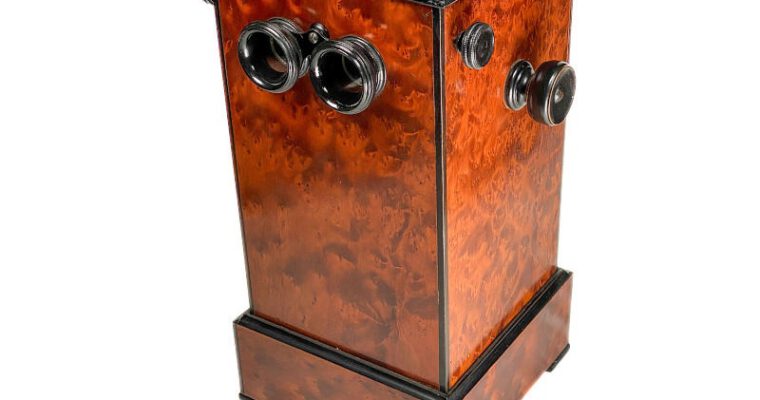
Archives: Museum Objects
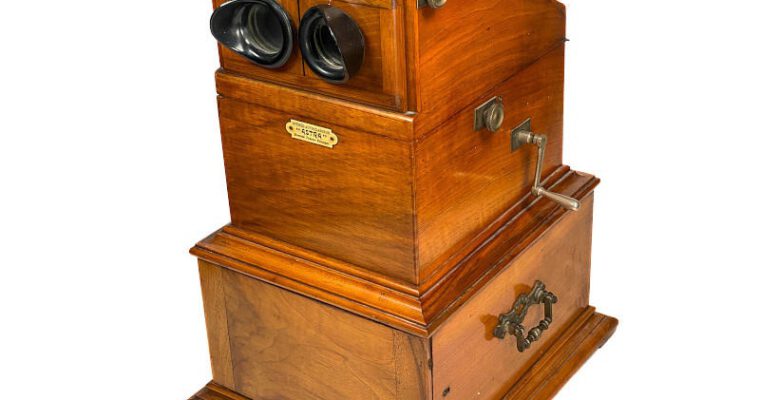
Tray-Stereoscope ‘Stéréo-Auto-Classeur “Astra“ ‘
L’Astra is the largest of Bize’s designs. The slide tray mechanism of L’Astra differs from typical stereoscopes. Instead of a tray carriage moving over a rail, L’Astra uses a gear system embedded in the base plate, with the tray featuring grooves. The rotating gear moves …
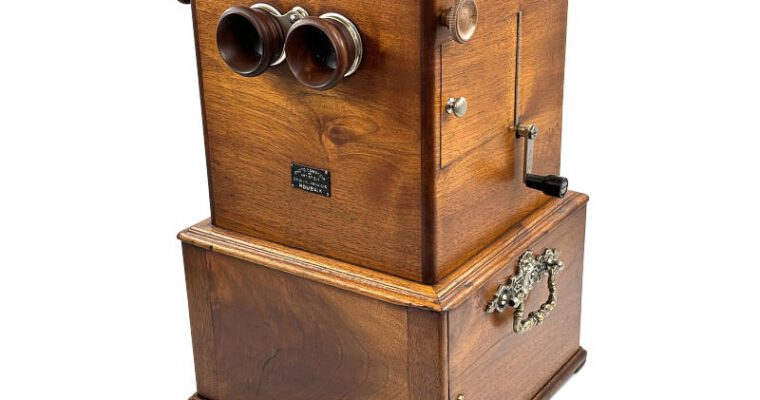
Tray-Stereoscope, side-loaded
The wooden trays contain 25 slides each and can be inserted into the viewer through a small door on the right side of the housing. Then, by turning a crank on the right side of the housing, one slide after another can be examined. Each …
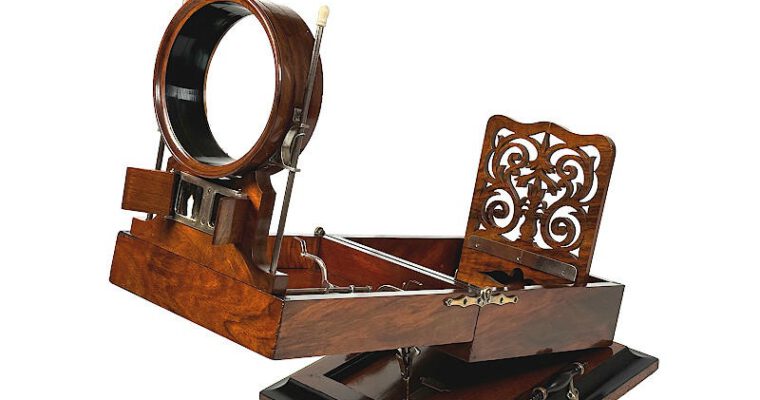
Large, foldable Graphoscope, Luxe
Henry J. Lewis was a son of William Lewis, a pioneering photographer and supplier of daguerreian materials in New York. Henry Lewis patented a design that was a variant of the English Graphoscope. The device has a large lens for conventional photographs and two stereo …
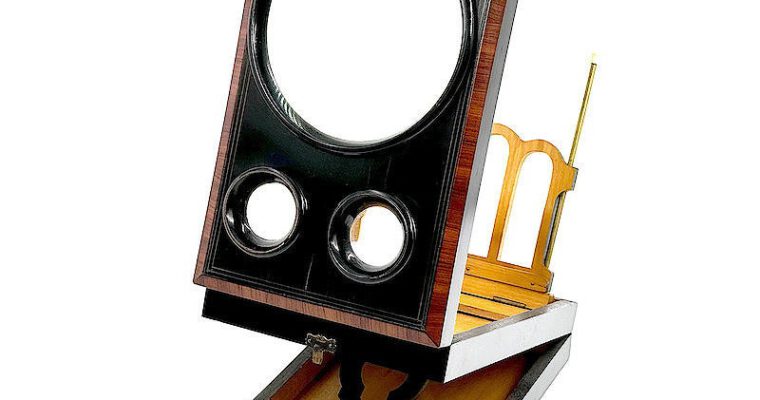
Foldable Pantoscope ‘à double socle’
A pantoscope is a compact, partially foldable viewer equipped with both stereoscopic lenses and a large magnification lens, allowing the viewing of both mono and stereo images. They were mostly produced ‘à double socle’ with a simple rectangular body, which allowed for easier adjustment of …
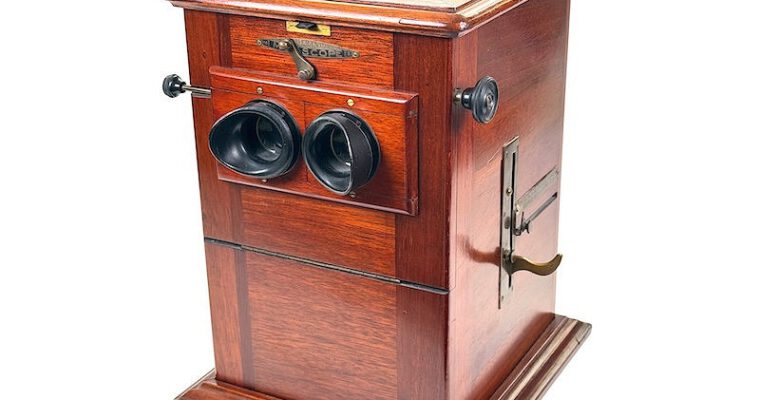
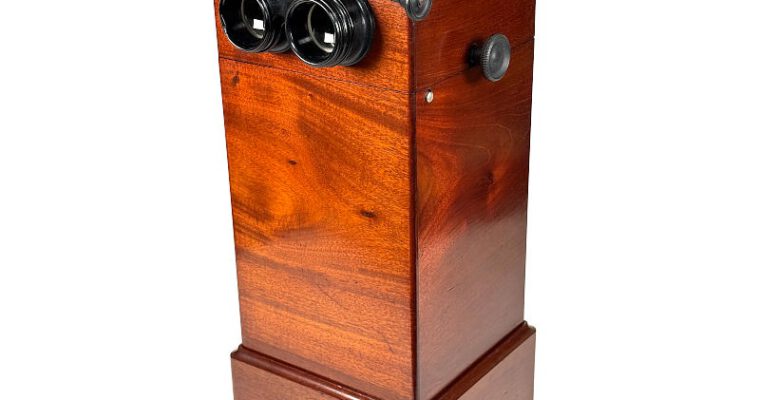
Tray-Stereoscope ‘Métascope Spécial’ together with Original Owner’s Photo Collection
To place a slide tray, the lid on the top and the front panel must be opened. The lever that loads the slides is in the down position and locked. After the slide tray is inserted, the lever is unlocked and moves upward. The first …
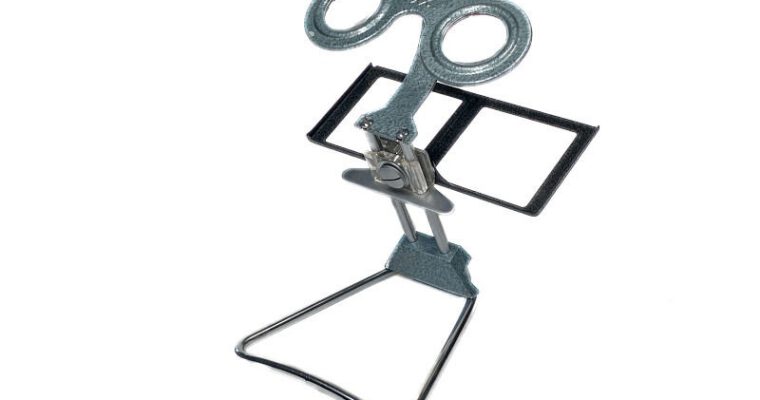
Chain-Stereoscope ‘à court foyer, chaîne interchangeable’, Short Focus
This American interchangeable-chain, short-focus stereoscope has a distinctive construction, particularly in its chain mechanism. Unlike earlier models that used wire chains, it employs stamped and cut metal frames that form a perfect border around the photographic image. Since these frames are the same dimensions as …
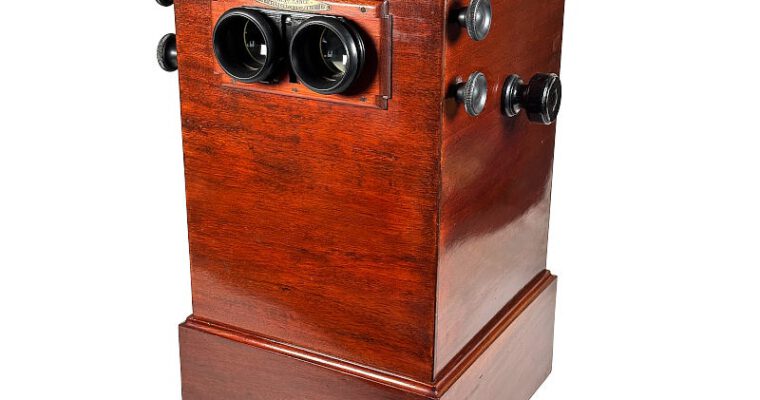
Chain-Stereoscope, unusual, large format
Further reading: Stereoscopy History Series — Mattey (A. Ruiter)
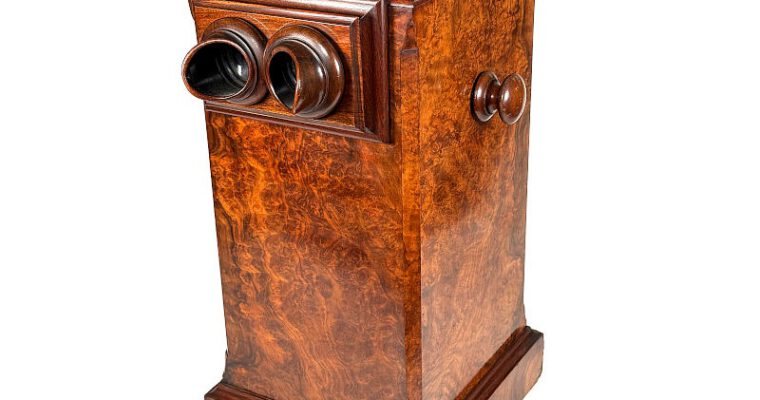
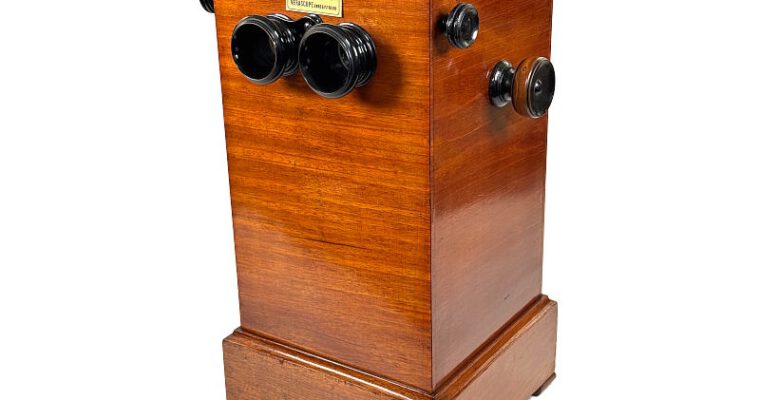
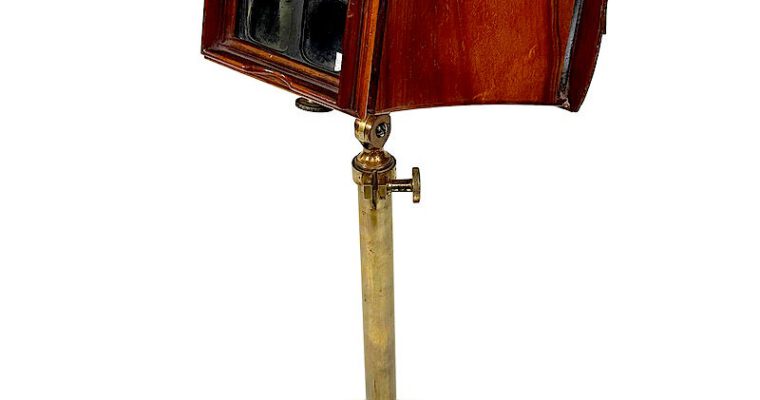
Brewster Stereoscope on Stand, Rosewood, Prismatic Lenses
In the Brewster-type stereoscope by Murray & Heath, the lens holder with lenses can be slid out of the instrument for cleaning. The focusing knob is located underneath the body. The viewer was also available mounted on a stand. In 1858, Murray & Heath registered the …