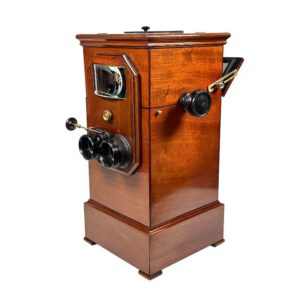
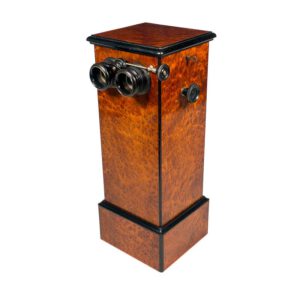
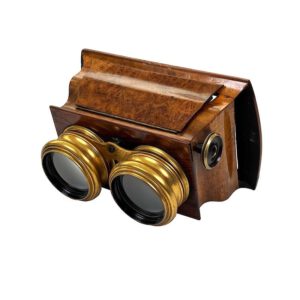
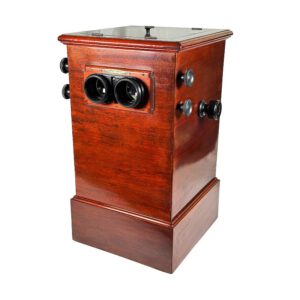
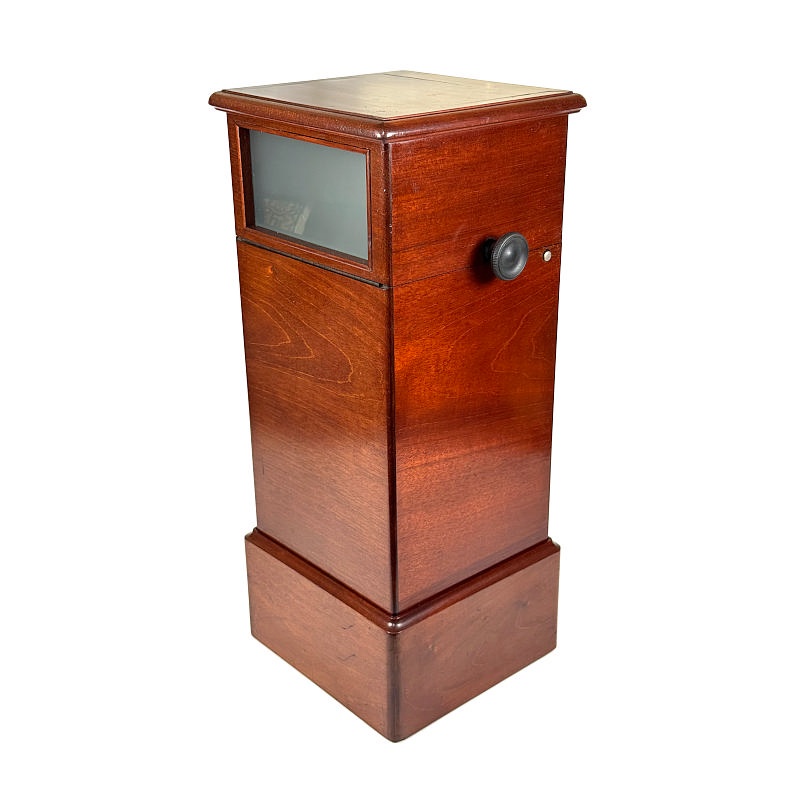
Chain-Stereoscope ‘à court foyer, chaîne interchangeable’, Short Focus
Details
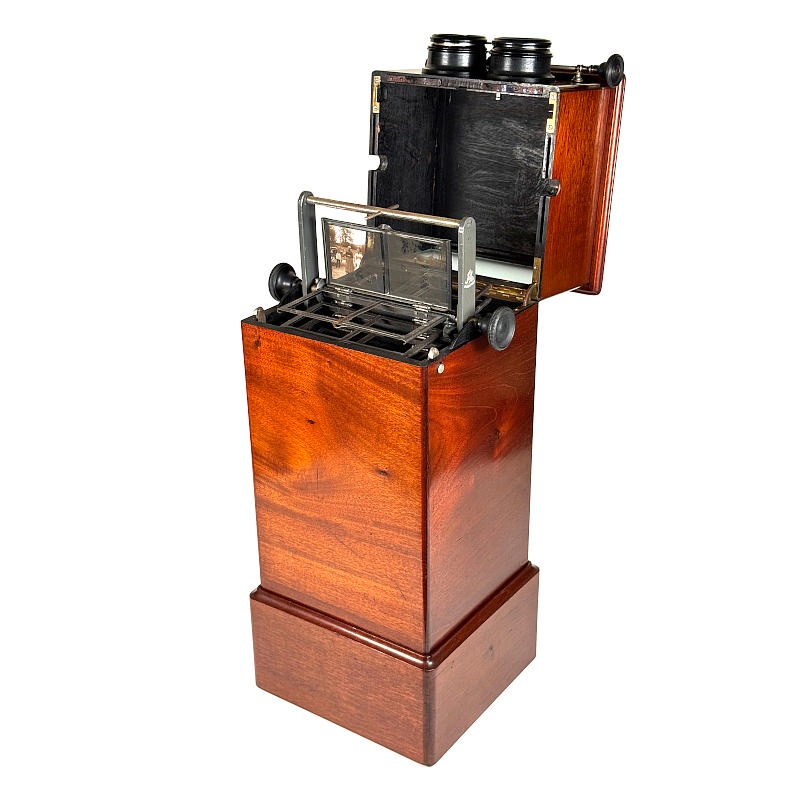
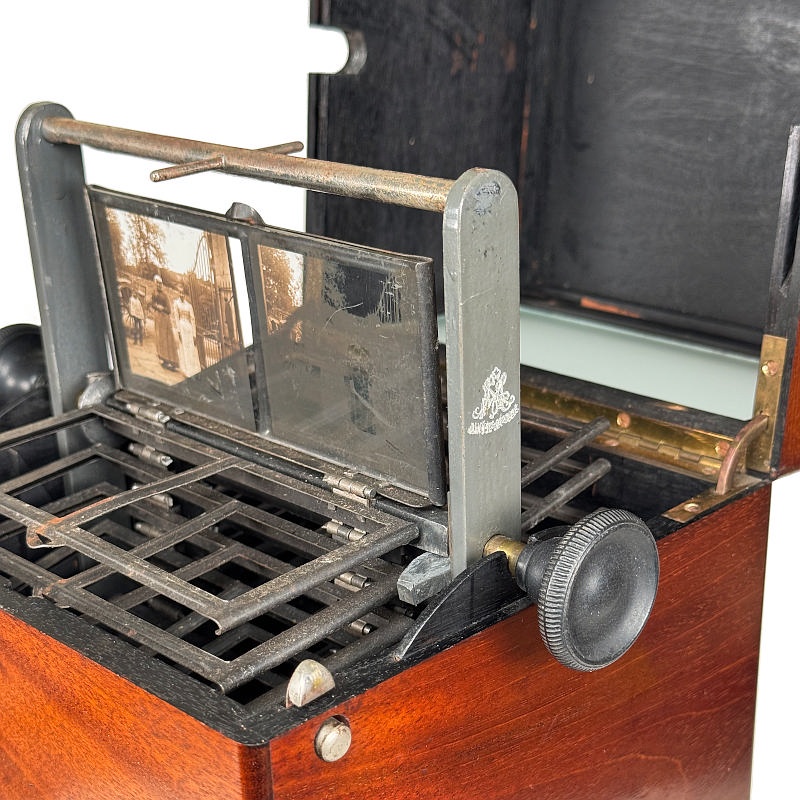
This American interchangeable-chain, short-focus stereoscope has a distinctive construction, particularly in its chain mechanism. Unlike earlier models that used wire chains, it employs stamped and cut metal frames that form a perfect border around the photographic image. Since these frames are the same dimensions as the stereoscopic views, the distance between the eyepieces and the image can be reduced, resulting in greater magnification than with other models.
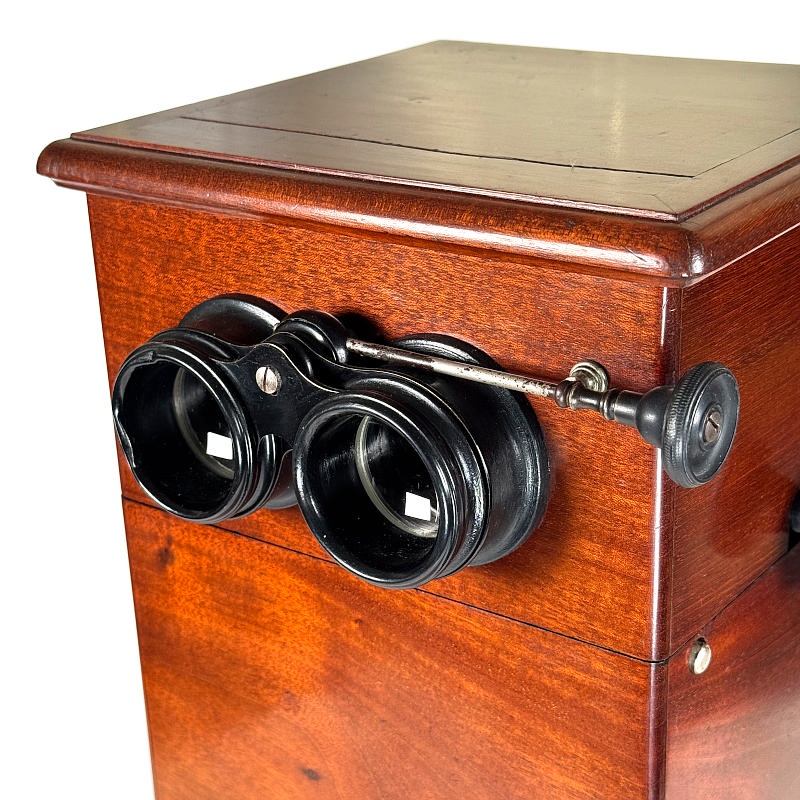
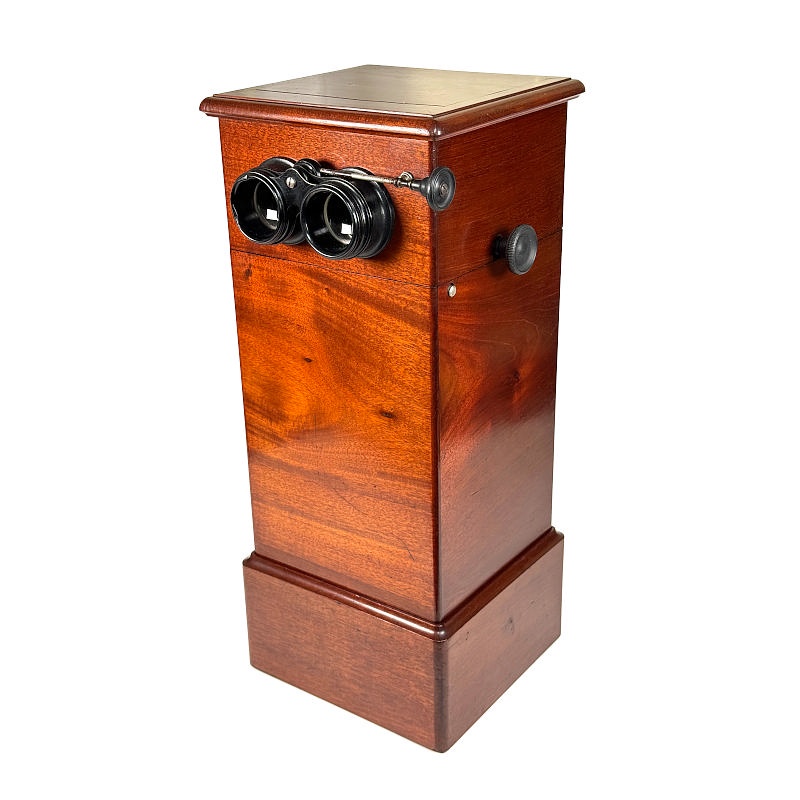
It was made in polished old mahogany or thuya wood. It is equipped with rack-and-pinion focusing binocular lenses and achromatic glass lenses. Adjustable eye spacing was available as an option.
(from: Moulinier et al. Histoires de visionneuses stéréoscopiques françaises. Limoges, 2025, p. 113. Author’s translation.)
This stereoscope was designed for chains holding 50 views. It was available with either an interchangeable or a fixed chain. The chain mechanism was patented in July 1902, followed by a patent for a magic lantern into which the chain could be inserted. It remains unclear whether the magic lantern was ever commercialised.