Archives: Museum Objects

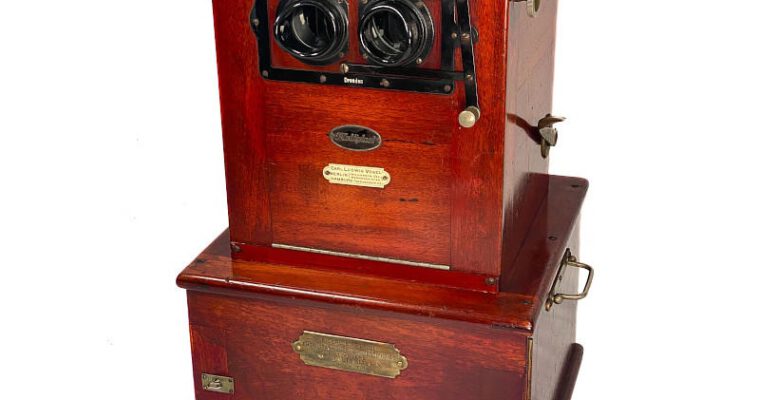
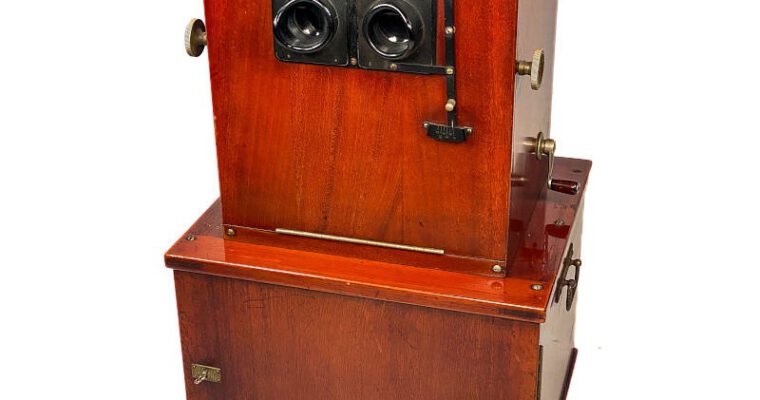
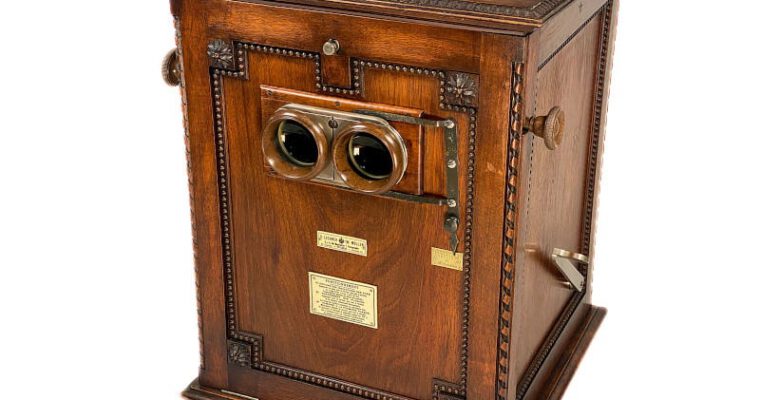
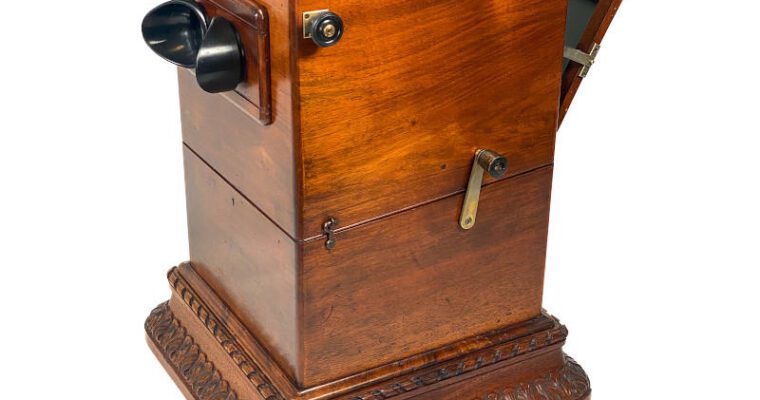
Tray-Stereoscope ‘Série III’

Tray-Stereoscope ‘Série III’

The wood­en trays con­tain 25 slides each and can be insert­ed into the view­er by flip­ping back its top. Then, by turn­ing a crank on the right side of the hous­ing, one slide after anoth­er can be exam­ined. Each half-turn of the crank advances or 

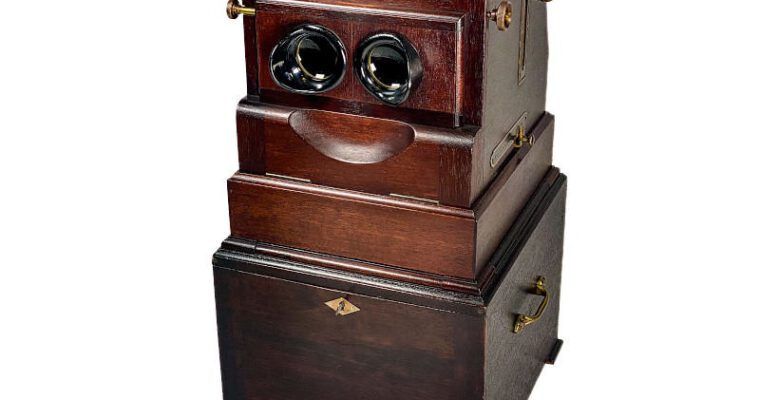
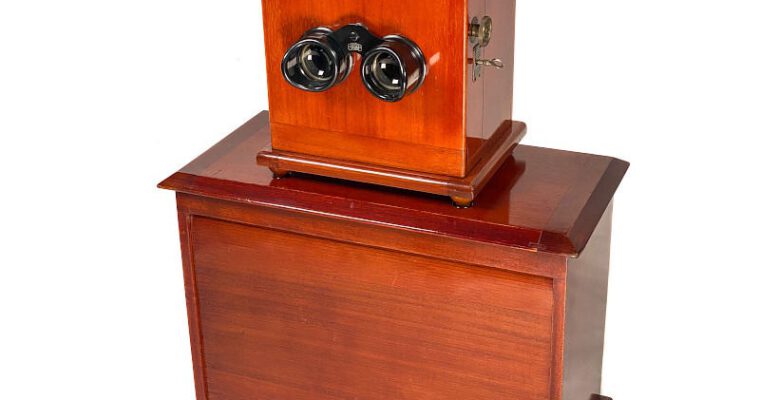
Tray-Stereoscope ‘Multiplast’, First Version

Tray-Stereoscope ‘Multiplast’, First Version

The Mul­ti­plast close­ly resem­bles the Tax­iphote in appear­ance. The 45 x 107 mod­el was oper­at­ed by a lever. The lat­er 6 x 13 mod­el used a crank mech­a­nism and allowed bidi­rec­tion­al nav­i­ga­tion. The Mul­ti­plast was con­tin­ued by Zeiss Ikon after the merg­er of ICA. (from: Com­pendi­um 

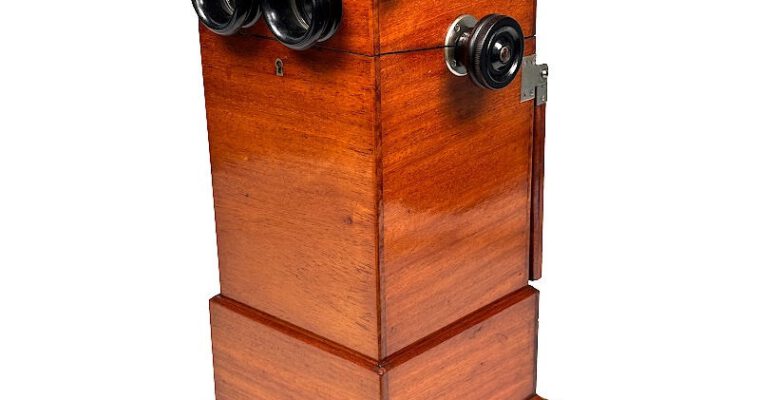
Tray-Stereoscope ‘Multiplast’, Second Version

Tray-Stereoscope ‘Multiplast’, Second Version

The Mul­ti­plast close­ly resem­bles the Tax­iphote in appear­ance. The 45 x 107 mod­el was oper­at­ed by a lever. The lat­er 6 x 13 mod­el used a crank mech­a­nism and allowed bidi­rec­tion­al nav­i­ga­tion. The Mul­ti­plast was con­tin­ued by Zeiss Ikon after the merg­er of ICA. (from: Com­pendi­um 

Tray-Stereoscope ‘Planox’, First Version

Tray-Stereoscope ‘Planox’, First Version

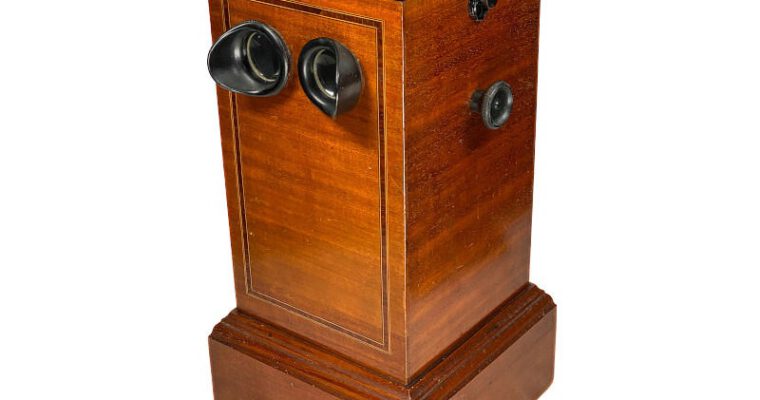
A wood­en tray con­tain­ing 20 glass slides can be insert­ed by flip­ping down the front of the view­er, then, by mov­ing a knob, locat­ed on the right side, up and down, one slide after anoth­er can be exam­ined. The slides are pulled up by mag­nets 

Chain-stereoscope ‘Le Phénix’ with interchangeable belt

Chain-stereoscope ‘Le Phénix’ with interchangeable belt

‘Le Phénix’ is an ultra-com­­pact revolv­ing stere­o­scope. It fea­tures a belt with wood­en bars that hold detach­able met­al stere­oview hold­ers. The belt is sus­pend­ed on a four-sided prism met­al bar with a large knob on the right end. Turn­ing the knob advances the images sequen­tial­ly. 

Tray-Stereoscope ‘Le Taxiphote no. 2, style Louis XVI’, Luxe

Tray-Stereoscope ‘Le Taxiphote no. 2, style Louis XVI’, Luxe

A bake­lite tray con­tain­ing 25 glass slides can be insert­ed by flip­ping down the front of the view­er. Then, by depress­ing the lever on the right side of the hous­ing, one slide after anoth­er can be exam­ined. On the left side of the view­er, there 

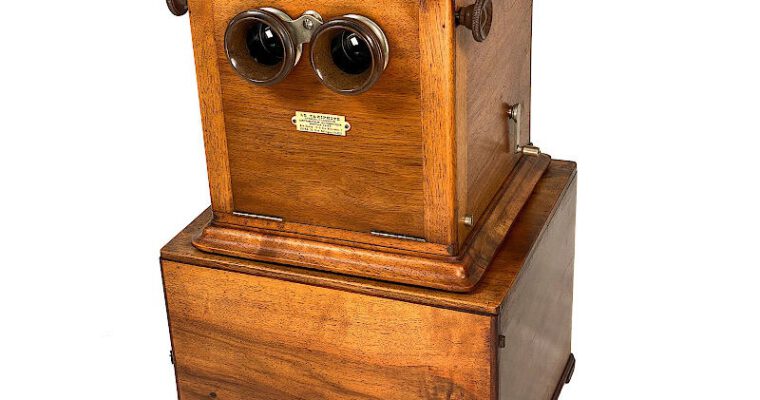
Tray-Stereoscope ‘Le Taxiphote, modèle simplifié’ with Storage Base

Tray-Stereoscope ‘Le Taxiphote, modèle simplifié’ with Storage Base

A bake­lite tray con­tain­ing 25 glass slides can be insert­ed by flip­ping down the front of the view­er. Then, by turn­ing a crank on the right side of the hous­ing, one slide after anoth­er can be exam­ined. On the left side of the view­er, there 

Leporello-Stereoscope ‘Stereospekt’ with Original Storage Base

Leporello-Stereoscope ‘Stereospekt’ with Original Storage Base

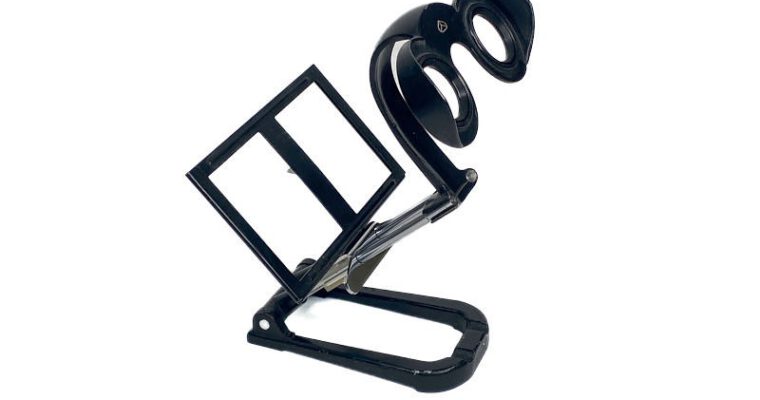
The glass slides are mount­ed in a met­al har­mon­i­ca belt that can hold up to twelve slides. Instruc­tions on how to posi­tion the belt in the device are print­ed on the top. The slides are firm­ly clamped in frames, sug­gest­ing that they were intend­ed to 

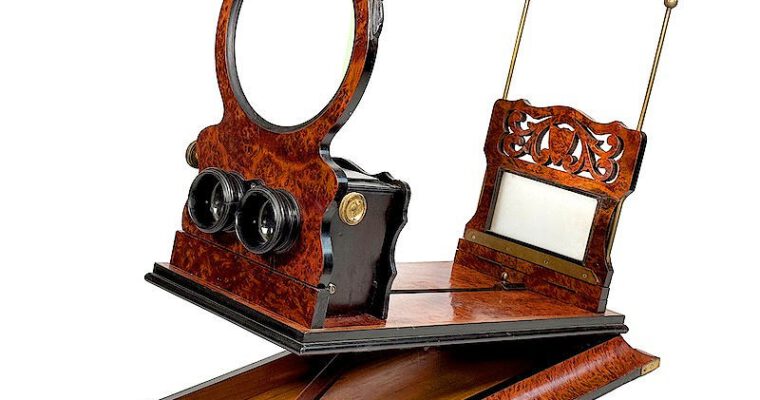
Graphoscope ‘Modèle de luxe, Jumelle et Chambre’, Luxe

Graphoscope ‘Modèle de luxe, Jumelle et Chambre’, Luxe

Jean-Bap­tiste Fou­quet designed an improved ver­sion of the Eng­lish Grapho­scope. The Eng­lish Grapho­scope fit­ted with stereo lens­es is orig­i­nal­ly an open view­er. Fou­quet added a wood­en box with a stere­oview hold­er behind the stereo lens­es, turn­ing it into a closed sys­tem for view­ing stere­oviews. (from: 

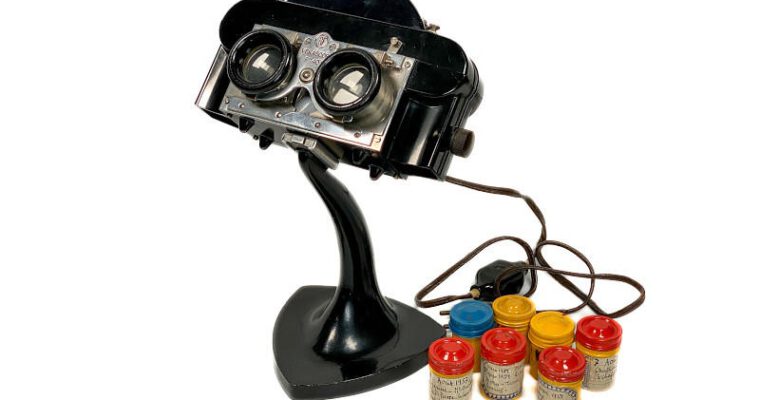
Rollfilm-Stereoscope ‘Verascope F40’, Second Model, with Stand, Light Unit and a Set of Rollfilms

Rollfilm-Stereoscope ‘Verascope F40’, Second Model, with Stand, Light Unit and a Set of Rollfilms

The revers­ing stere­o­scope for the Véras­cope F40 was intro­duced in 1951. It is made of var­nished mahogany and was spe­cial­ly designed for exposed 35 mm film used with the F40, with which it shares the same film-advance syn­chro­niza­tion sys­tem. Its revers­ing sys­tem uses roof prisms. 

Chain-Stereoscope ‘Le Stéréo’

Chain-Stereoscope ‘Le Stéréo’

Le Stéréo is par­tic­u­lar­ly notable for the dis­tinc­tive han­dle mount­ed on the top of the body. Some vari­ants bear a Le Stéréo logo on the front. The view­er is asso­ci­at­ed with the Paris pho­to­graph­ic stu­dio Étab­lisse­ments Rep, which was active in the 1920s and locat­ed