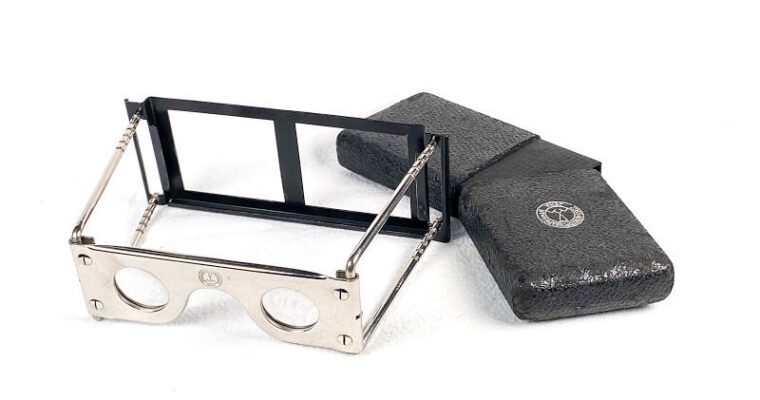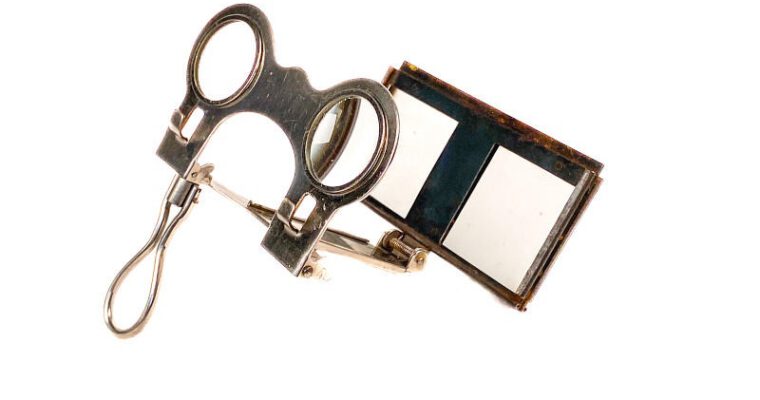
Foldable Stereoscope ‘Stéréoscope pliant en cuivre nickelé’
Further reading: Stereoscopy History Series — Mattey (A. Ruiter)

Further reading: Stereoscopy History Series — Mattey (A. Ruiter)
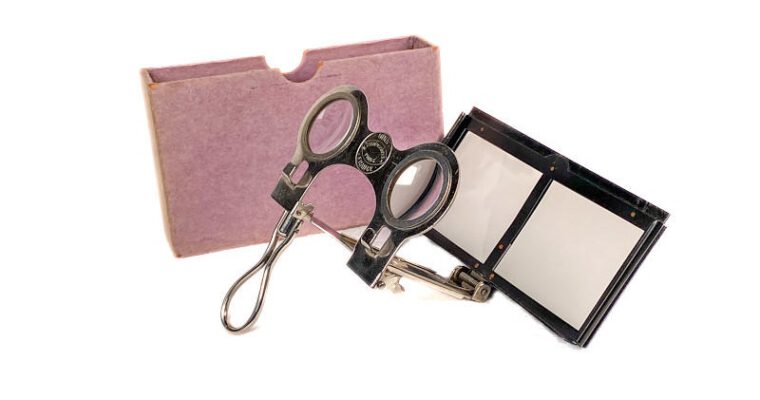
Further reading: Stereoscopy History Series — Mattey (A. Ruiter)
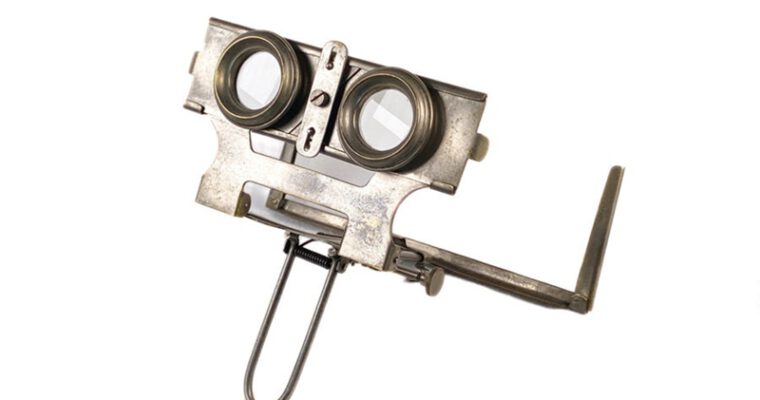
T. C. & E. C. Jack was a Scottish publishing house based in Edinburgh. In 1905, the company published The Edinburgh Stereoscopic Atlas of Anatomy. The atlas was not a conventional bound book. It consisted of paper mounted stereoviews, each with black-and-white paired images and …
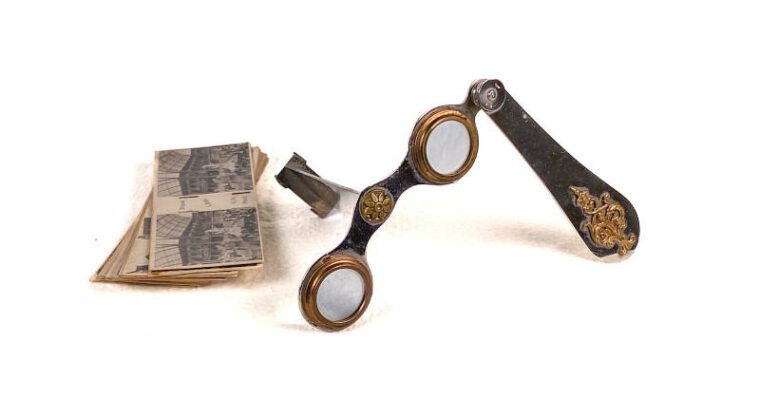
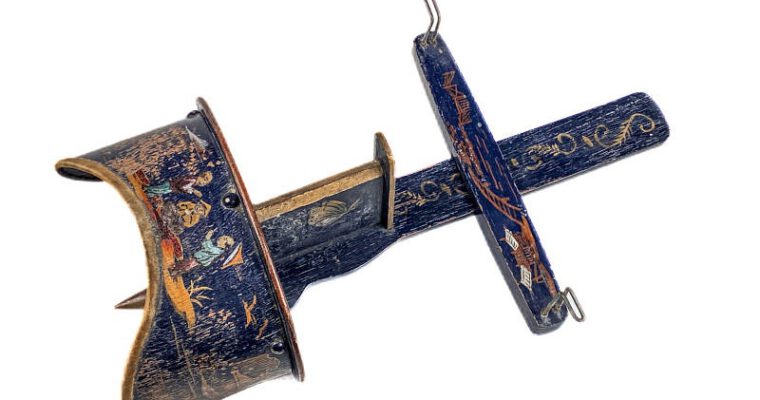
L’Iris stéréoscope à manche is a finely decorated lorgnette-style stereoscope. The viewer was distributed by Gustave Jacob, who also marketed Lucien Bize’s stereoscopes. Manufacture by Bize therefore cannot be ruled out, since L’Omnium dates from the same period and Bize initially specialised in the production …
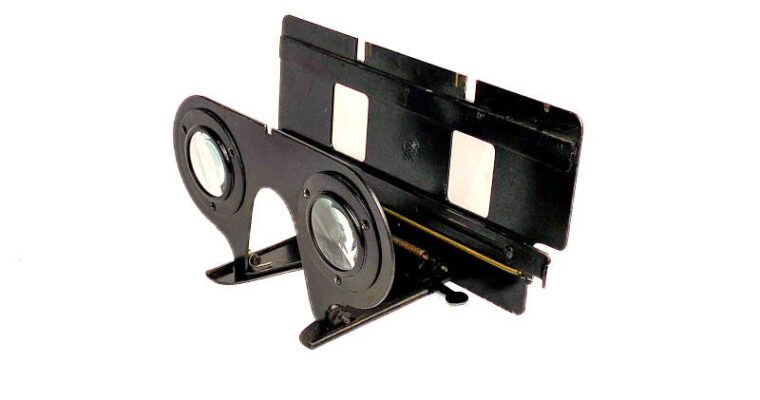
The Homéos pliant de poche was based on the earlier introduced Stéréoscope pliant de poche, but was specifically designed for film slides from the 35 mm Homéos stereo camera. (from: Compendium of Stereoscopes)
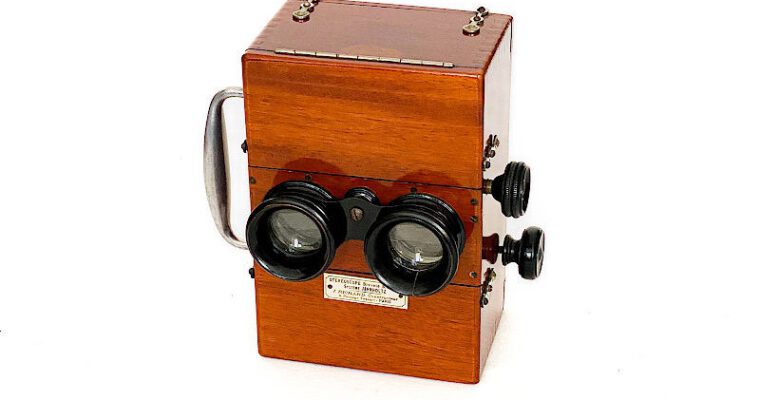
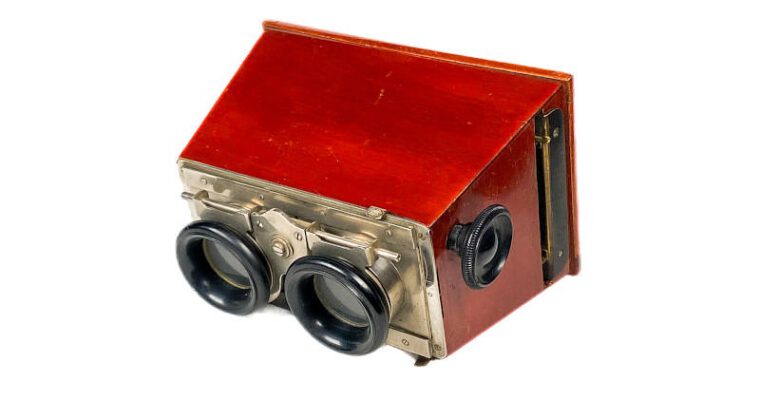
After the fixed-chain models came the push-and-pull stereoscope, in which the views pass from the supply magazine to the receiving magazine after a viewing period, thanks to a changing rod. This system was invented by Hermann-Marie-Camille Jahnholtz, who filed patent FR 280.799 on August 23, …
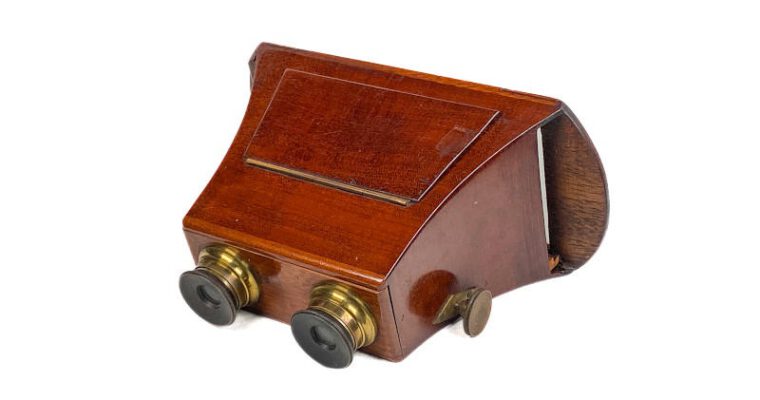
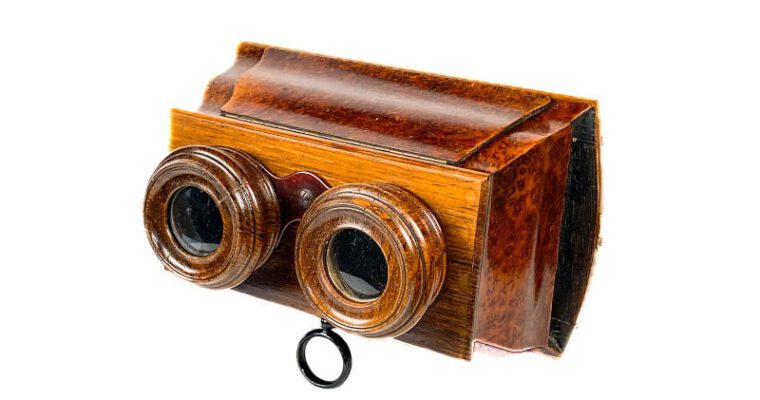
A Brewster-type stereoscope is a refracting hand-held stereoscope introduced by David Brewster in 1849. The device was later developed into a viewer with an enclosed housing. This modification occurred largely in response to the use of daguerreotype stereoviews, which exhibited high surface reflectivity and therefore …
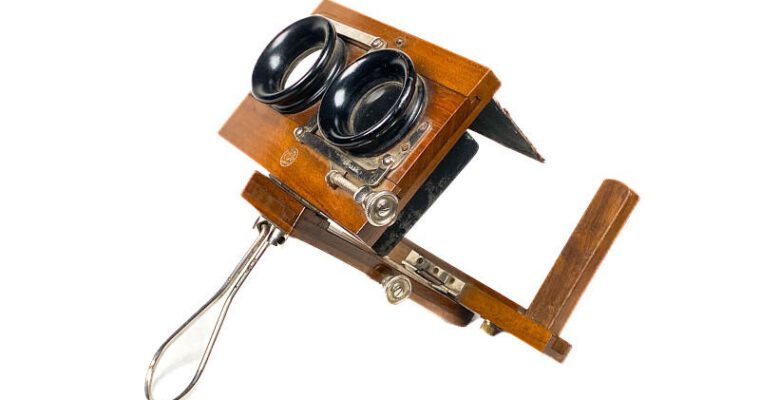
In 1887, Eugène Gaston Clément and Georges Arthur Gilmer joined forces with the optician A. Laverne for three years, at the end of which they took over the commercial business located at 10 Rue de Malte in Paris. From 1890 onward, the partnership Clément & …