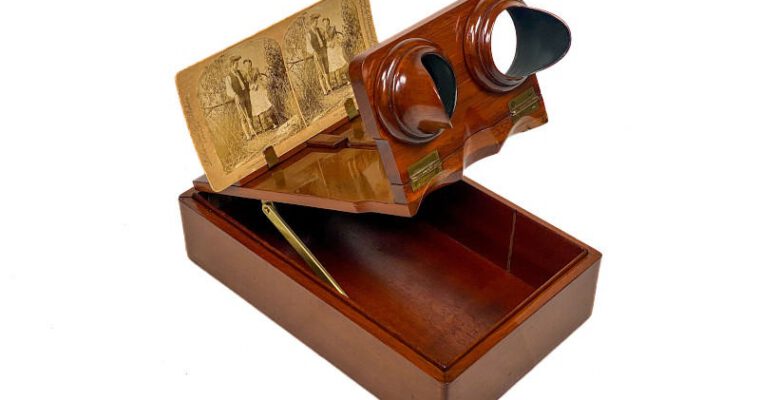
Museum Tag: tabletop
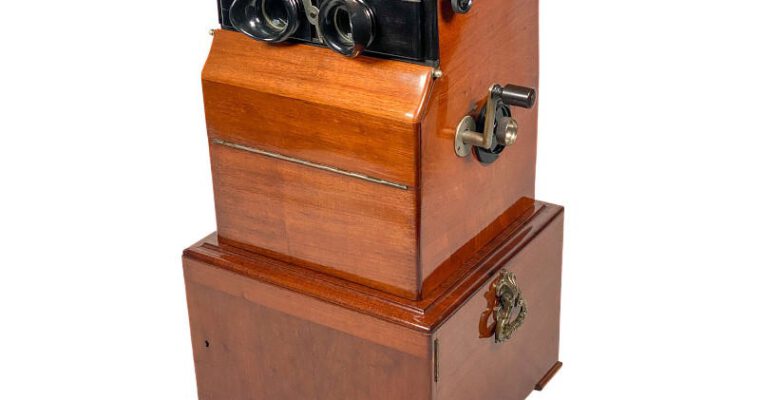
Tray-Stereoscope ‘Nouveau Stéréoscope’
To load the device, the front panel is opened and a tray of 25 glass slides can be inserted. By turning a side lever, one of the images is pushed upwards from the tray by two metal fingers from below, allowing it to be viewed. …
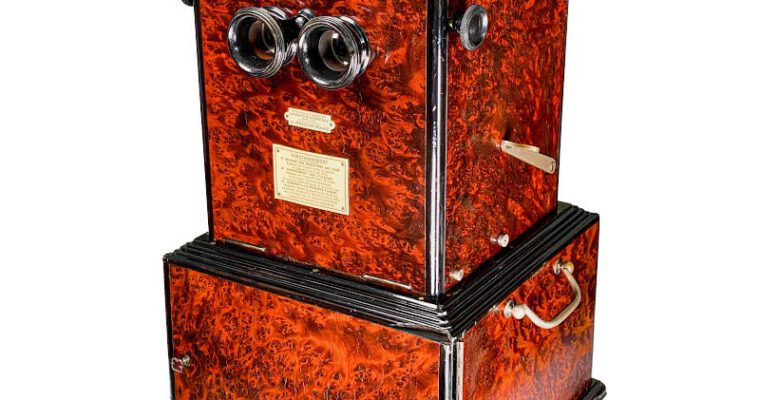
Tray-Stereoscope ‘Stéréo-Classeur’, Luxe
A bakelite tray containing 25 glass slides can be inserted by flipping down the front of the viewer. Then, by depressing the lever on the right side of the housing, one slide after another can be examined. On the left side of the viewer, there …
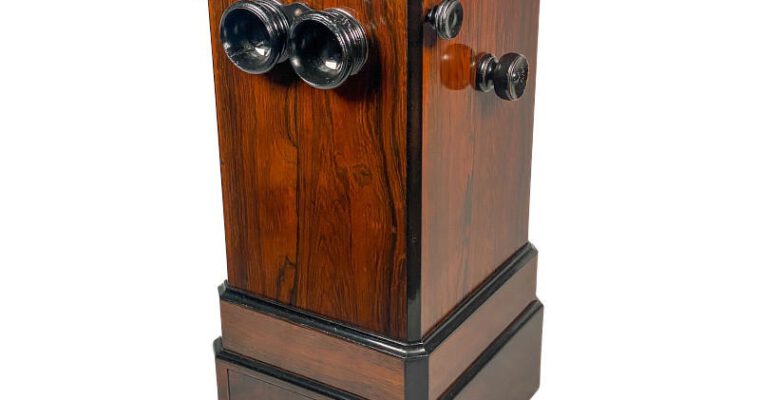
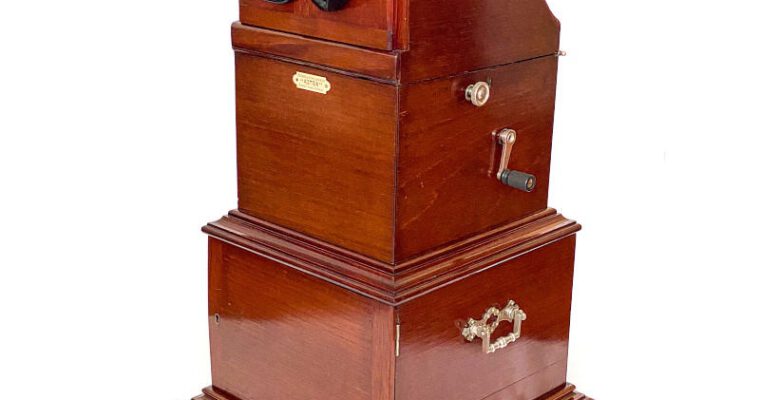
Tray-Stereoscope ‘Stéréo-Auto-Classeur “Astra“ ‘
L’Astra is the largest of Bize’s designs. The slide tray mechanism of L’Astra differs from typical stereoscopes. Instead of a tray carriage moving over a rail, L’Astra uses a gear system embedded in the base plate, with the tray featuring grooves. The rotating gear moves …
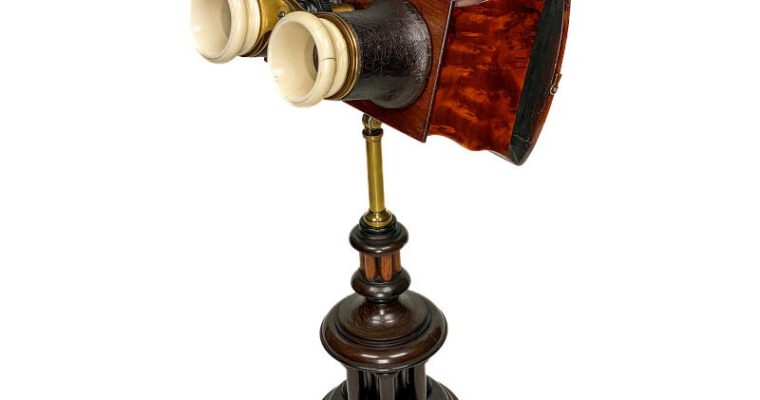
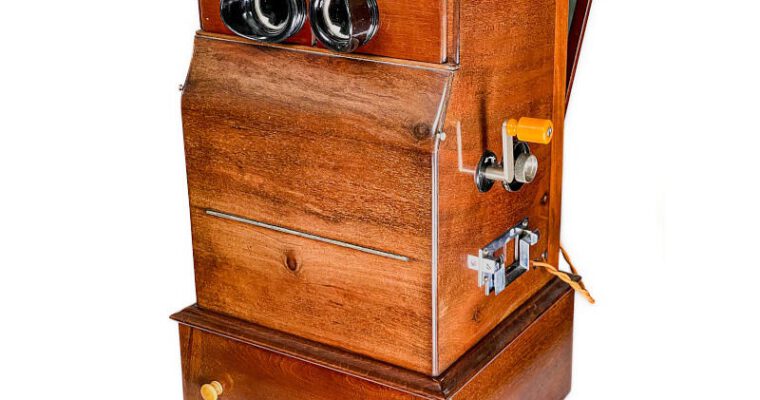
Tray-Stereoscope ‘Nouveau Stéréoscope’
To load the device, the front panel is opened and a tray of 25 glass slides can be inserted. By turning a side lever, one of the images is pushed upwards from the tray by two metal fingers from below, allowing it to be viewed. …
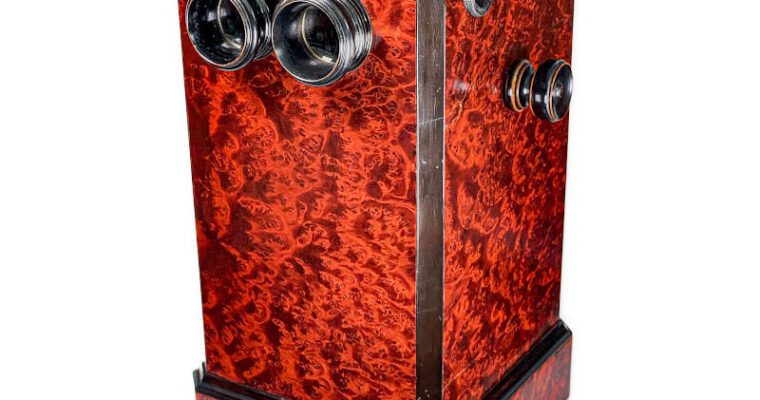
Chain-Stereoscope, Ronce de Thuya, Luxe
Further reading: Stereoscopy History Series — Mattey (A. Ruiter)
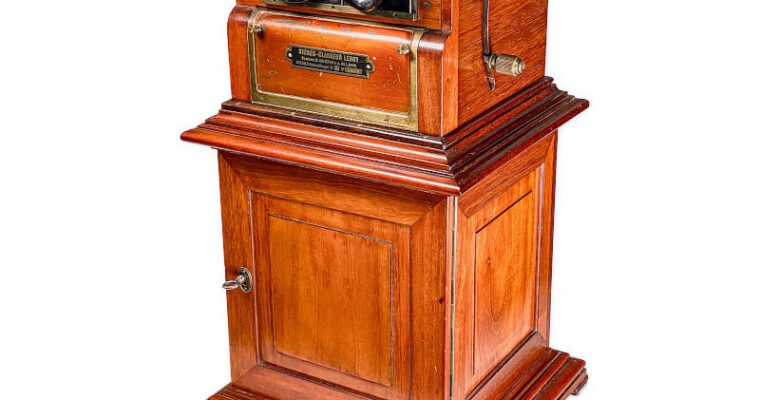
Tray-Stereoscope ‘Stéréo-Classeur Leroy’
The stereoscope carries the name Leroy, although the namesake played no role in its development. The manufacturer of the stereoscope, Émile Guérin, continued the company of Lucien Leroy and retained the established name Leroy as a brand. The Stéréo-Classeur Leroy is a compact stereoscope with a …
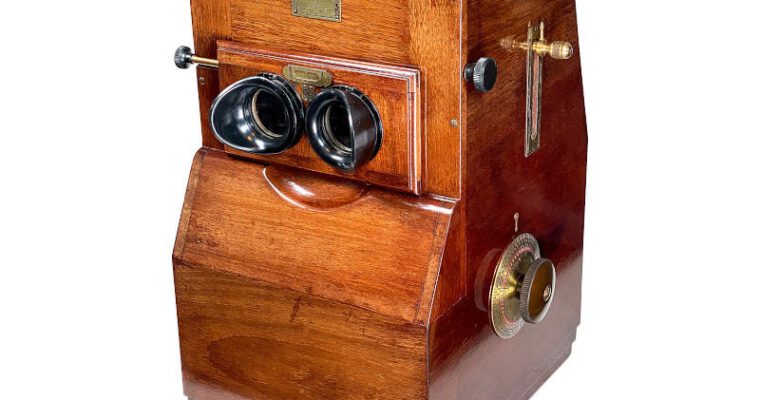
Tray-Stereoscope ‘Planox Rotatif’
Four bakelite trays containing 25 glass slides each can be inserted through a flap on the left side of the viewer. These trays are bent by 90 degrees and are arranged to form a drum. Then, by moving a small knob, located on the right …
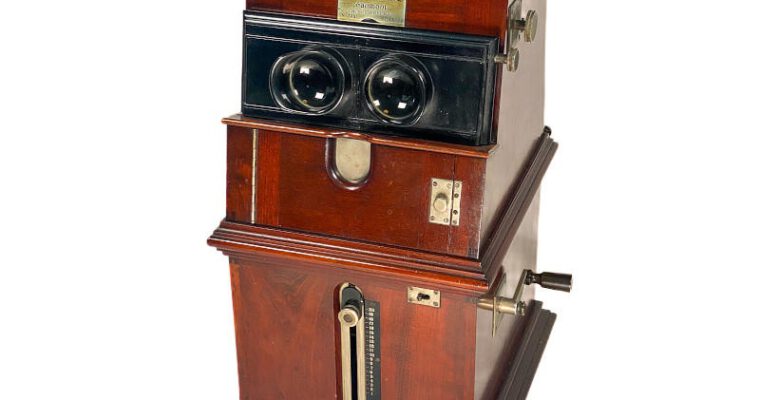
Tray-Stereoscope ‘Stéréodrome’ with its Original Photo Collection
Le Stéréodrome is a robust stereoscope with a heavy-duty and reliable construction. The device exhibits a stable design that remained in production into the 1930s without significant modifications. The model designed to accommodate a projection lamp has a few visible differences on the outside and …
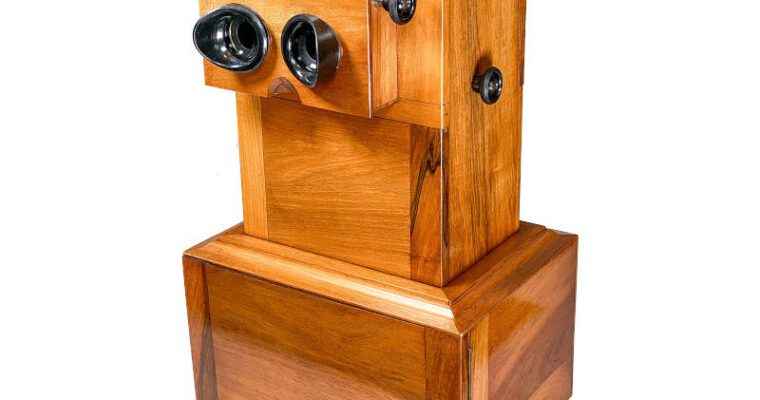
Stereoscope ‘Educa’
The stereoscope and its operating principle are unique. The stereoviews are printed on a single glass plate measuring 13 × 18 cm. Each plate contains twenty-four images arranged as twelve stereo pairs in six horizontal rows. A sliding lid at the top of the viewer …