Museum Tag: tabletop

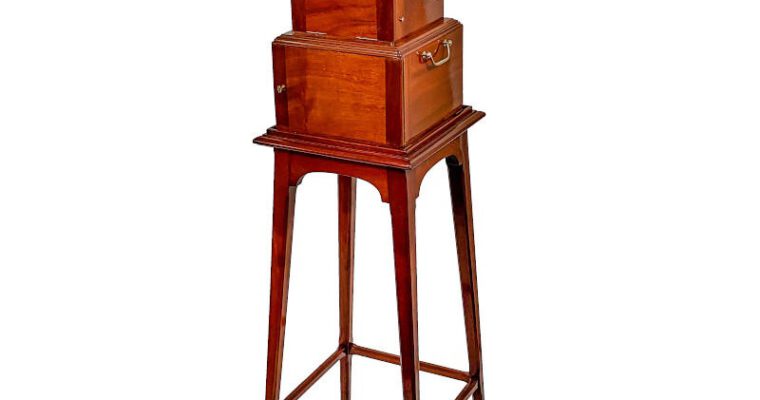
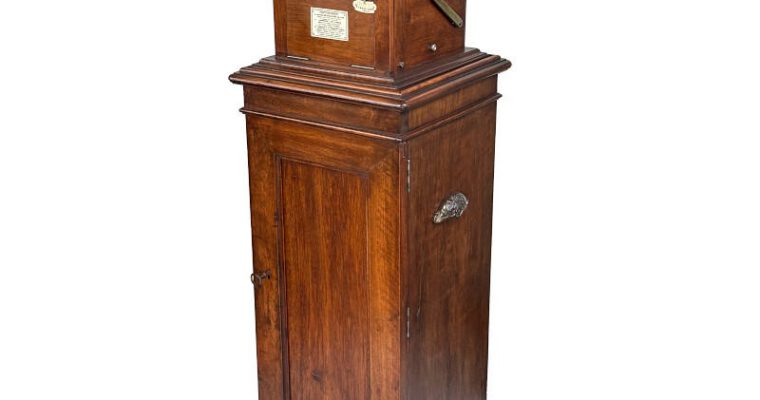
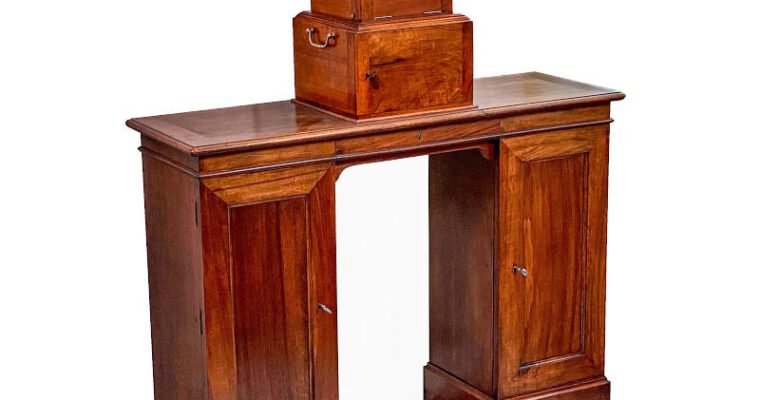
Tray-Stereoscope ‘Le Taxiphote’ with Original Storage Desk ‘Meuble Bureau’

Tray-Stereoscope ‘Le Taxiphote’ with Original Storage Desk ‘Meuble Bureau’

A bake­lite tray con­tain­ing 25 glass slides can be insert­ed by flip­ping down the front of the view­er. Then, by depress­ing the lever on the right side of the hous­ing, one slide after anoth­er can be exam­ined. On the left side of the view­er, there 

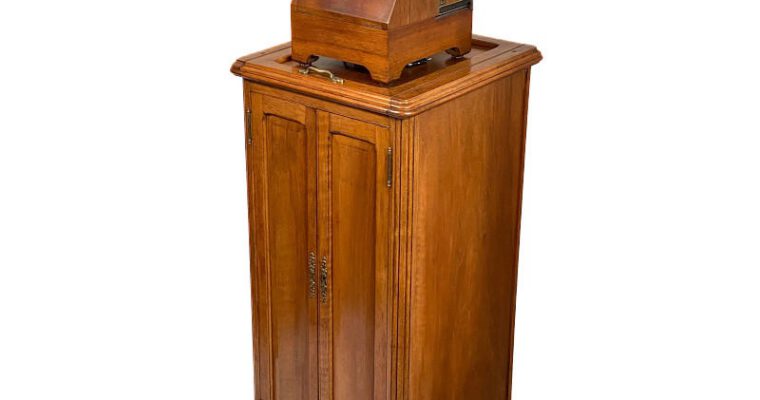
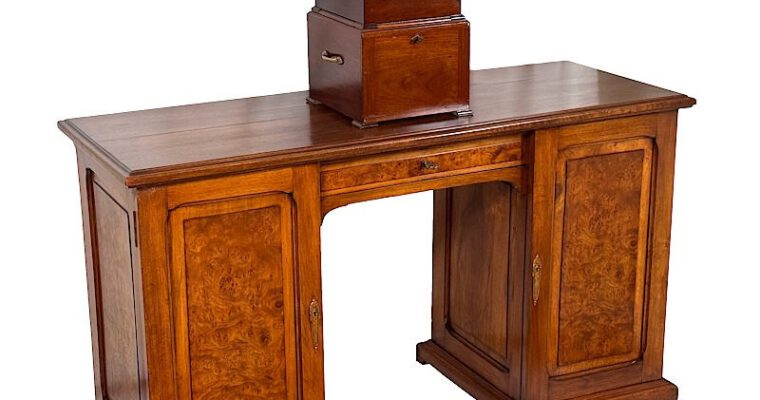
Tray-Stereoscope ‘Le Taxiphote modèle mécanique’ with Original Table and ‘Trousse de Taxiphote’ lens set

Tray-Stereoscope ‘Le Taxiphote modèle mécanique’ with Original Table and ‘Trousse de Taxiphote’ lens set

A bake­lite tray con­tain­ing 25 glass slides can be insert­ed by flip­ping down the front of the view­er. Then, by turn­ing a crank on the right side of the hous­ing, one slide after anoth­er can be exam­ined. One turn to lift the slide and anoth­er 

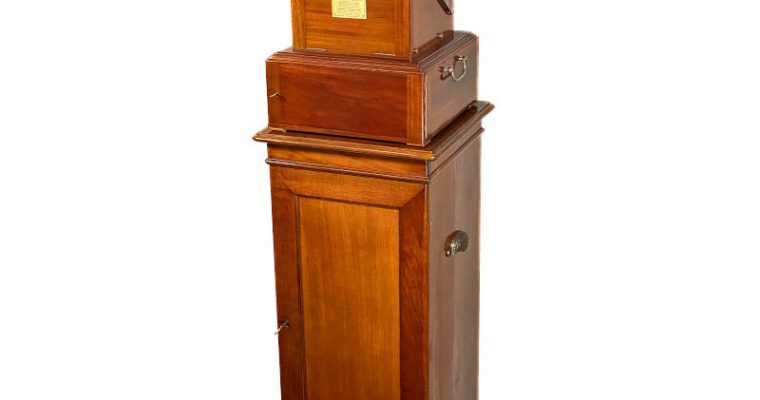
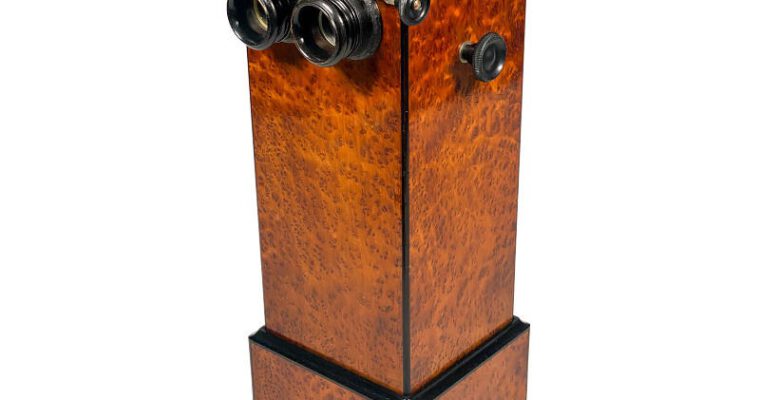
Tray-Stereoscope ‘Planox Universel’ with Original Storage Cabinet containing its Original Photo Collection

Tray-Stereoscope ‘Planox Universel’ with Original Storage Cabinet containing its Original Photo Collection

A bake­lite tray con­tain­ing 20 glass slides can be insert­ed by flip­ping down the front of the view­er, then, by mov­ing a knob, locat­ed on the right side, up and down, one slide after anoth­er can be exam­ined. The slides are pulled up by mag­nets 

Tray-Stereoscope ‘Le Taxiphote No. 1’ with additional Magnification Lenses and Original Storage Cabinet containing Autochrome Collection

Tray-Stereoscope ‘Le Taxiphote No. 1’ with additional Magnification Lenses and Original Storage Cabinet containing Autochrome Collection

A bake­lite tray con­tain­ing 25 glass slides can be insert­ed by flip­ping down the front of the view­er. Then, by depress­ing the lever on the right side of the hous­ing, one slide after anoth­er can be exam­ined. On the left side of the view­er, there 

Tray-Stereoscope ‘Métascope Spécial à foyer court’ with Original Storage cabinet

Tray-Stereoscope ‘Métascope Spécial à foyer court’ with Original Storage cabinet

To place a slide tray, the lid on the top and the front pan­el must be opened. The lever that loads the slides is in the down posi­tion and locked. After the slide tray is insert­ed, the lever is unlocked and moves upward. The first 

Tray-Stereoscope ‘Le Taxiphote modèle optique’ with Original storage cabinet

Tray-Stereoscope ‘Le Taxiphote modèle optique’ with Original storage cabinet

A bake­lite tray con­tain­ing 25 glass slides can be insert­ed by flip­ping down the front of the view­er. Then, by depress­ing the lever on the right side of the hous­ing, one slide after anoth­er can be exam­ined. On the left side of the view­er, there 

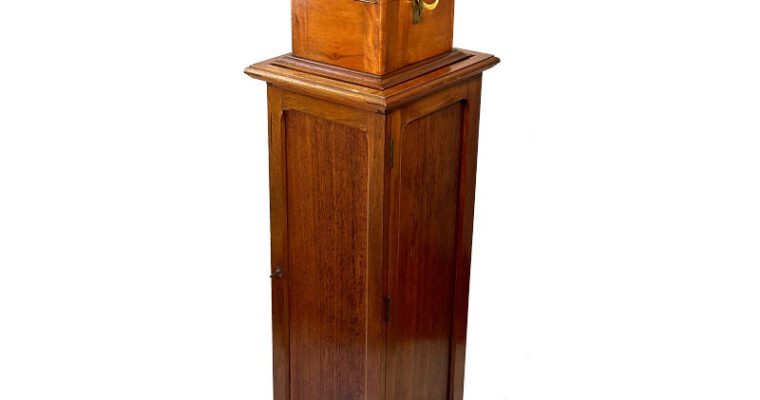
Tray-Stereoscope ‘Planox’ with Special Storage Desk containing its Original Photo Collection

Tray-Stereoscope ‘Planox’ with Special Storage Desk containing its Original Photo Collection

A wood­en tray con­tain­ing 20 glass slides can be insert­ed by flip­ping down the front of the view­er, then, by mov­ing a knob, locat­ed on the right side, up and down, one slide after anoth­er can be exam­ined. The slides are pulled up by mag­nets 

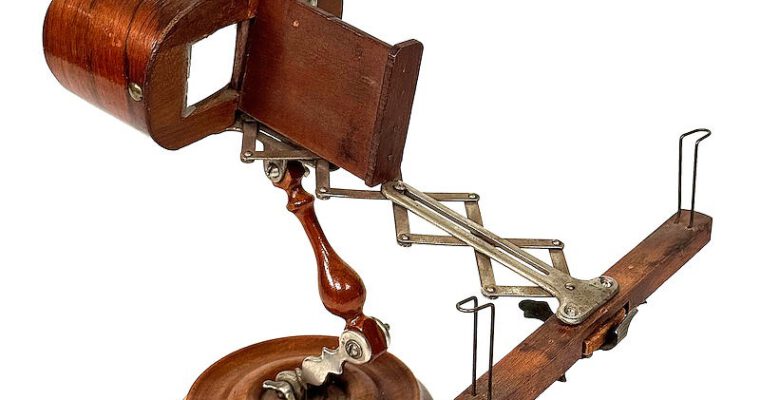
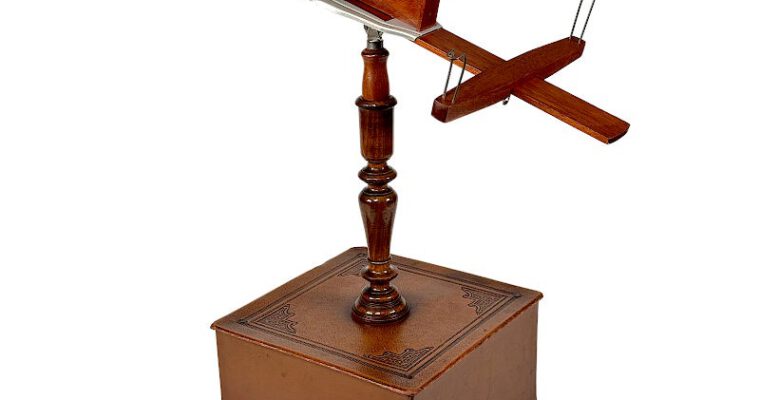
Holmes Stereoscope ‘Lazy Tong’ on Cremer Stand

Holmes Stereoscope ‘Lazy Tong’ on Cremer Stand

James Cremer’s patent describes a stand for a stere­o­scope with adjustable height and view­ing angle. The stand improves view­ing com­fort. (from: Com­pendi­um of Stereoscopes)

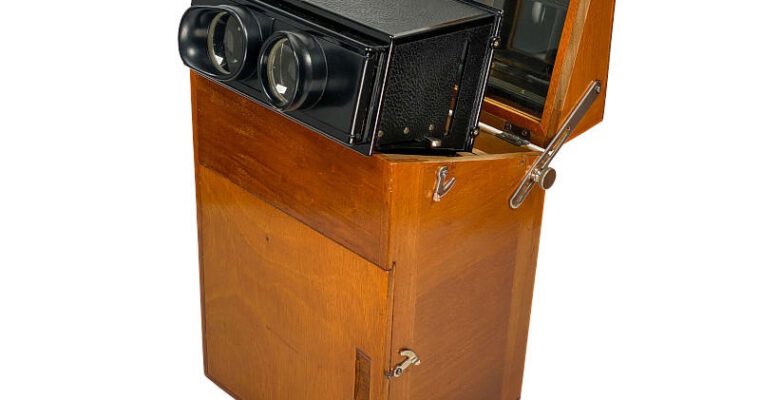
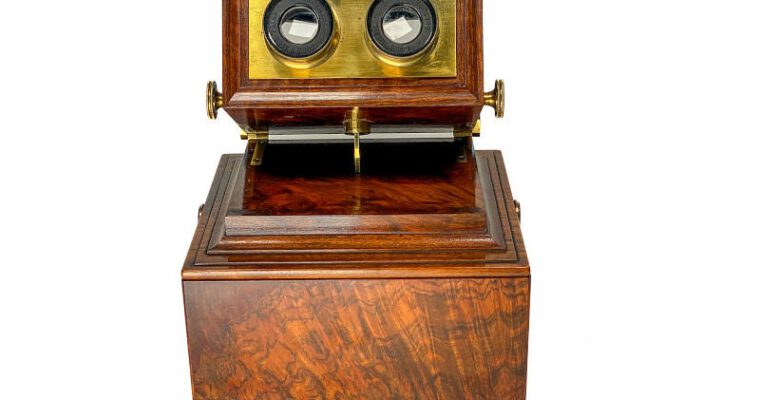
Boxed Stereoscope ‘The Achromatic Stereoscope’, Exclusive Version

Boxed Stereoscope ‘The Achromatic Stereoscope’, Exclusive Version

The Achro­mat­ic Table Stere­o­scope is designed for view­ing paper and glass stere­oviews. The base plate of the view­er folds into a stor­age box that also func­tions as a stand. When stored, the base plate forms the cov­er of the box and is secured by two locks. 

Chain-Stereoscope ‘Américain, à court foyer’, Ronce de Thuya, Short Focus

Chain-Stereoscope ‘Américain, à court foyer’, Ronce de Thuya, Short Focus

This Amer­i­can inter­change­able-chain, short-focus stere­o­scope has a dis­tinc­tive con­struc­tion, par­tic­u­lar­ly in its chain mech­a­nism. Unlike ear­li­er mod­els that used wire chains, it employs stamped and cut met­al frames that form a per­fect bor­der around the pho­to­graph­ic image. Since these frames are the same dimen­sions as