Archives: Museum Objects

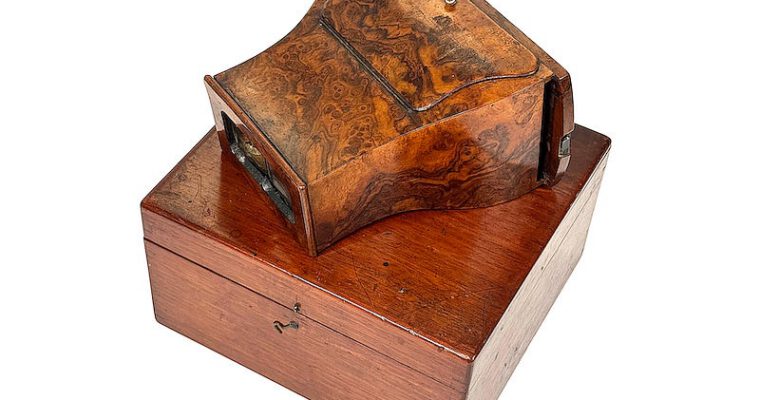
Stereoscope with Original Storage Box

Stereoscope with Original Storage Box

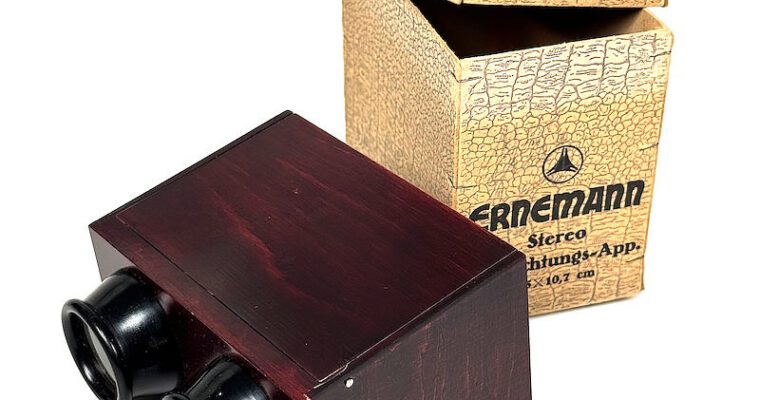
The box-type stere­o­scopes pro­duced by Erne­mann are char­ac­terised in par­tic­u­lar by their dis­tinc­tive bur­­gundy-coloured hous­ing. The view­er was avail­able in a wide range of for­mats: 45 x 107, 6 x 13, 8.5 x 17, 9 x 12, 9 x 14, 9 x 18, 10 x 15 

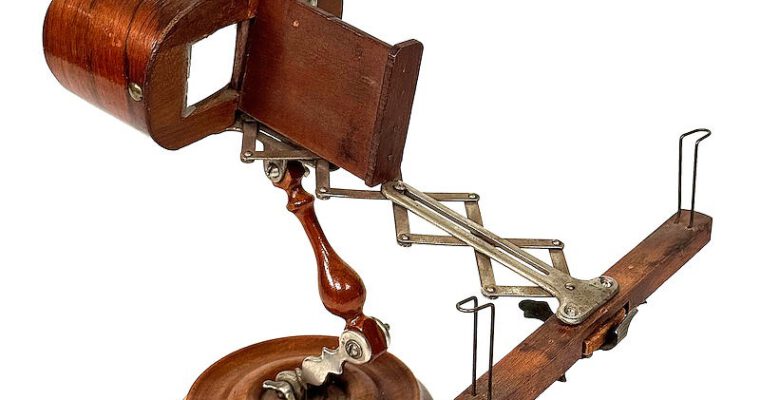
Holmes Stereoscope ‘Lazy Tong’ on Cremer Stand

Holmes Stereoscope ‘Lazy Tong’ on Cremer Stand

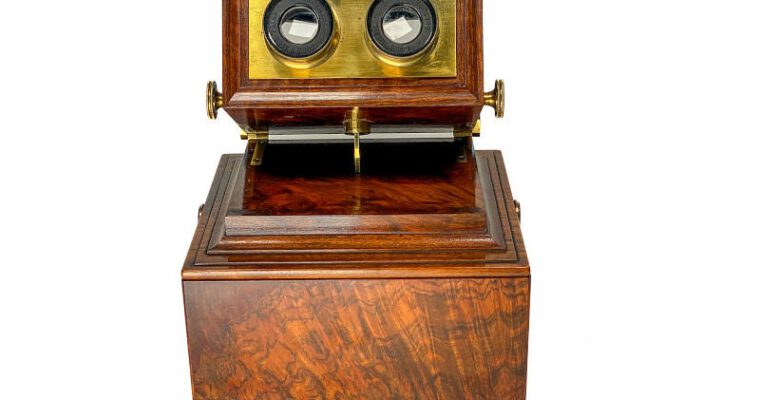
James Cremer’s patent describes a stand for a stere­o­scope with adjustable height and view­ing angle. The stand improves view­ing com­fort. (from: Com­pendi­um of Stereoscopes)

Brewster Stereoscope, Claudet Patent, Prismatic Lenses with Storage Box

Brewster Stereoscope, Claudet Patent, Prismatic Lenses with Storage Box

A Brew­ster-type stere­o­scope is a refract­ing hand-held stere­o­scope intro­duced by David Brew­ster in 1849. The device was lat­er devel­oped into a view­er with an enclosed hous­ing. This mod­i­fi­ca­tion occurred large­ly in response to the use of daguerreo­type stere­oviews, which exhib­it­ed high sur­face reflec­tiv­i­ty and there­fore 

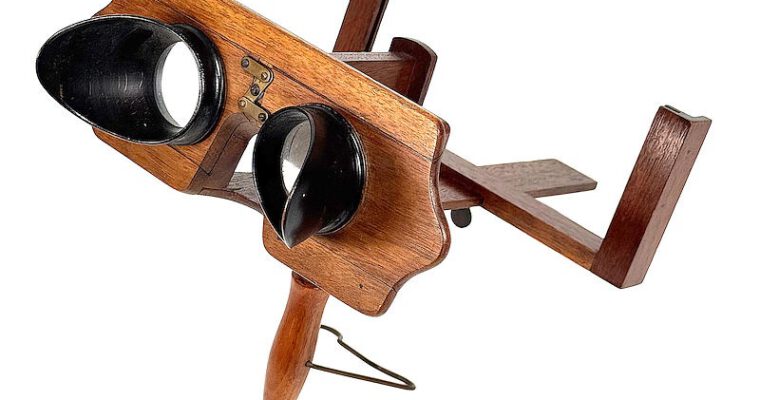
Holmes Stereoscope of French/German Toy Brand

Holmes Stereoscope of French/German Toy Brand

Georges Carette was a French toy man­u­fac­tur­er. Through his mar­riage to a Ger­man woman, he set­tled in Ger­many. He ini­tial­ly worked as a sales agent for Bing, but found­ed his own com­pa­ny in Nürn­berg in 1886. Carette is main­ly known for man­u­fac­tur­ing tin toys, but 

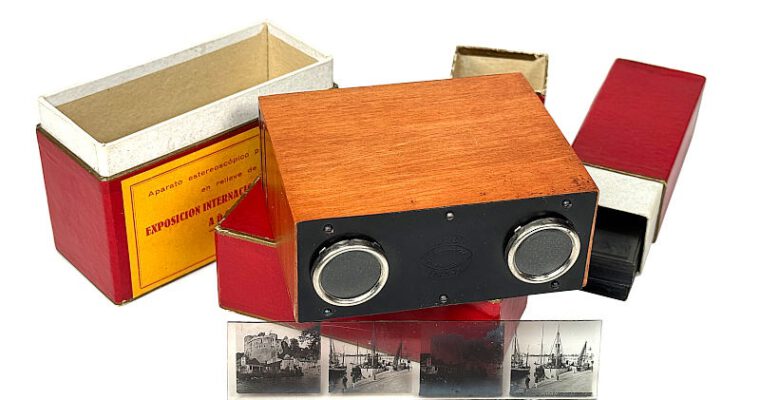
Stereoscope ‘Mignoscope’, International Exhibition Barcelona 1929

Stereoscope ‘Mignoscope’, International Exhibition Barcelona 1929

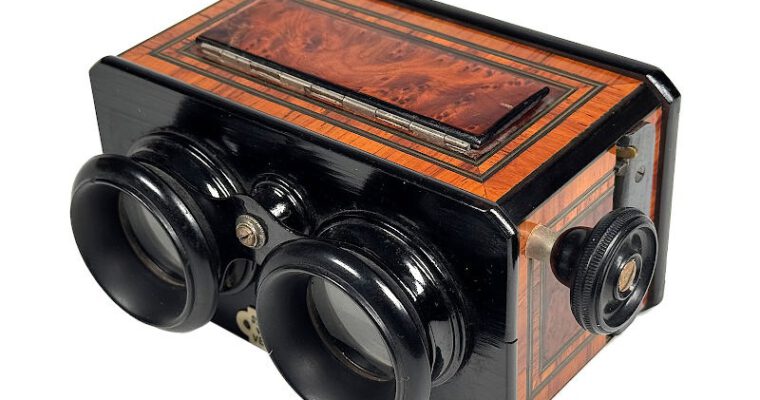
The Migno­scope was dis­trib­uted by Mat­tey under the Unis France label, but is not list­ed in the company’s cat­a­logues. The view­er is a vari­ant of the Alter­nascope and essen­tial­ly con­sists of the Alternascope’s lens pan­el with­out the wood­en stand. The view­er was designed to accom­mo­date wide 

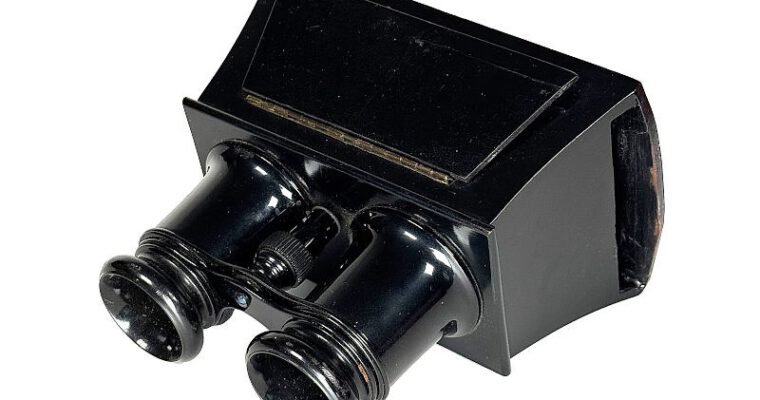
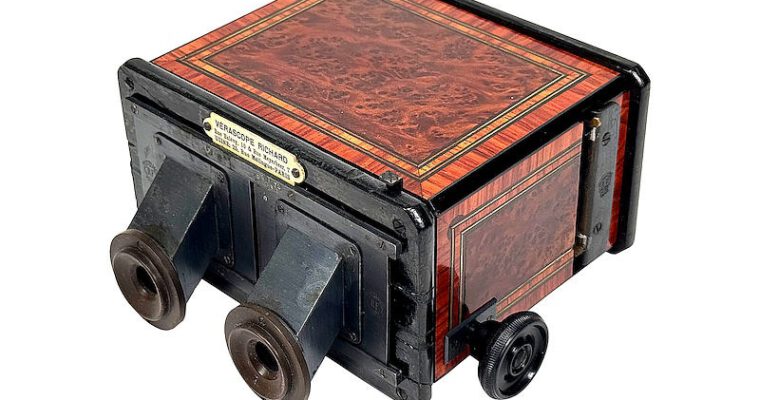
Prism Stereoscope ‘Stéréoscope redresseur, modèle extra-riche’, Luxe

Prism Stereoscope ‘Stéréoscope redresseur, modèle extra-riche’, Luxe

The Stéréo­scope redresseur makes it pos­si­ble to cor­rect­ly view stere­oviews that have not been trans­posed. The view­er achieves this by means of two types of prism lens­es. This com­bi­na­tion pro­duces a lat­er­al cor­rec­tion (left–right rever­sal) of the images. It per­forms the same func­tion as swap­ping 

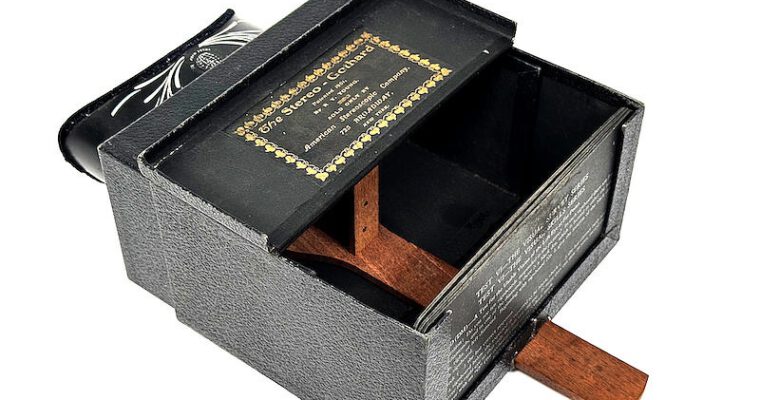
Holmes Stereoscope ‘The Stereo-Gothard’

Holmes Stereoscope ‘The Stereo-Gothard’

The Amer­i­can Stereo­scop­ic Com­pa­ny got the idea to com­bine the ease-of-use of the Holmes stere­o­scope design with the light-block­­ing ben­e­fits of the closed-box Brew­ster design and patent­ed this Stereo- Gothard Attach­ment in 1901. You could buy this attach­ment as an add-on for a Holmes-style stere­o­scope 

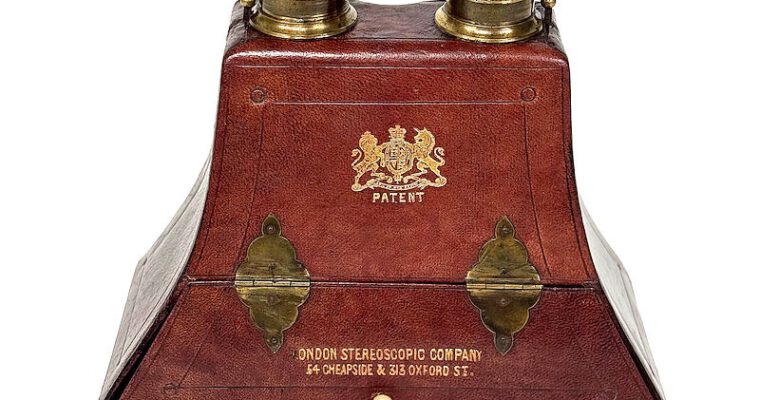
Brewster Stereoscope, Claudet Patent, Cooke Patent, Morrocan Leather, Luxe

Brewster Stereoscope, Claudet Patent, Cooke Patent, Morrocan Leather, Luxe

A Brew­ster-type stere­o­scope is a refract­ing hand-held stere­o­scope intro­duced by David Brew­ster in 1849. The device was lat­er devel­oped into a view­er with an enclosed hous­ing. This mod­i­fi­ca­tion occurred large­ly in response to the use of daguerreo­type stere­oviews, which exhib­it­ed high sur­face reflec­tiv­i­ty and there­fore 

Boxed Stereoscope ‘The Achromatic Stereoscope’, Exclusive Version

Boxed Stereoscope ‘The Achromatic Stereoscope’, Exclusive Version

The Achro­mat­ic Table Stere­o­scope is designed for view­ing paper and glass stere­oviews. The base plate of the view­er folds into a stor­age box that also func­tions as a stand. When stored, the base plate forms the cov­er of the box and is secured by two locks. 

Chain-Stereoscope ‘Américain, à court foyer’, Ronce de Thuya, Short Focus

Chain-Stereoscope ‘Américain, à court foyer’, Ronce de Thuya, Short Focus

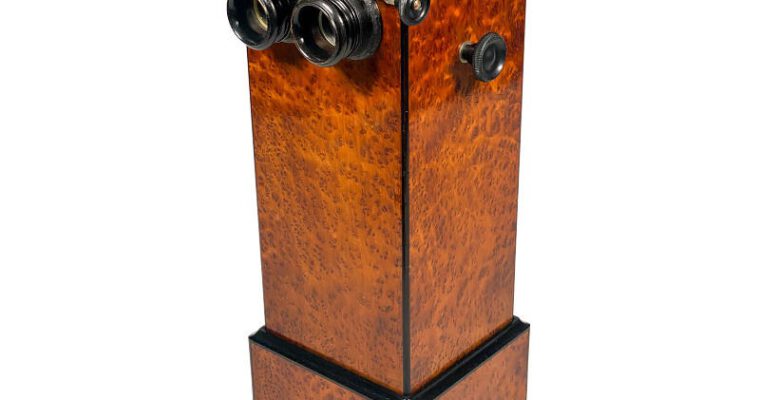
This Amer­i­can inter­change­able-chain, short-focus stere­o­scope has a dis­tinc­tive con­struc­tion, par­tic­u­lar­ly in its chain mech­a­nism. Unlike ear­li­er mod­els that used wire chains, it employs stamped and cut met­al frames that form a per­fect bor­der around the pho­to­graph­ic image. Since these frames are the same dimen­sions as