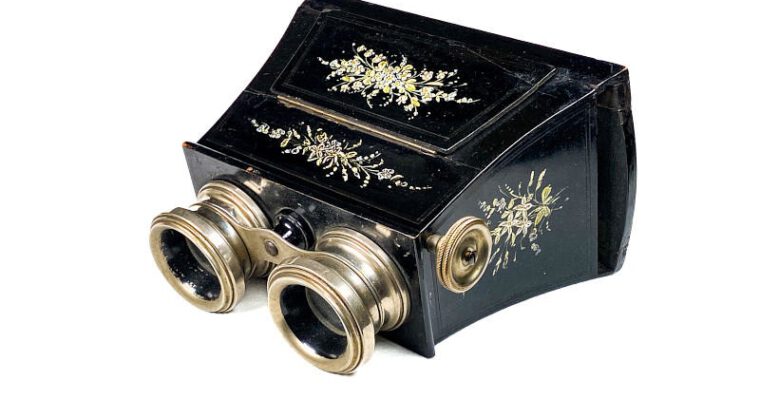
Archives: Museum Objects
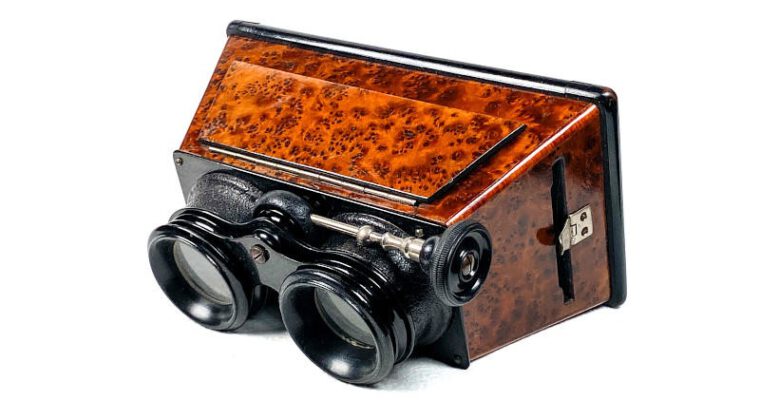
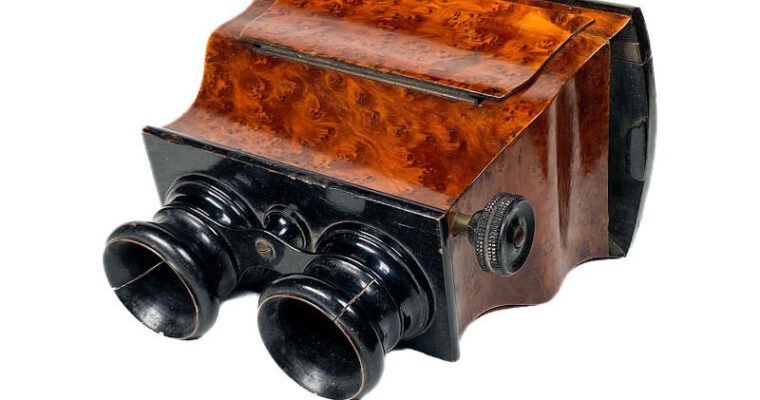
Stereoscope ‘corps de jumelle’, Ronce de Thuya
Further reading: Stereoscopy History Series — Mattey (A. Ruiter)
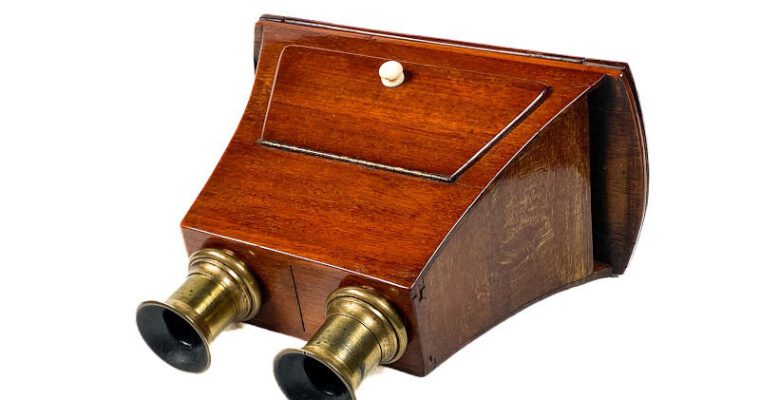
Brewster Stereoscope, Foldable Back
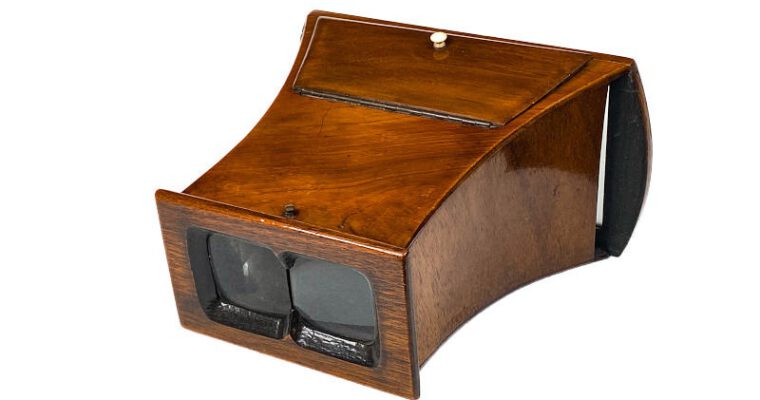
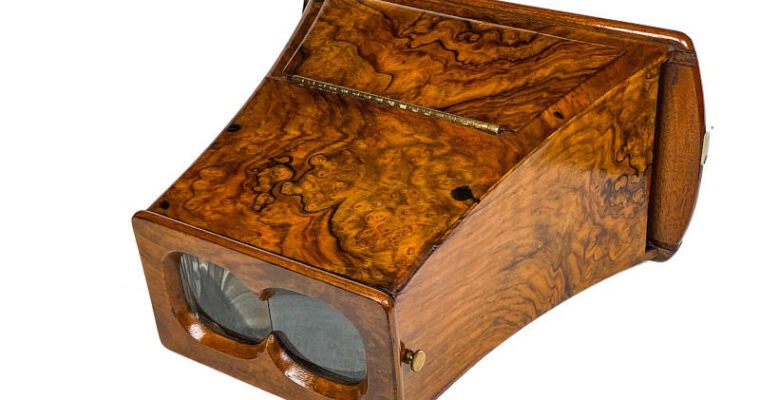
A Brewster-type stereoscope is a refracting hand-held stereoscope introduced by David Brewster in 1849. The device was later developed into a viewer with an enclosed housing. This modification occurred largely in response to the use of daguerreotype stereoviews, which exhibited high surface reflectivity and therefore …
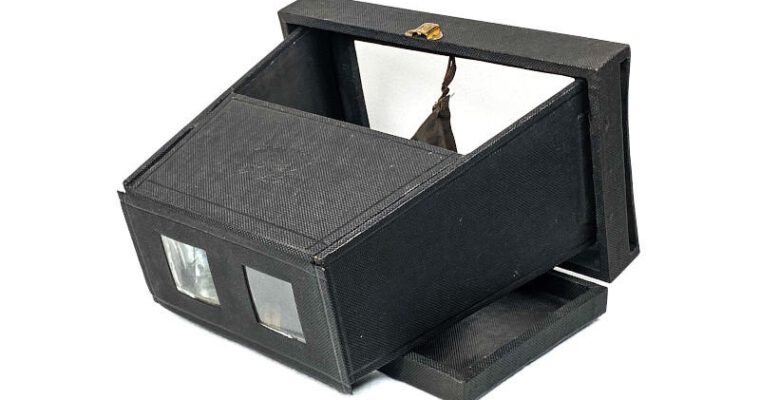
Foldable Stereoscope
Eugène Hanau was a manufacturer of cameras and a publisher of stereoviews. In 1879, he acquired the publishing business of Jules Marinier. Hanau produced both conventional cameras and stereo cameras. From 1901, the business continued under the name E. Hanau et fils. Hanau used the initials …
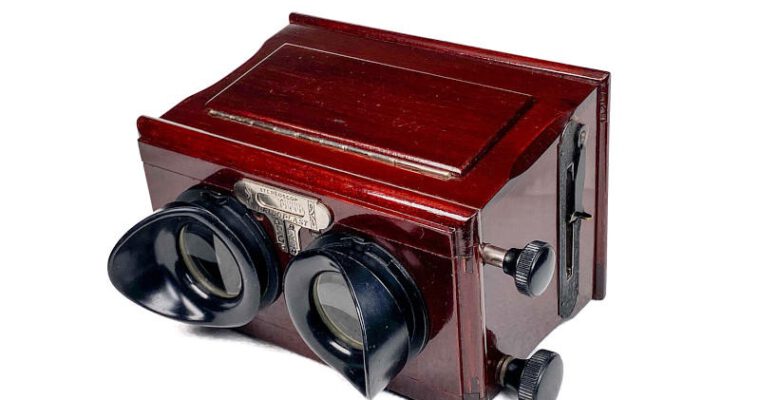
Stereoscope ‘Stereoscop Heidoplast’
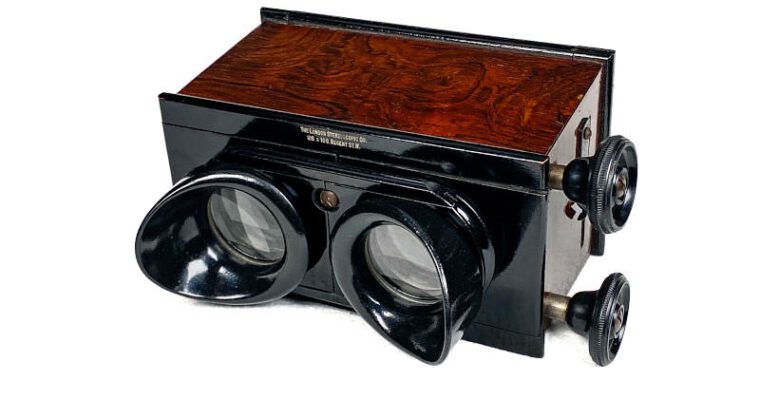
Heidoplast was a trademark for stereoscopes of Franke & Heidecke. The stereoscope was intended for the Heidoscop stereo camera of the company. The Heidoplast stereoscope was a rebranded French Planox stereoscope. (from: Compendium of Stereoscopes)
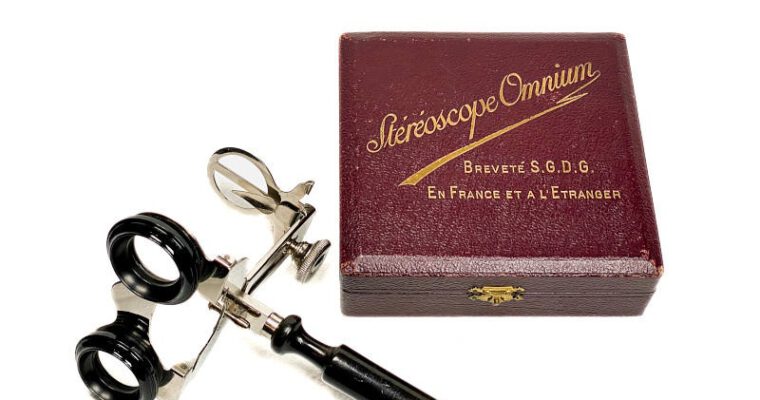
Stereoscope ‘Omnium’
L’Omnium is a foldable pocket stereoscope. The lens panel and the stereoview holder are collapsible, and the handgrip can be unscrewed from the viewing section. When disassembled, the components can be stored in a case, typically finished in burgundy or black. (from: Compendium of Stereoscopes) Further …
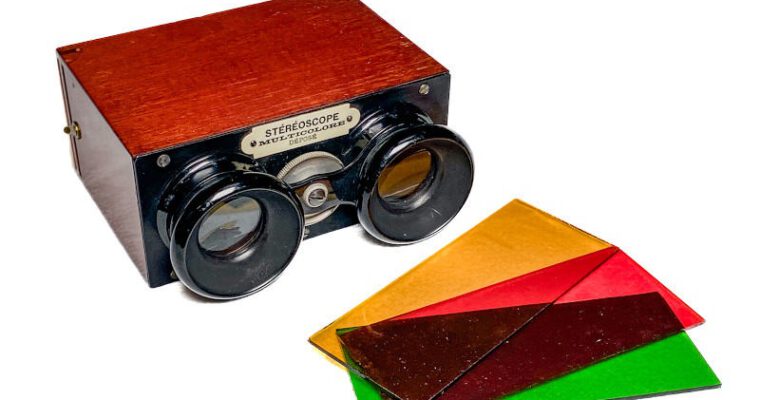
Stereoscope ‘Multicolore’
The Multicolore is supplied with colour filters to alter the tint of glass stereoviews during viewing. The black front panel—with the focus knob positioned between the lenses—is identical to that of Lucien Bize’s Minimus. This construction appears to be a distinctive feature of Bize’s stereoscopes. …
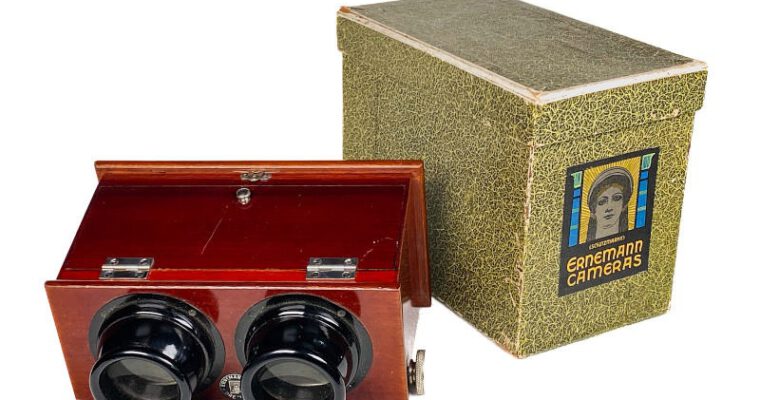
Stereoscope with Original Storage Box
The box-type stereoscopes produced by Ernemann are characterised in particular by their distinctive burgundy-coloured housing. The viewer was available in a wide range of formats: 45 x 107, 6 x 13, 8.5 x 17, 9 x 12, 9 x 14, 9 x 18, 10 x 15 …