Museum Tag: multiview

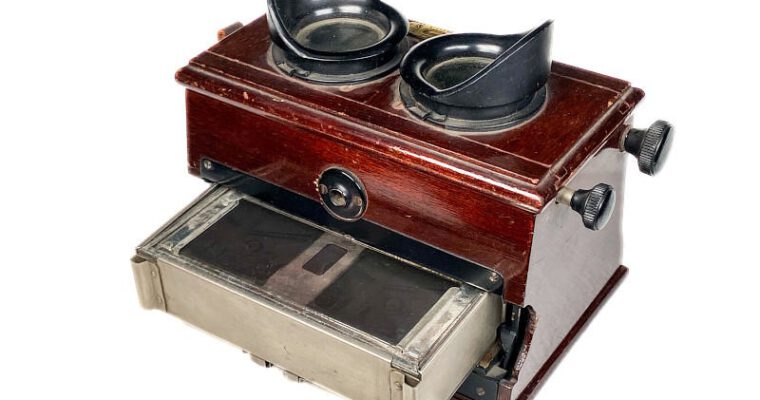
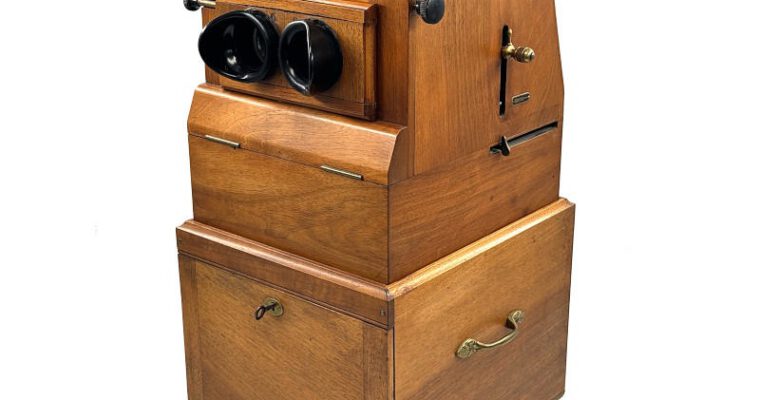
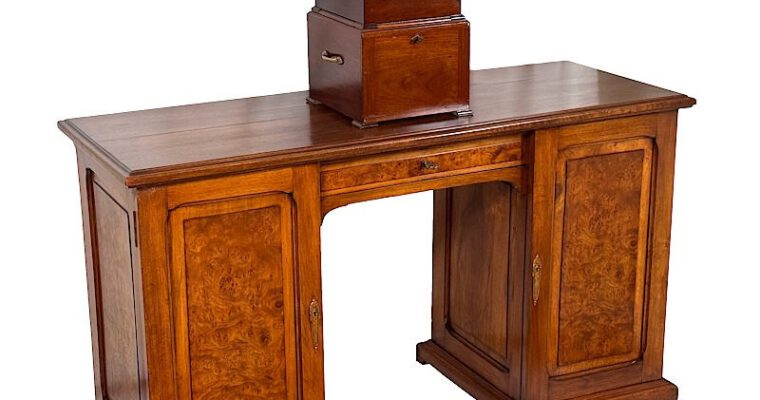
Tray-Stereoscope ‘Planox’ with Special Storage Desk containing its Original Photo Collection

Tray-Stereoscope ‘Planox’ with Special Storage Desk containing its Original Photo Collection

A wood­en tray con­tain­ing 20 glass slides can be insert­ed by flip­ping down the front of the view­er, then, by mov­ing a knob, locat­ed on the right side, up and down, one slide after anoth­er can be exam­ined. The slides are pulled up by mag­nets 

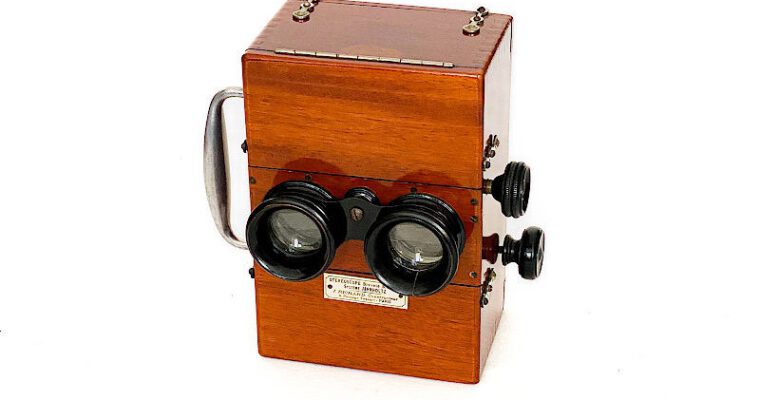
Tray-Stereoscope ‘Planox Apéscope’

Tray-Stereoscope ‘Planox Apéscope’

The Apés­cope is one of the few hand-held mul­ti-view stere­o­scopes and a late devel­op­ment, pro­duced at a time when stere­oscopy was in decline. A mag­a­zine con­tain­ing 12 glass stere­oviews can be insert­ed into the view­er from below. By push­ing a draw upwards, a slide is 

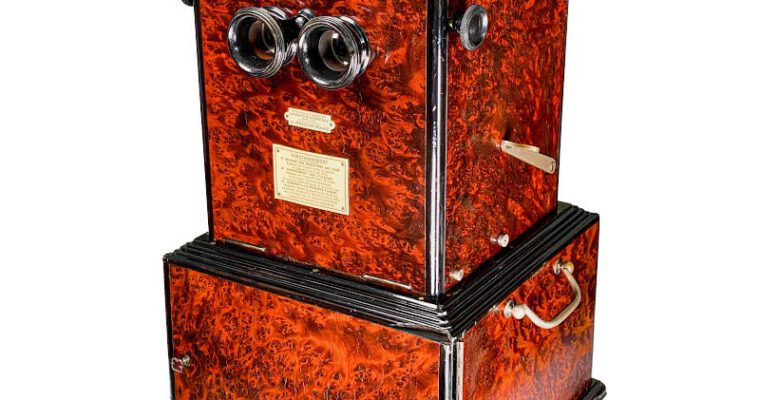
Stereoscope ‘Systeme Jahnholtz’

Stereoscope ‘Systeme Jahnholtz’

After the fixed-chain mod­els came the push-and-pull stere­o­scope, in which the views pass from the sup­ply mag­a­zine to the receiv­ing mag­a­zine after a view­ing peri­od, thanks to a chang­ing rod. This sys­tem was invent­ed by Her­­mann-Marie-Camille Jahn­holtz, who filed patent FR 280.799 on August 23, 

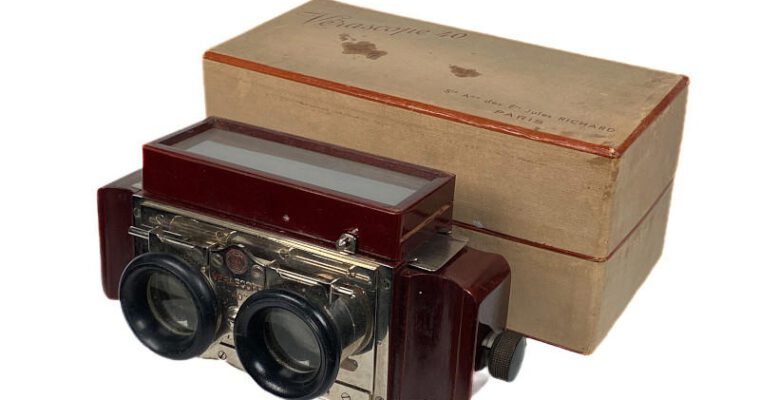
Rollfilm-Stereoscope ‘Verascope 40’, First Model, with Original Storage Box

Rollfilm-Stereoscope ‘Verascope 40’, First Model, with Original Storage Box

The revers­ing stere­o­scope for the Véras­cope F40 was intro­duced in 1951. It is made of var­nished mahogany and was spe­cial­ly designed for exposed 35 mm film used with the F40, with which it shares the same film-advance syn­chro­niza­tion sys­tem. Its revers­ing sys­tem uses roof prisms. 

Tray-Stereoscope ‘Stéréo-Classeur’, Luxe

Tray-Stereoscope ‘Stéréo-Classeur’, Luxe

A bake­lite tray con­tain­ing 25 glass slides can be insert­ed by flip­ping down the front of the view­er. Then, by depress­ing the lever on the right side of the hous­ing, one slide after anoth­er can be exam­ined. On the left side of the view­er, there 

Tray-Stereoscope ‘Stéréo-Auto-Classeur “Astra“ ‘

Tray-Stereoscope ‘Stéréo-Auto-Classeur “Astra“ ‘

L’Astra is the largest of Bize’s designs. The slide tray mech­a­nism of L’Astra dif­fers from typ­i­cal stere­o­scopes. Instead of a tray car­riage mov­ing over a rail, L’Astra uses a gear sys­tem embed­ded in the base plate, with the tray fea­tur­ing grooves. The rotat­ing gear moves 

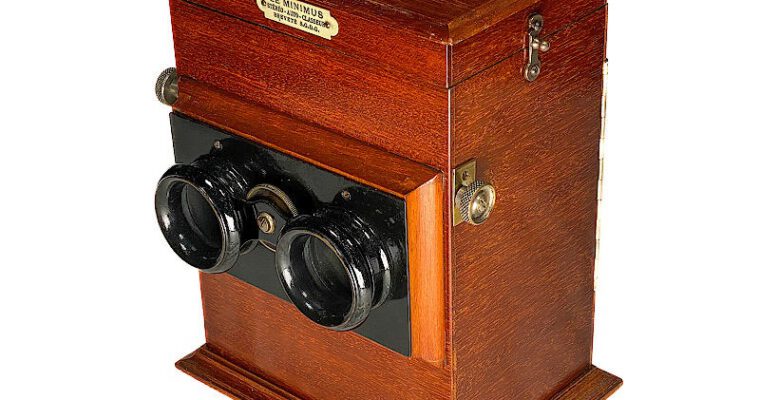
Stereoscope ‘Le Minimus’

Stereoscope ‘Le Minimus’

Le Min­imus is a com­pact man­u­al mul­ti-view stere­o­scope that holds 24 glass slides. Turn­ing the knobs on the sides moves the front pan­el out­ward, allow­ing a slide to drop into posi­tion before the lens­es. Fur­ther rota­tion trans­fers the viewed slide to a stor­age com­part­ment below, 

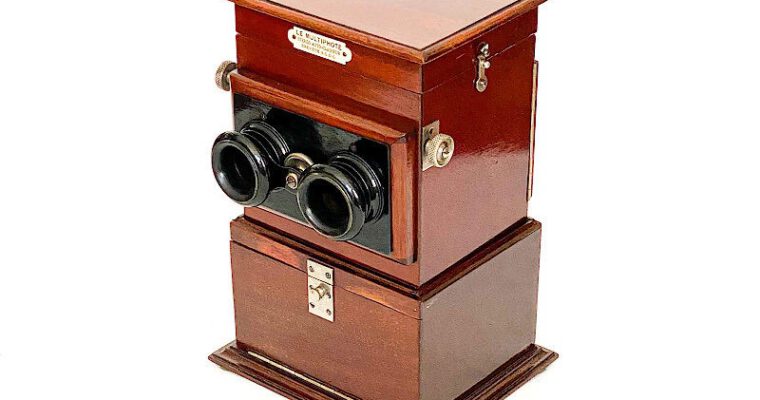
Stereoscope ‘Le Multiphote’

Stereoscope ‘Le Multiphote’

Le Mul­ti­phote is a man­u­al mul­ti-view stere­o­scope designed for 24 glass slides. Turn­ing the knobs on the sides moves the front pan­el out­ward, allow­ing a slide to drop into posi­tion before the lens­es. Fur­ther rota­tion trans­fers the viewed slide into a detach­able tray in the 

Tray-Stereoscope ‘Magazin Stereobetrachter’

Tray-Stereoscope ‘Magazin Stereobetrachter’

The Mag­a­zin-stere­o­be­­tra­chter was the only tray-based stere­o­scope pro­duced by Erne­mann. The device is com­pact rel­a­tive to view­ers equipped with a mul­ti-view mech­a­nism. (from: Com­pendi­um of Stereoscopes)

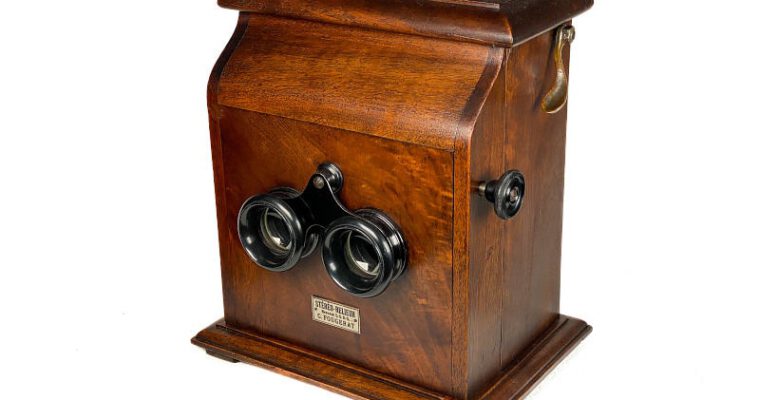
Leporello-Stereoscope ‘Stéréo-Relieur’

Leporello-Stereoscope ‘Stéréo-Relieur’

This rare stere­o­scope was like­ly a mod­est suc­cess in France. How­ev­er, the patent­ed design by Charles Fouger­at was also applied in Ger­many by ICA in the much bet­ter-known Stere­ospekt. (from: Com­pendi­um of Stereoscopes)

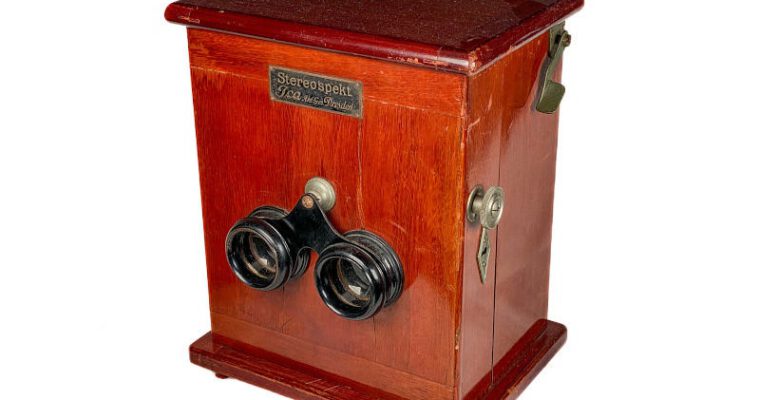
Leporello-Stereoscope ‘Stereospekt’

Leporello-Stereoscope ‘Stereospekt’

The glass slides are mount­ed in a met­al har­mon­i­ca belt that can hold up to twelve slides. Instruc­tions on how to posi­tion the belt in the device are print­ed on the top. The slides are firm­ly clamped in frames, sug­gest­ing that they were intend­ed to 

Tray-Stereoscope ‘Planox’, Second Version

Tray-Stereoscope ‘Planox’, Second Version

A bake­lite tray con­tain­ing 20 glass slides can be insert­ed by flip­ping down the front of the view­er, then, by mov­ing a knob, locat­ed on the right side, up and down, one slide after anoth­er can be exam­ined. The slides are pulled up by mag­nets