Museum Tag: boxsliding

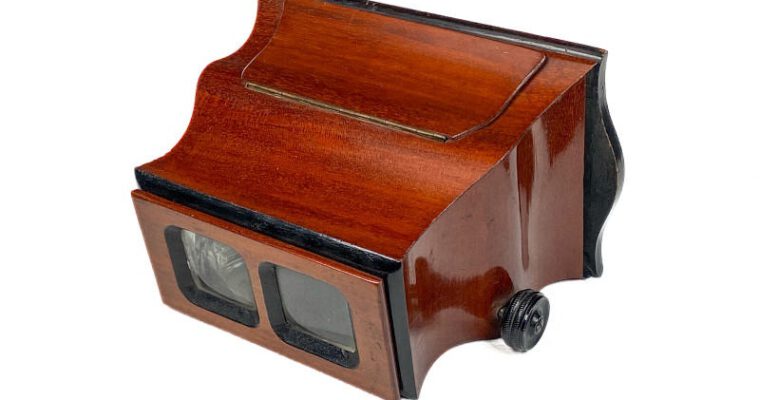
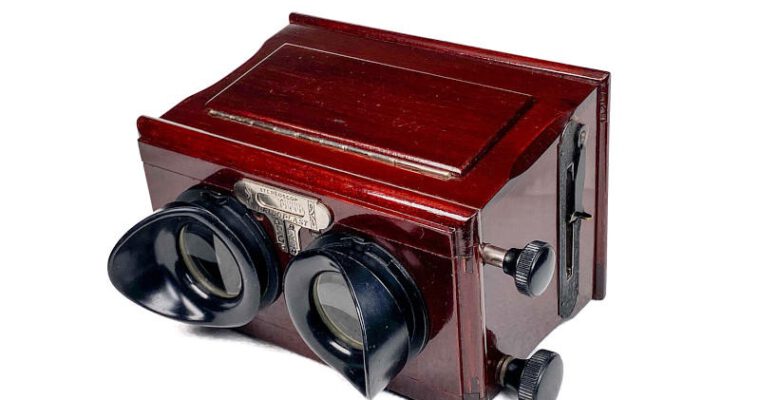
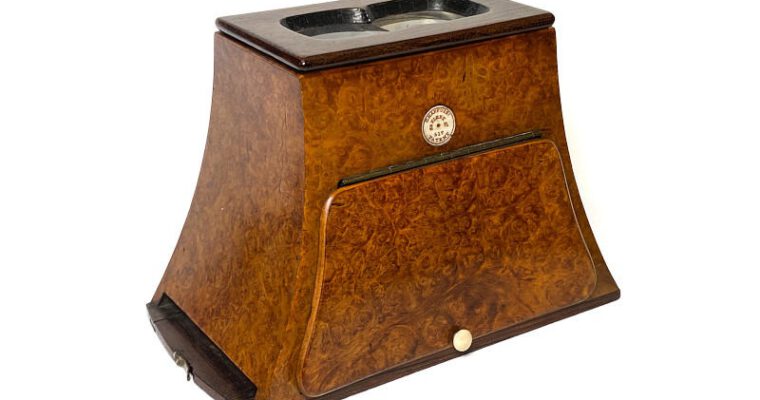
Brewster Stereoscope, Burl Walnut, Short Focus, Prismatic Lenses

Brewster Stereoscope, Burl Walnut, Short Focus, Prismatic Lenses

Paul Émile Chap­puis, who was born in France, moved to Lon­don to estab­lish a pho­to­graph­ic stu­dio. In 1857, he intro­duced a mir­ror in the hinged lid of the stere­o­scope, allow­ing reflect­ed light to be direct­ed into the view­er. This elim­i­nat­ed the need to tilt the 

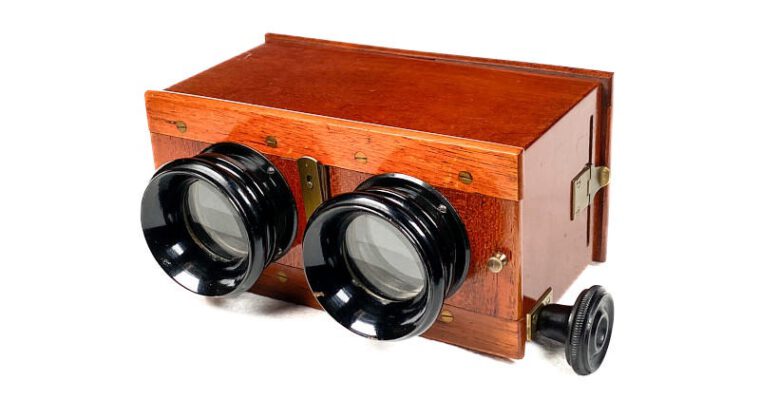
Stereoscope ‘forme droite’

Stereoscope ‘forme droite’

The stere­o­scope is rel­a­tive­ly large and fea­tures a focus­ing knob on the under­side. After loos­en­ing the knob, focus is adjust­ed by slid­ing the stere­oview hold­er. The lens pan­el is posi­tioned deep with­in the device, while the wood­en hous­ing reduces inci­dent light. Large side shields fur­ther 

Stereoscope ‘Stereoscop Heidoplast’

Stereoscope ‘Stereoscop Heidoplast’

Hei­do­plast was a trade­mark for stere­o­scopes of Franke & Hei­decke. The stere­o­scope was intend­ed for the Hei­do­scop stereo cam­era of the com­pa­ny. The Hei­do­plast stere­o­scope was a rebrand­ed French Planox stere­o­scope. (from: Com­pendi­um of Stereoscopes)

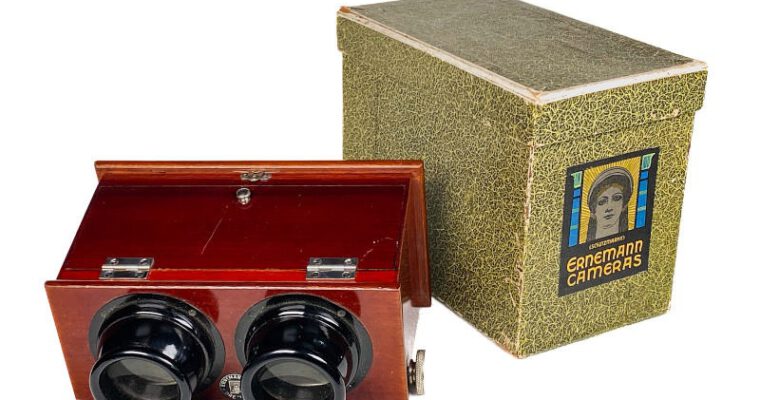
Stereoscope with Original Storage Box

Stereoscope with Original Storage Box

The box-type stere­o­scopes pro­duced by Erne­mann are char­ac­terised in par­tic­u­lar by their dis­tinc­tive bur­­gundy-coloured hous­ing. The view­er was avail­able in a wide range of for­mats: 45 x 107, 6 x 13, 8.5 x 17, 9 x 12, 9 x 14, 9 x 18, 10 x 15 

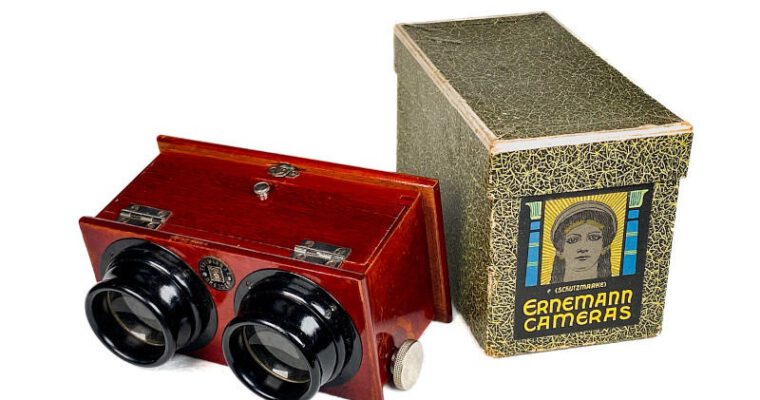
Stereoscope with Original Storage Box

Stereoscope with Original Storage Box

The box-type stere­o­scopes pro­duced by Erne­mann are char­ac­terised in par­tic­u­lar by their dis­tinc­tive bur­­gundy-coloured hous­ing. The view­er was avail­able in a wide range of for­mats: 45 x 107, 6 x 13, 8.5 x 17, 9 x 12, 9 x 14, 9 x 18, 10 x 15 

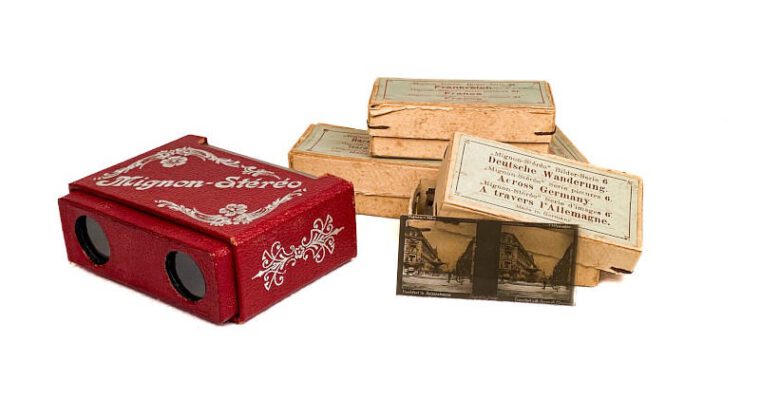
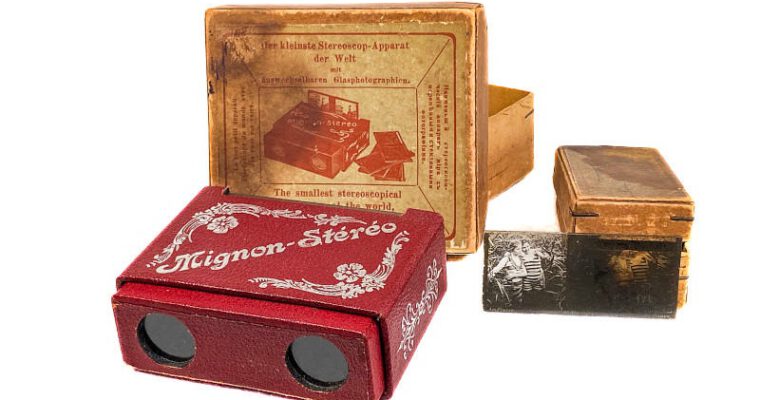
Stereoscope ‘Mignon-Stéréo’ with Four Image Sets

Stereoscope ‘Mignon-Stéréo’ with Four Image Sets

The name sug­gests that it is a French stere­o­scope, but the Mignon-Stéréo is of Ger­man man­u­fac­ture. The device is intend­ed for small 3 x 6.5 cm glass stere­oviews that were made specif­i­cal­ly for this view­er. The Mignon-Stéréo was mar­ket­ed as The small­est stereo­scop­i­cal appa­ra­tus of 

Stereoscope ‘Mignon-Stéréo’ with Original Storage Box and Image Set

Stereoscope ‘Mignon-Stéréo’ with Original Storage Box and Image Set

The name sug­gests that it is a French stere­o­scope, but the Mignon-Stéréo is of Ger­man man­u­fac­ture. The device is intend­ed for small 3 x 6.5 cm glass stere­oviews that were made specif­i­cal­ly for this view­er. The Mignon-Stéréo was mar­ket­ed as The small­est stereo­scop­i­cal appa­ra­tus of 

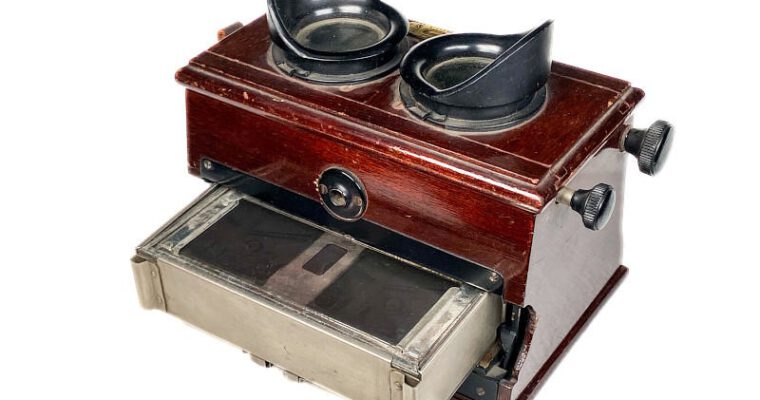
Tray-Stereoscope ‘Planox Apéscope’

Tray-Stereoscope ‘Planox Apéscope’

The Apés­cope is one of the few hand-held mul­ti-view stere­o­scopes and a late devel­op­ment, pro­duced at a time when stere­oscopy was in decline. A mag­a­zine con­tain­ing 12 glass stere­oviews can be insert­ed into the view­er from below. By push­ing a draw upwards, a slide is