Museum Tag: 85x17cm

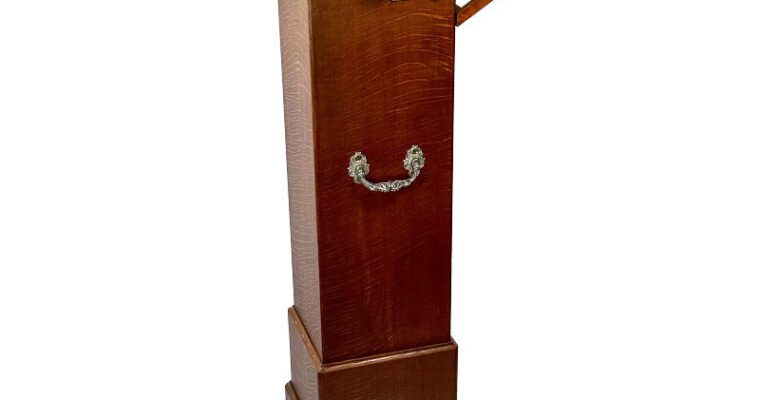
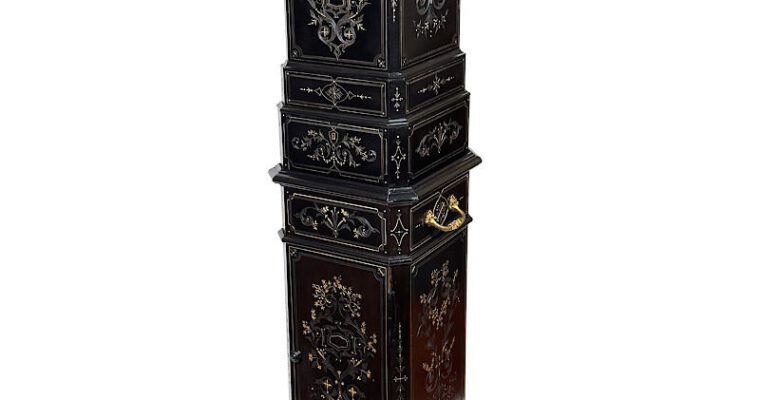
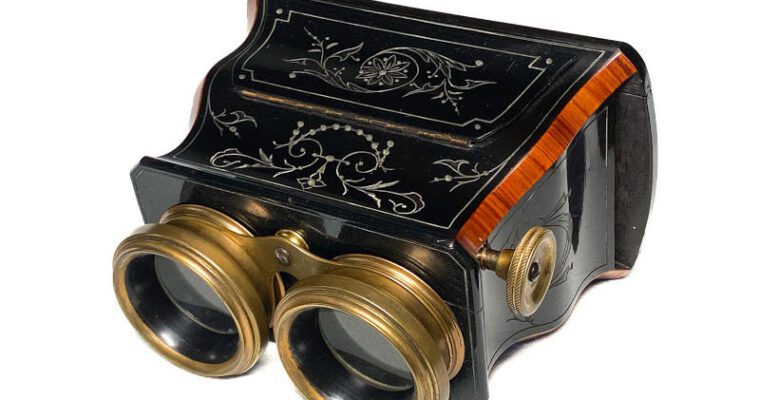
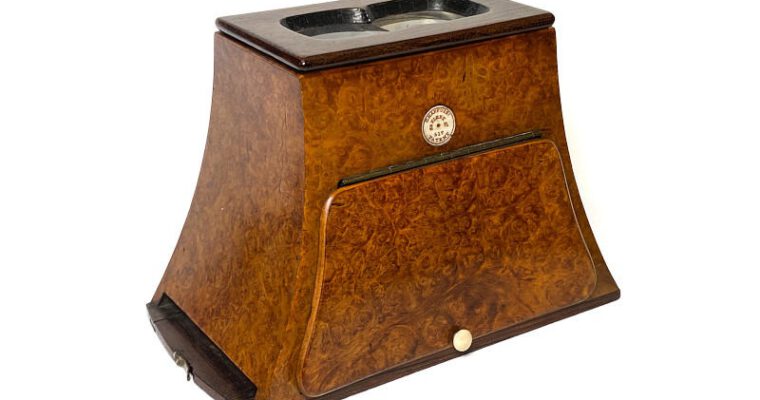
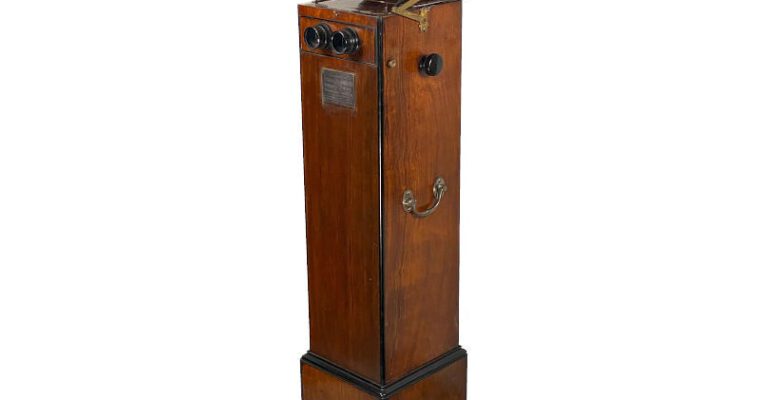
Chain-Stereoscope ‘Stéréo-Mégascope’ with Graphoscope and Dedication Plate

Chain-Stereoscope ‘Stéréo-Mégascope’ with Graphoscope and Dedication Plate

The Stéréo-Mégas­­cope com­bines the advan­tages of a chain-based stere­o­scope with those of a graphoscope/pantoscope, allow­ing detailed view­ing of mono images such as CDVs or cab­i­net cards through a large mag­ni­fi­ca­tion lens. To achieve this, an addi­tion­al large lens is mount­ed on top of the com­mon floor-stand 

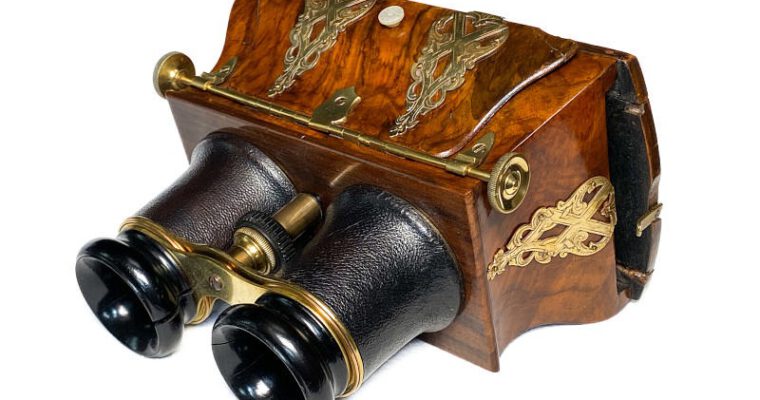
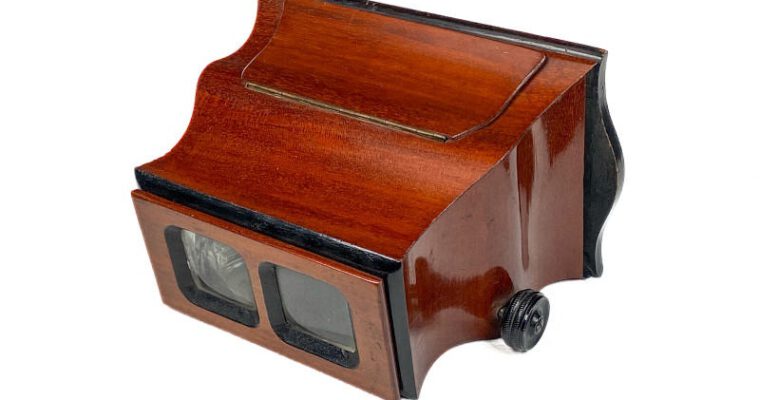
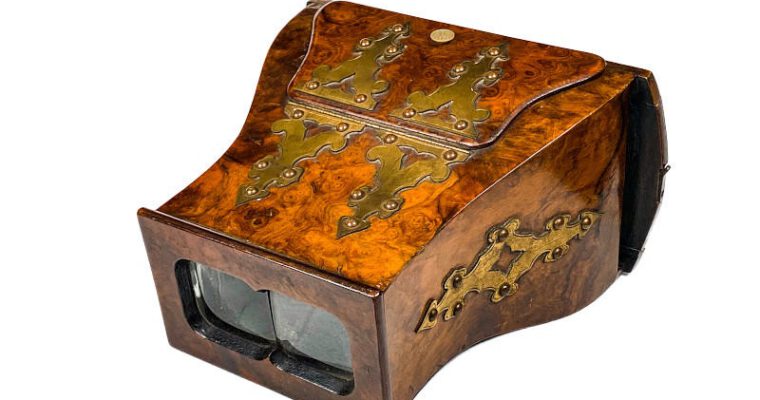
Brewster Stereoscope, Burl Walnut, Short Focus, Prismatic Lenses

Brewster Stereoscope, Burl Walnut, Short Focus, Prismatic Lenses

Paul Émile Chap­puis, who was born in France, moved to Lon­don to estab­lish a pho­to­graph­ic stu­dio. In 1857, he intro­duced a mir­ror in the hinged lid of the stere­o­scope, allow­ing reflect­ed light to be direct­ed into the view­er. This elim­i­nat­ed the need to tilt the 

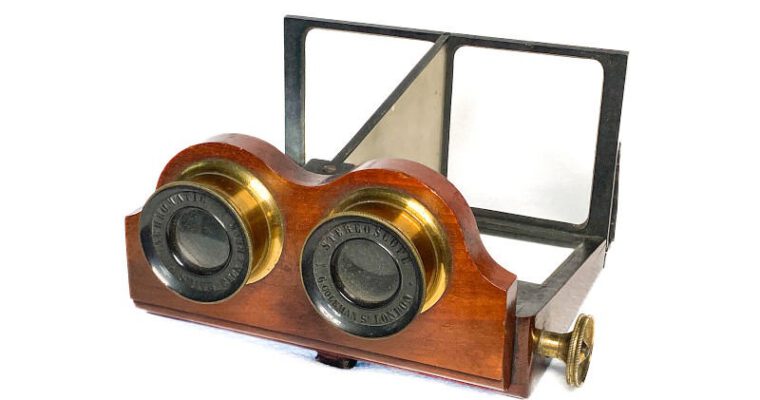
Stereoscope ‘Patent Achromatic Mirror Stereoscope’

Stereoscope ‘Patent Achromatic Mirror Stereoscope’

The Achro­mat­ic Mir­ror Stere­o­scope was spe­cial­ly designed for view­ing paper stere­oviews that were mount­ed in a book. It is an open view­er with a mir­ror on the base of the device, to which it owes its name. Two achro­mat­ic lens­es are placed in adjustable brass 

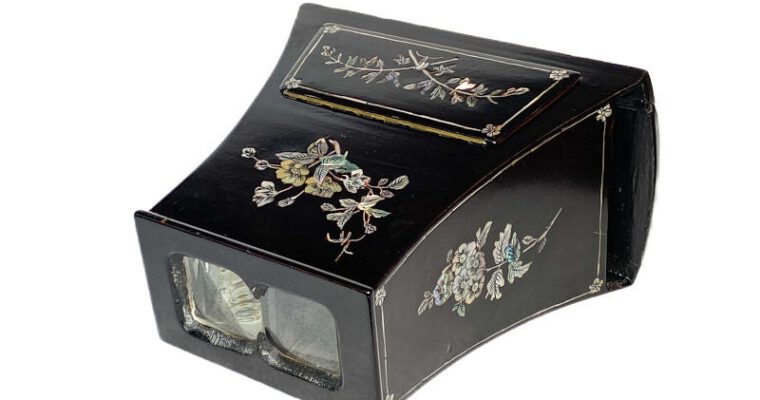
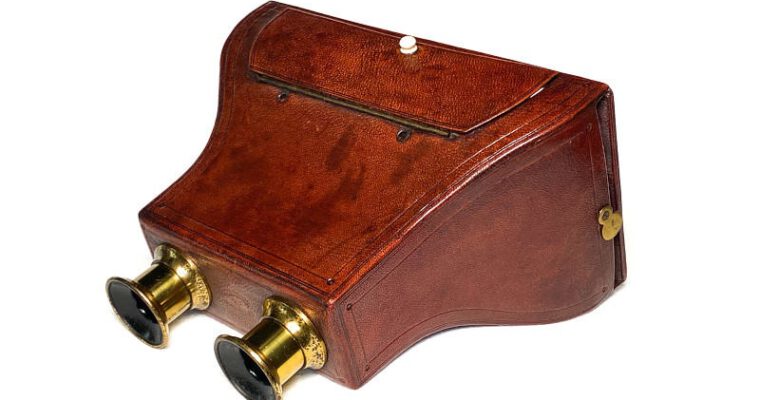
Brewster Stereoscope, Claudet Patent, Morrocan Leather, Luxe

Brewster Stereoscope, Claudet Patent, Morrocan Leather, Luxe

A Brew­ster-type stere­o­scope is a refract­ing hand-held stere­o­scope intro­duced by David Brew­ster in 1849. The device was lat­er devel­oped into a view­er with an enclosed hous­ing. This mod­i­fi­ca­tion occurred large­ly in response to the use of daguerreo­type stere­oviews, which exhib­it­ed high sur­face reflec­tiv­i­ty and there­fore 

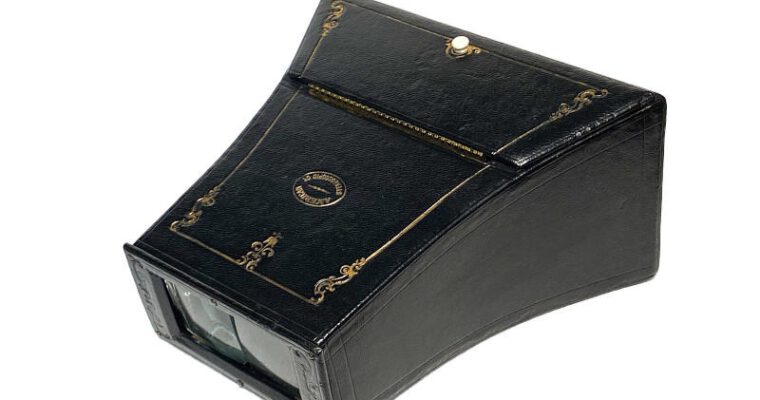
Brewster Stereoscope, Black Leather, Prismatic Lenses

Brewster Stereoscope, Black Leather, Prismatic Lenses

The broth­ers Fred­er­ick and William Lan­gen­heim were of Ger­man ori­gin. In 1848 they were reg­is­tered with a pho­to­graph­ic stu­dio in Philadel­phia. They pro­duced daguerreo­types and had also acquired a licence to apply the calo­type process. From 1854 onward, the Lan­gen­heim broth­ers began pro­duc­ing and dis­trib­ut­ing