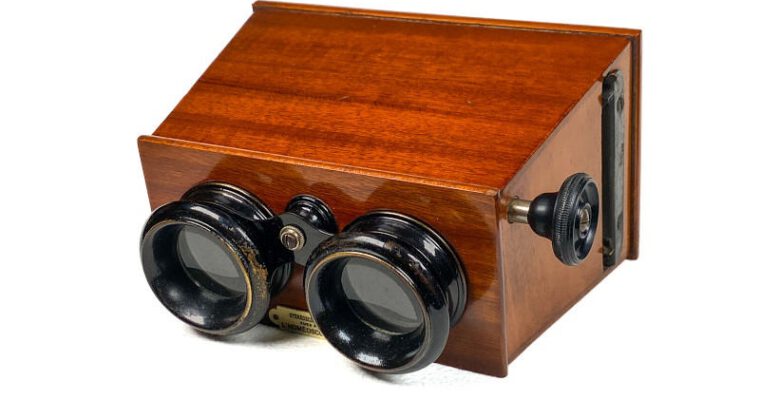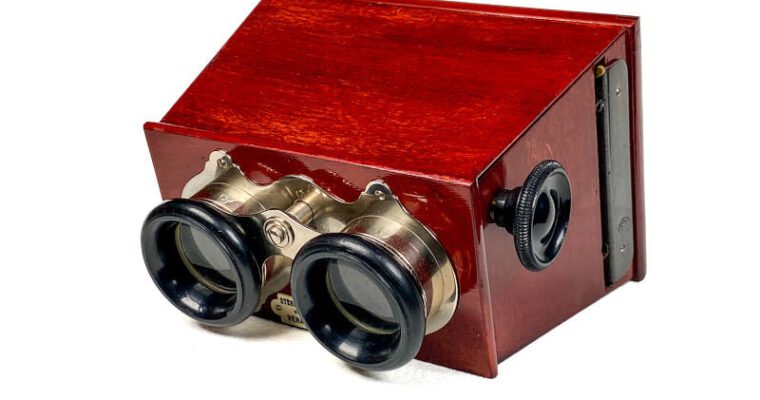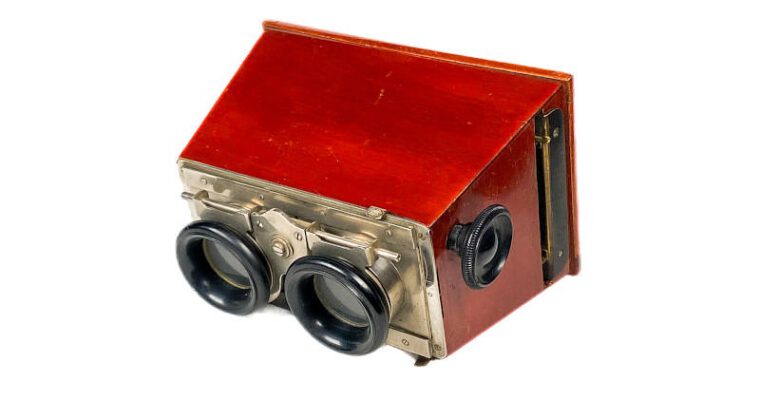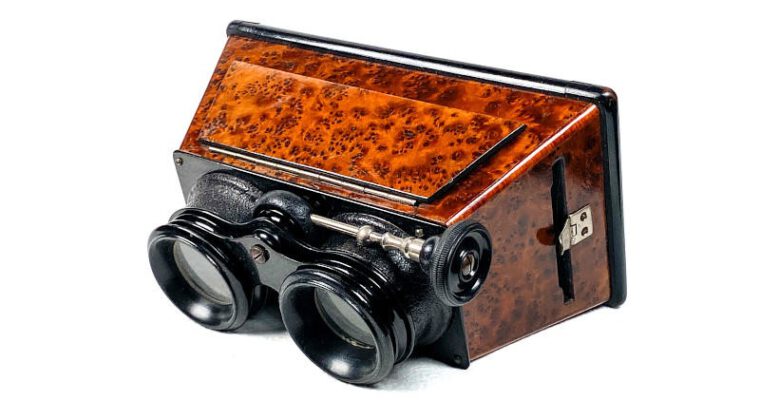
Stereoscope ‘corps de jumelle’, Ronce de Thuya
Further reading: Stereoscopy History Series — Mattey (A. Ruiter)

Further reading: Stereoscopy History Series — Mattey (A. Ruiter)
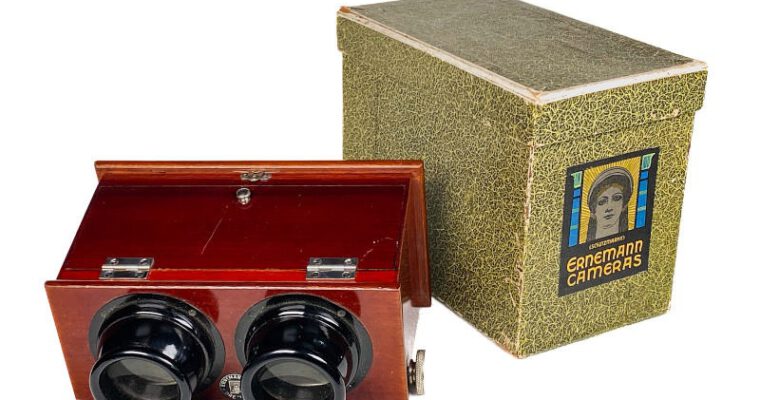
The box-type stereoscopes produced by Ernemann are characterised in particular by their distinctive burgundy-coloured housing. The viewer was available in a wide range of formats: 45 x 107, 6 x 13, 8.5 x 17, 9 x 12, 9 x 14, 9 x 18, 10 x 15 …
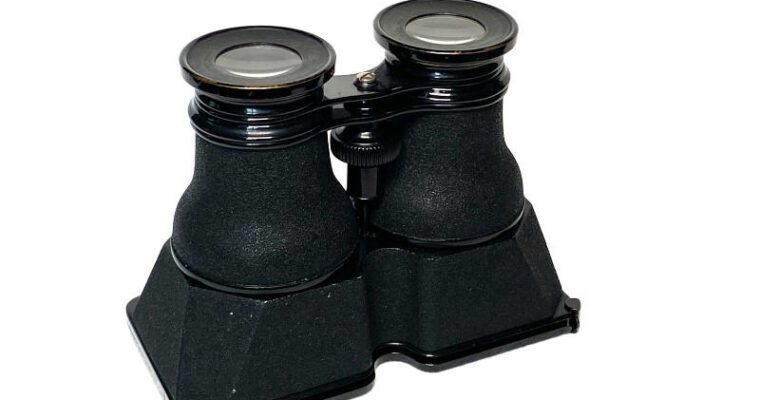
The Stereo-Dioskop is a compact binocular-style stereoscope. The viewer was a commercial success and was also distributed by other German camera manufacturers including ICA, Contessa-Nettel, and Franke & Heidecke. (from: Compendium of Stereoscopes)
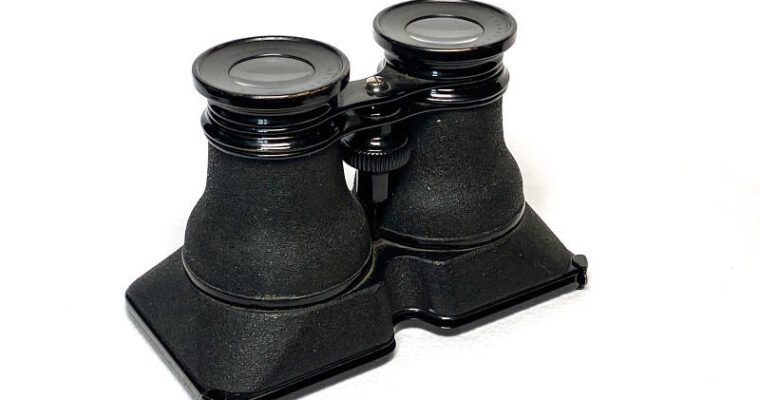
The Stereo-Dioskop is a compact binocular-style stereoscope. The viewer was a commercial success and was also distributed by other German camera manufacturers including ICA, Contessa-Nettel, and Franke & Heidecke. (from: Compendium of Stereoscopes)
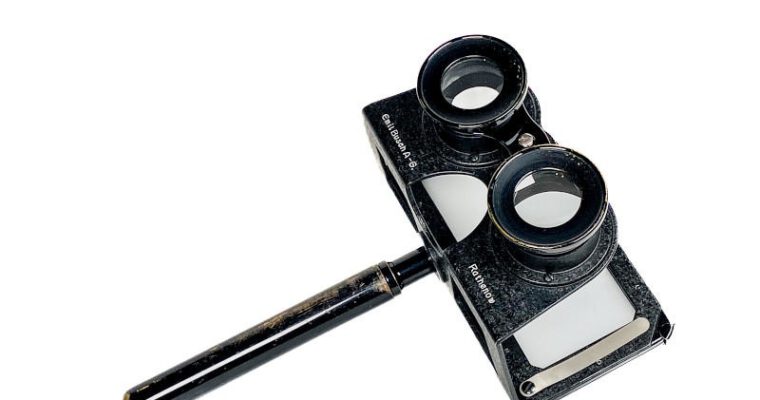
Emil Busch took over the optical firm in Rathenow from his uncle Eduard Duncker in 1845. The company began producing photographic devices from 1852 and became known for high-quality instruments and optics. In 1865, it introduced its newly developed wide-angle lens, the Pantoscop. From 1872, …
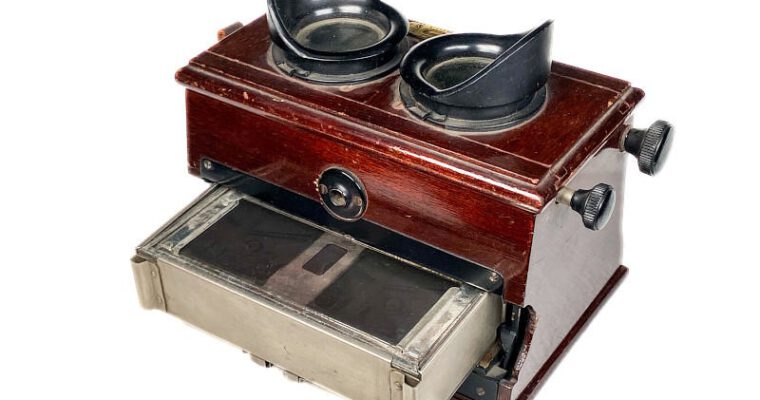
The Apéscope is one of the few hand-held multi-view stereoscopes and a late development, produced at a time when stereoscopy was in decline. A magazine containing 12 glass stereoviews can be inserted into the viewer from below. By pushing a draw upwards, a slide is …
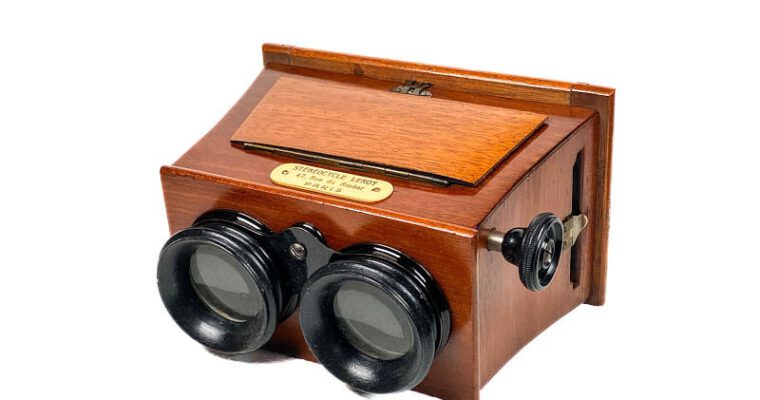
The name Stéreocycle refers to the successful stereo camera introduced in 1897 by Charles Bazin and Lucien Leroy. The commercial success of this camera led to the use of Stéreocycle as a trademark for other products marketed by the Leroy company. The Stéréocycle box-type stereoscope …
Further reading: Stereoscopy History Series — Mattey (A. Ruiter)
Further reading: Stereoscopy History Series — Mattey (A. Ruiter)