Tray-Stereoscope
Historical Context
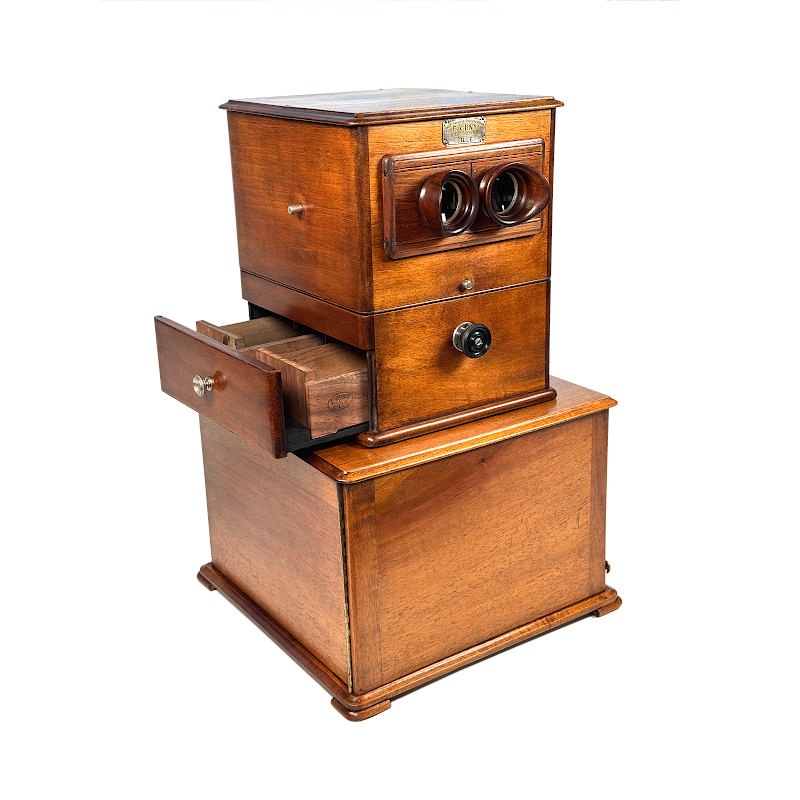
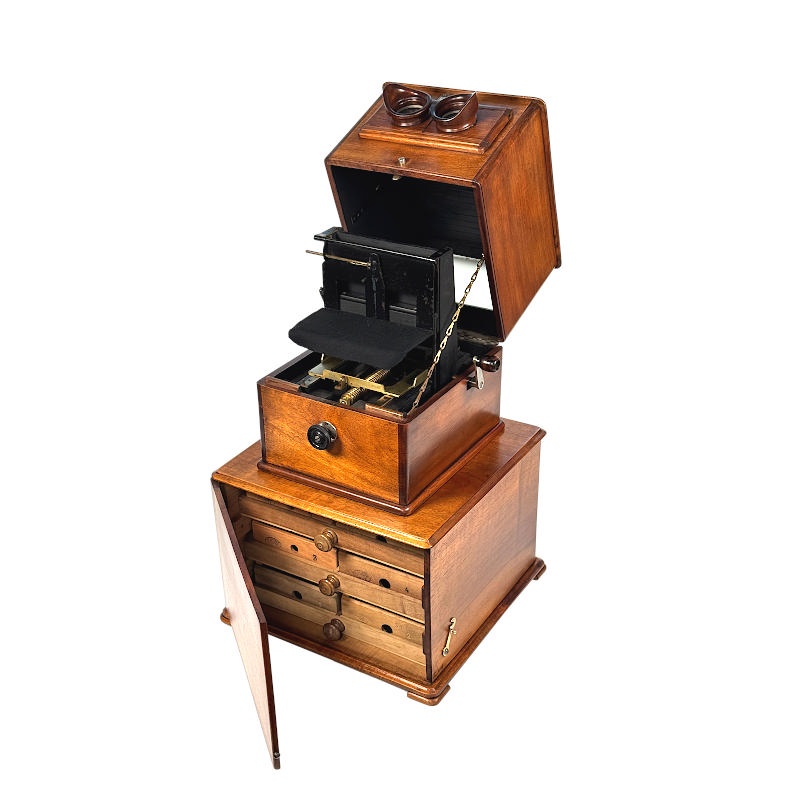
Wooden slide trays were a hallmark of ‘Hemdé’ viewers, but their true innovation lay in the crank mechanism. Using a cleverly threaded rod, it both lifted slides into position and moved the tray, enabling smooth forward and backward navigation. The mechanism was patented in 1907 by Paul Sorel, Émile Cuny, and Maurice Delécaille.
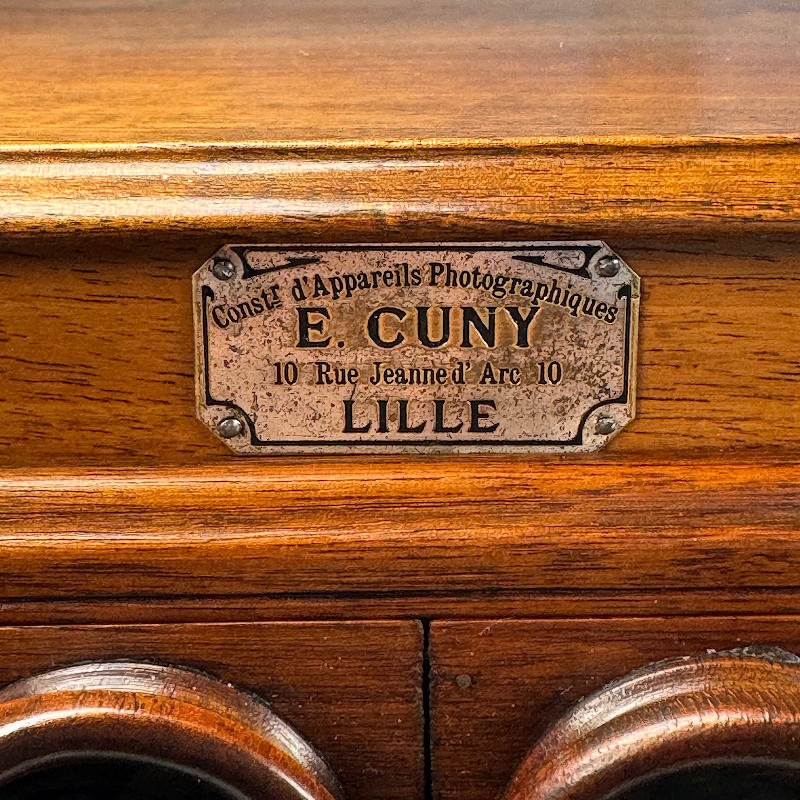
While the trademark ‘Hemdé’ was reserved exclusively for Delécaille and Sorel, Cuny was the sole manufacturer of the viewers. He evidently also distributed viewers under his own name, although only a small number of such examples are known. Some unbranded viewers are also known; however, their distinctive characteristics indicate that they differ from the majority of Cuny’s viewers marketed under the ‘Hemdé’ trademark.
Details
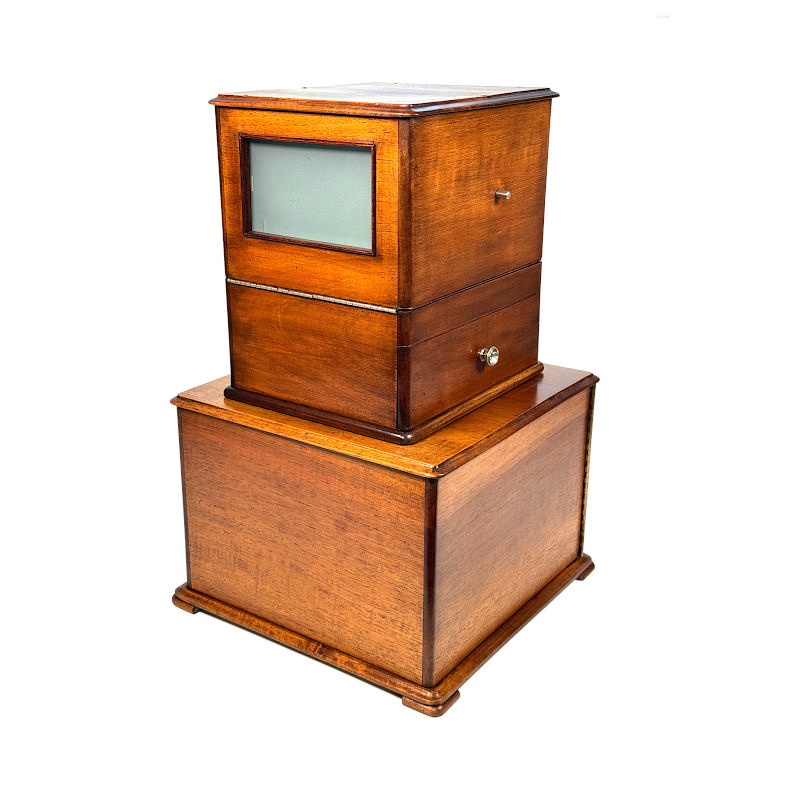
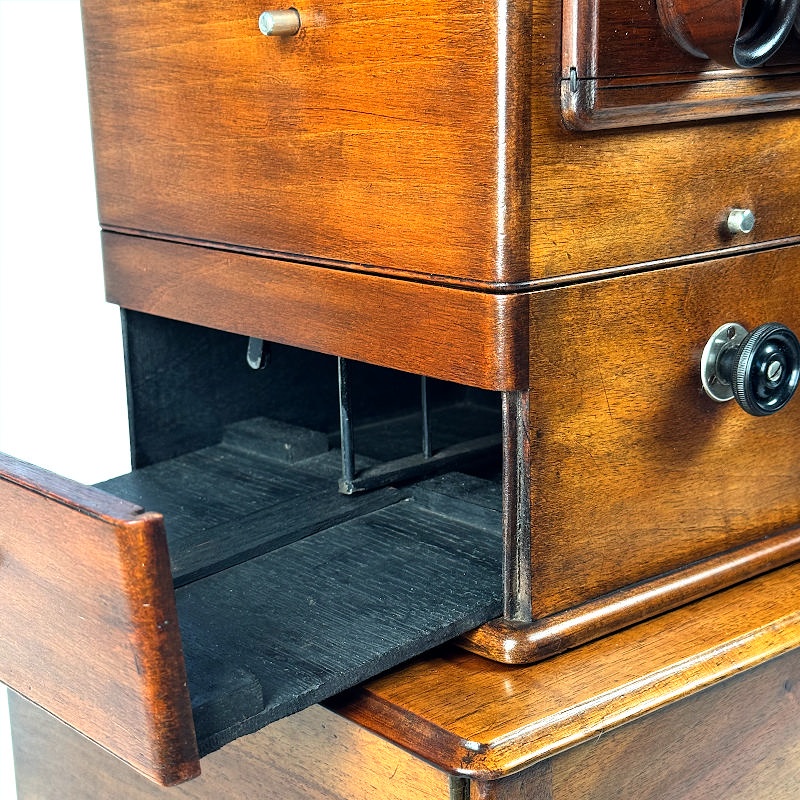
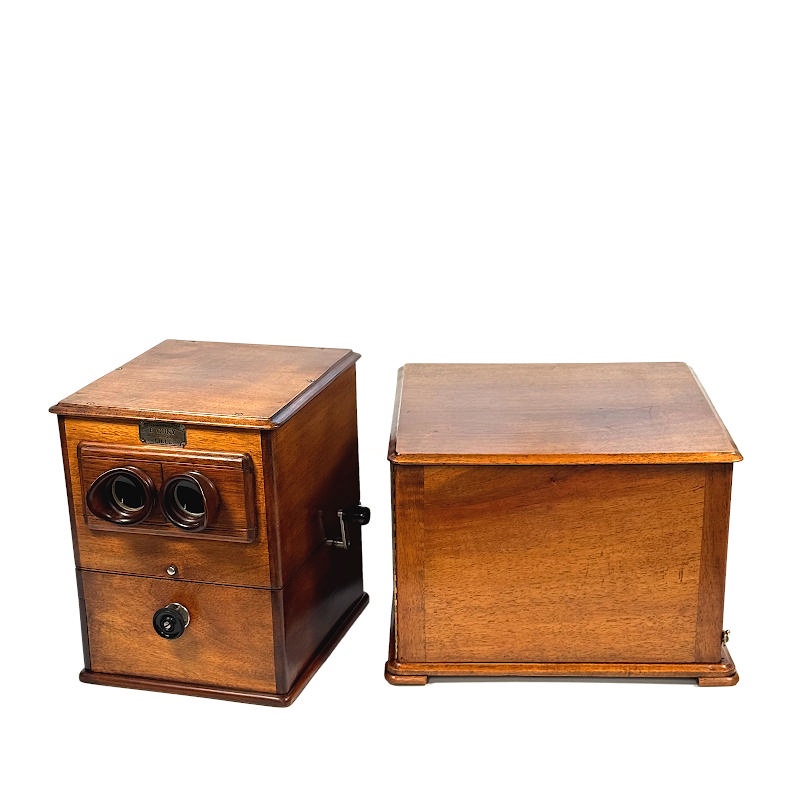
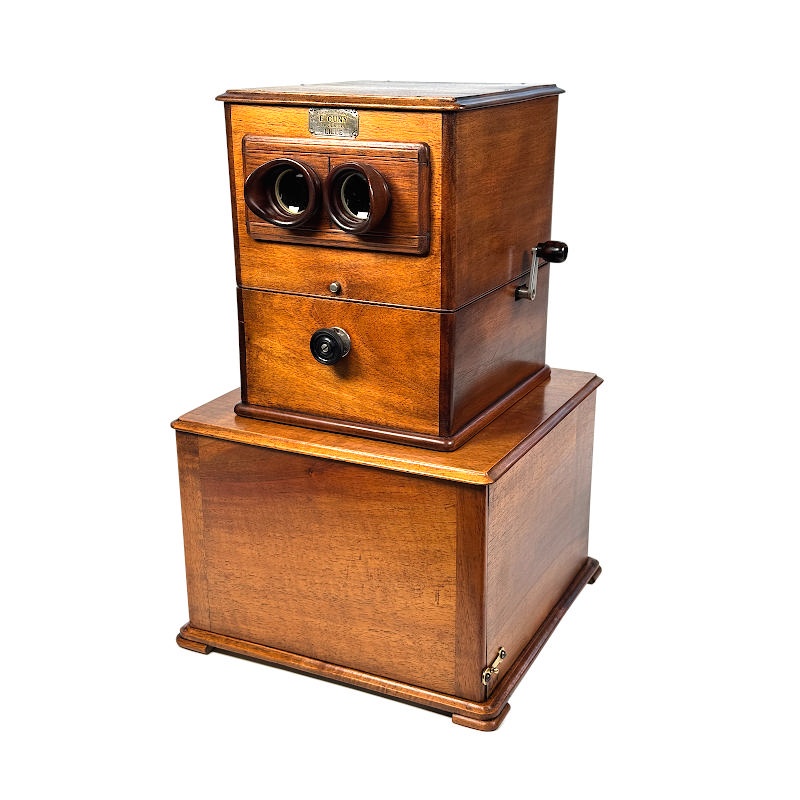
The wooden trays contain 25 slides each and can be inserted into the viewer by flipping back its top. Then, by turning a crank on the right side of the housing, one slide after another can be examined. Each half-turn of the crank advances or returns the slides and moves the tray forward. A knob on the front serves for focussing by moving the entire viewing mechanism inside the housing back and forth.
Further reading: Stereoscopy History Series — Hemdé (A. Ruiter)
Date Made
Place Made
Period
Type
Manufacturer
Technique
Format
Medium
Related Patent
Additional information or corrections are very welcome. Please send an e‑mail to mail@stereoscopicmuseum.org.