Brewster Stereoscope, Claudet Patent, Cooke Patent, Morrocan Leather, Luxe
Details
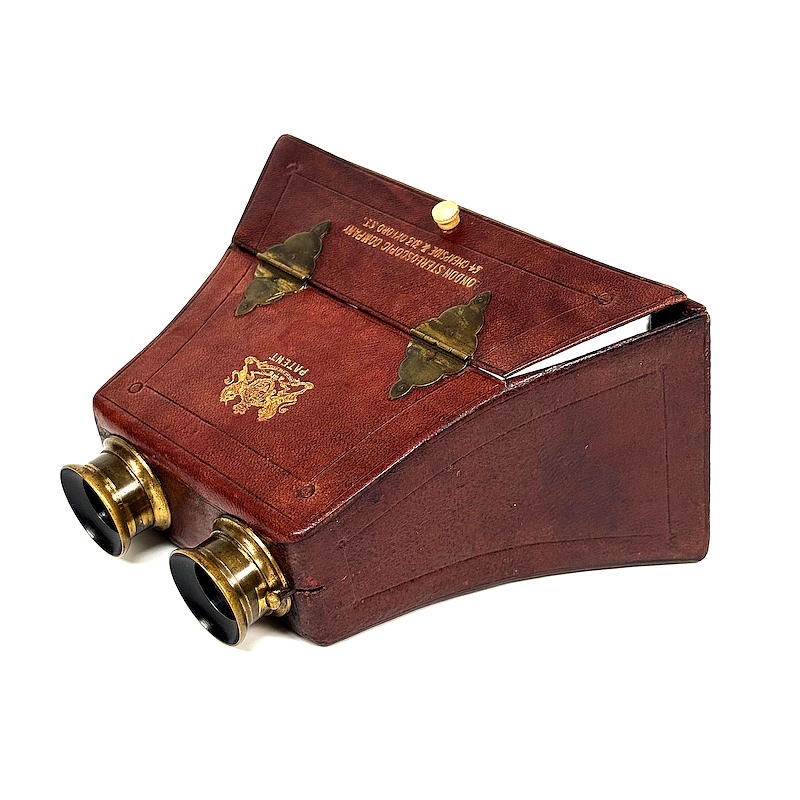
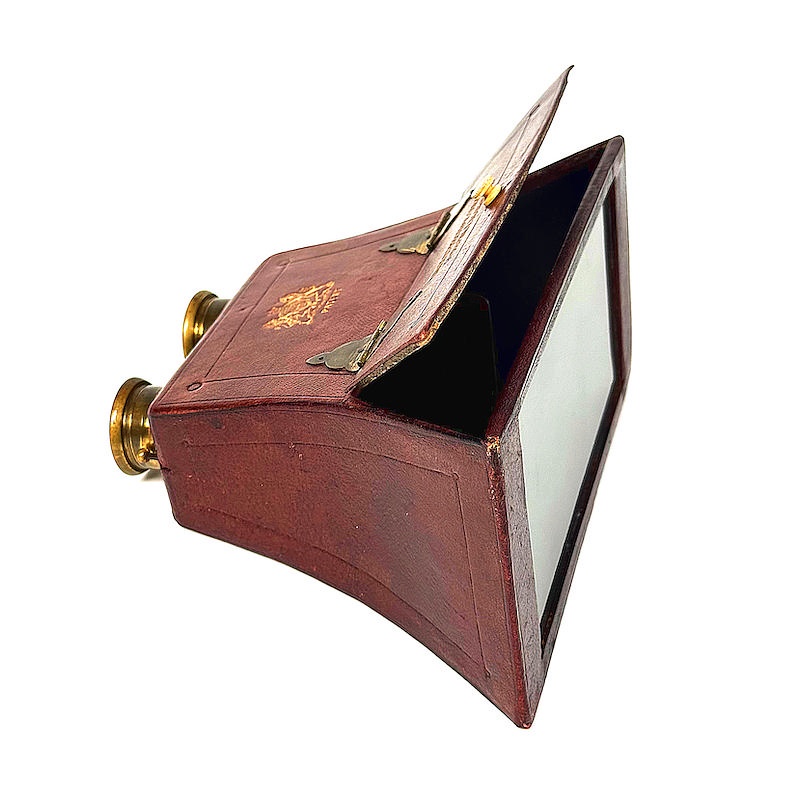
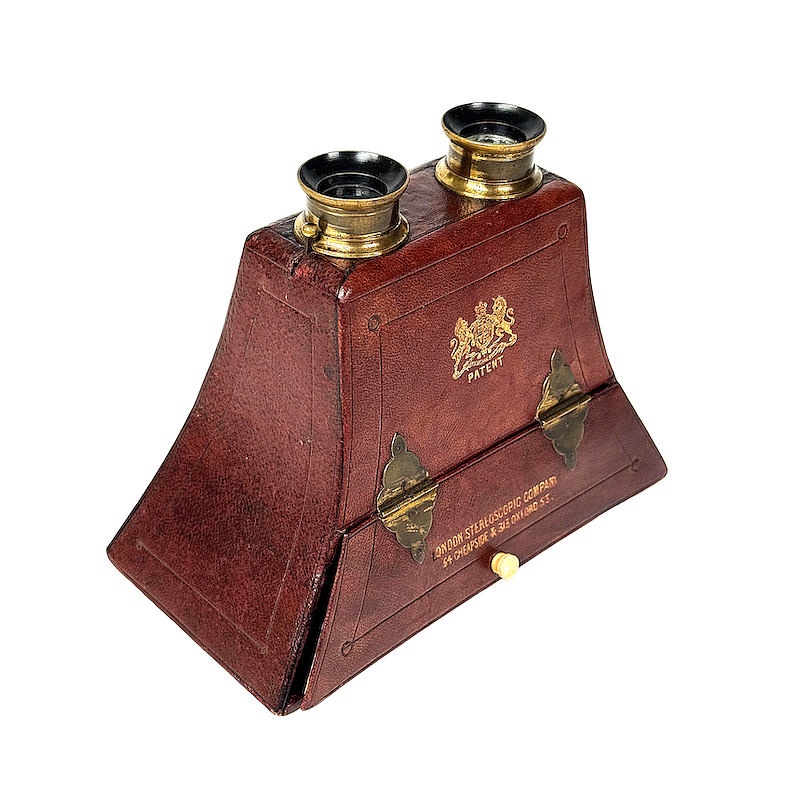
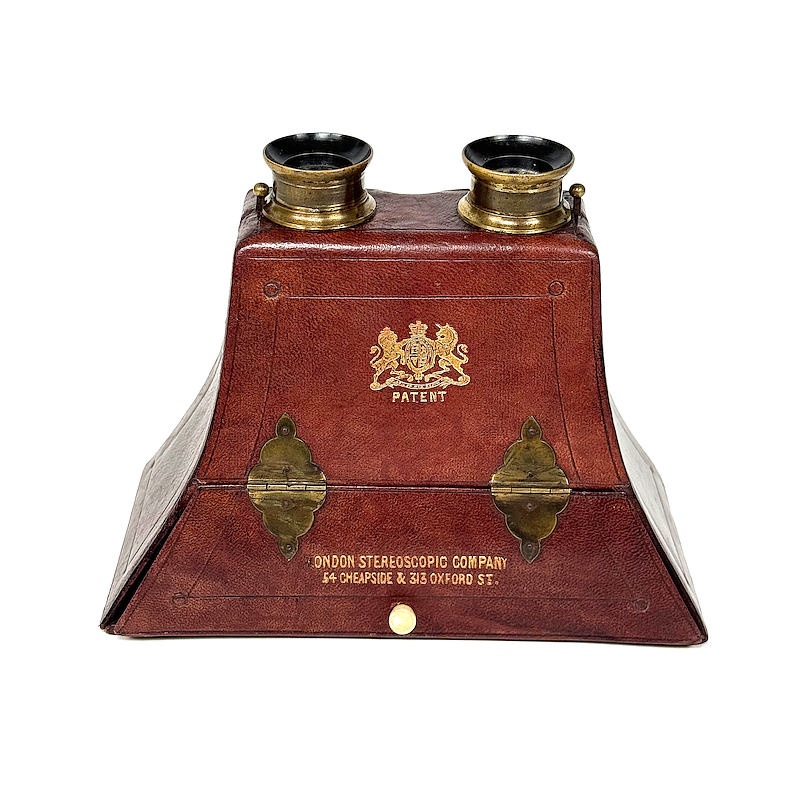
A Brewster-type stereoscope is a refracting hand-held stereoscope introduced by David Brewster in 1849. The device was later developed into a viewer with an enclosed housing. This modification occurred largely in response to the use of daguerreotype stereoviews, which exhibited high surface reflectivity and therefore required shielding from ambient light. A hinged lid was added to the top of the viewer in order to direct incident light onto the daguerreotype and, subsequently, onto paper stereoviews. Jules Duboscq later incorporated a ground glass element to enable illumination of glass stereoviews by transmitted light.
(from: Compendium of Stereoscopes)
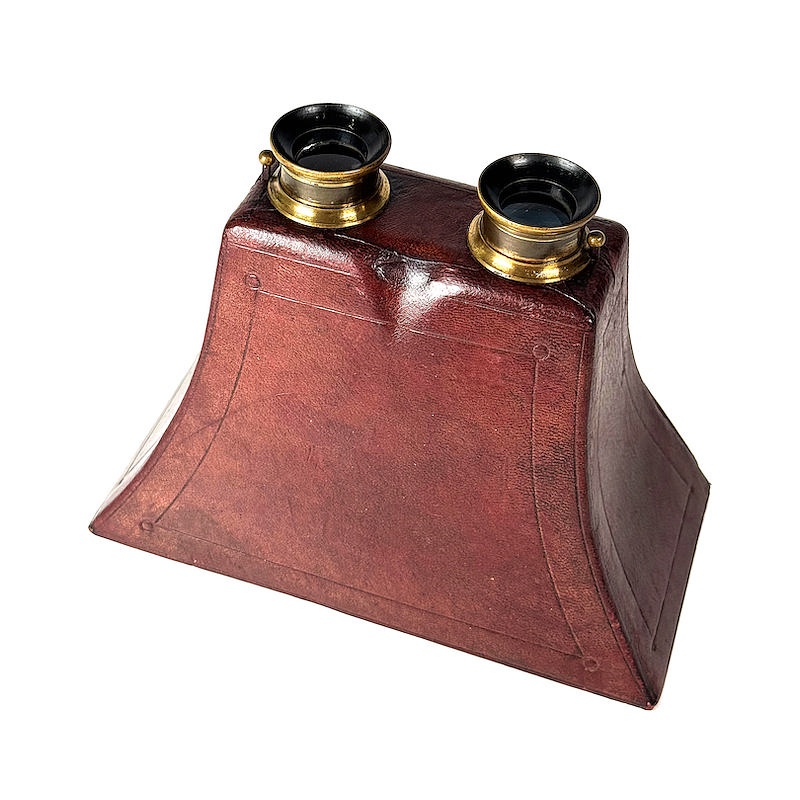
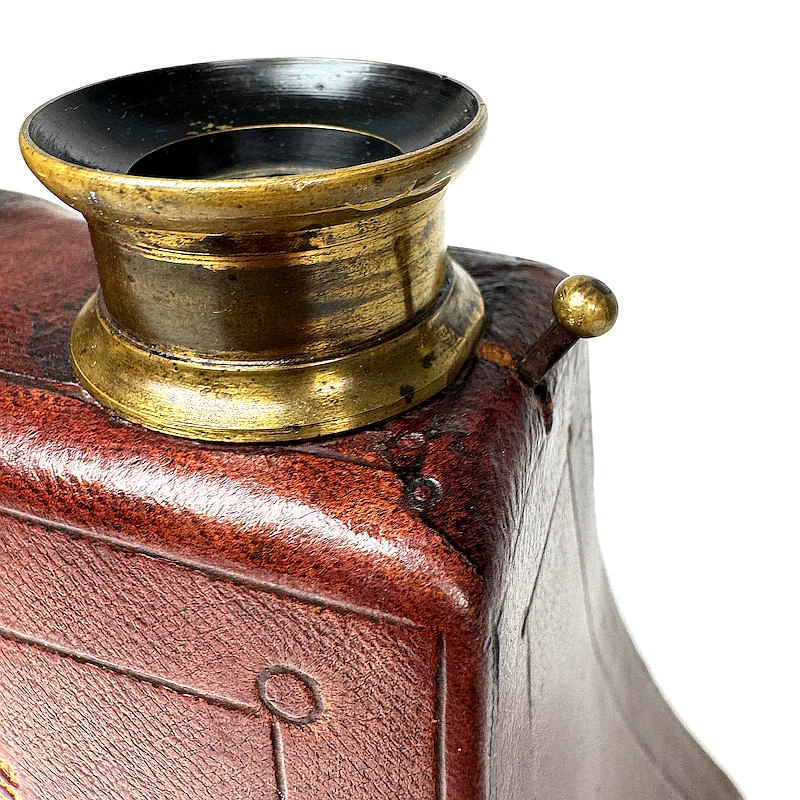
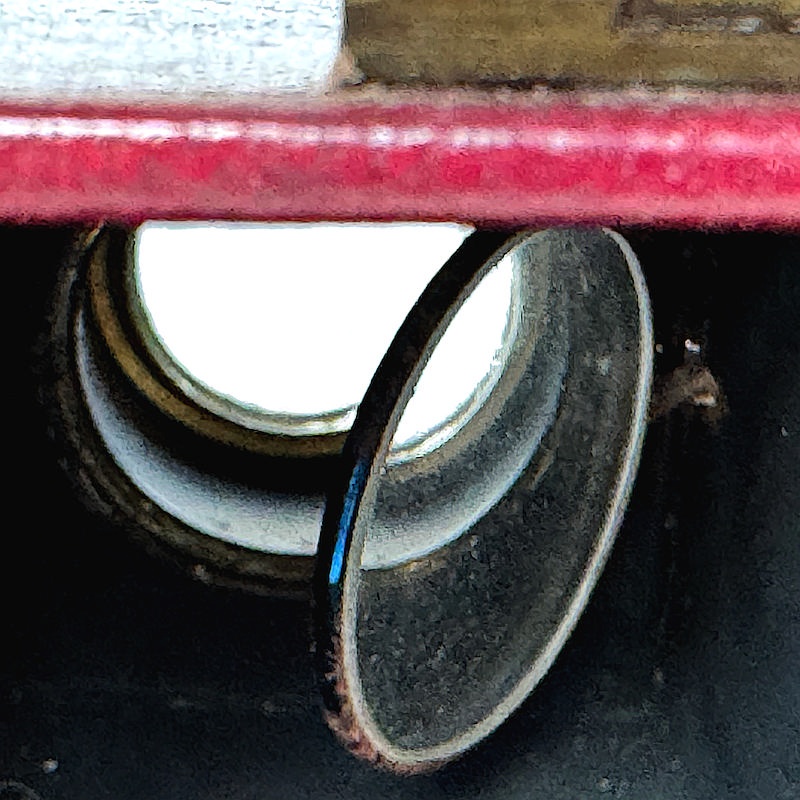
The illustrated viewer not only incorporates Claudet’s patent for larger lenses but also George Cooke’s patent for the use of auxiliary lenses. In this case, negative correction lenses can be swung into position through brass knobs on the sides of the lens tubes.
Date Made
Place Made
Period
Type
Manufacturer
Technique
Format
Medium
Related Patent
Additional information or corrections are very welcome. Please send an e‑mail to mail@stereoscopicmuseum.org.