Tray-Stereoscope ‘Le Taxiphote’ with Rare Patented Counter Lever
Historical Context
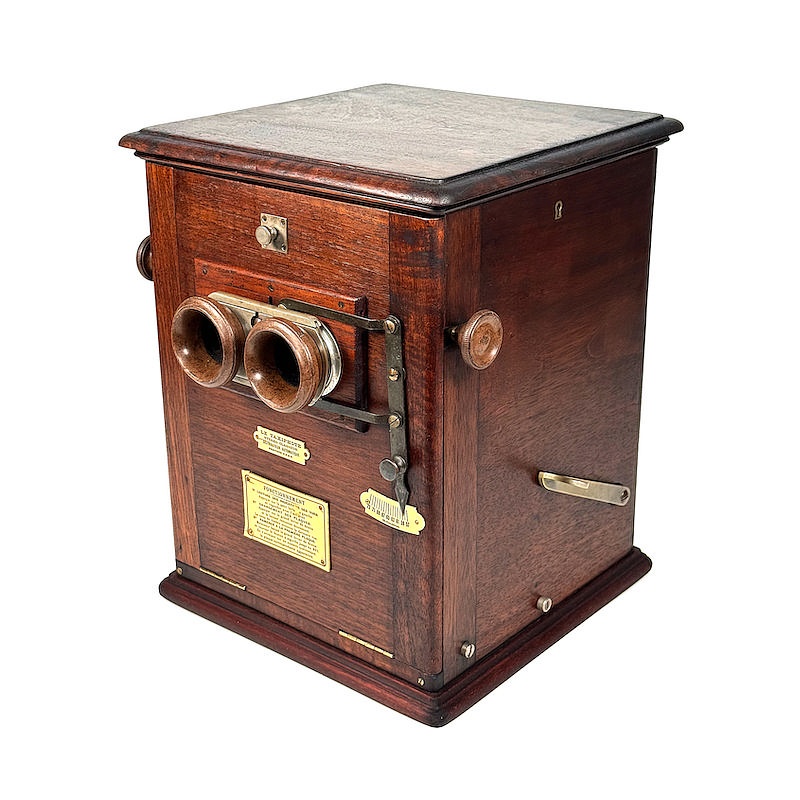
Shortly after the success of the ‘Vérascope’ stereoscopic camera, Jules Richard and his engineer Louis Colardeau patented the first model as ‘Stéréo-Classeur’ in 1899 and started production in the same year. It was renamed as ‘Le Taxiphote’ in 1900 and remained in production for around 40 years.
All models were available in two standard versions, one in waxed walnut and one in polished mahogany. There were also deluxe versions with changing designs such as inlaid patterns of different woods or additional ornaments.
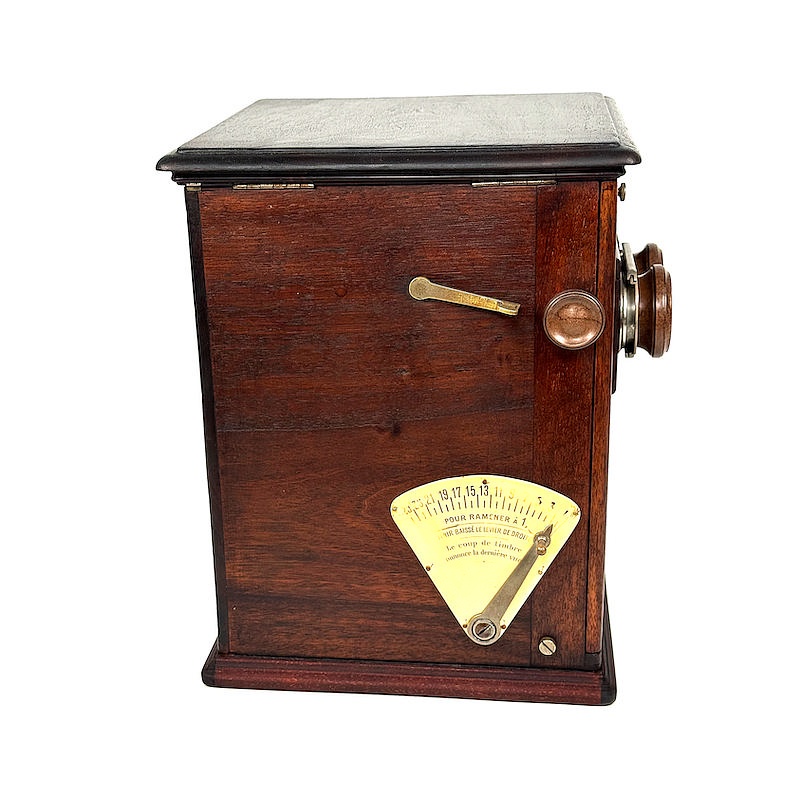
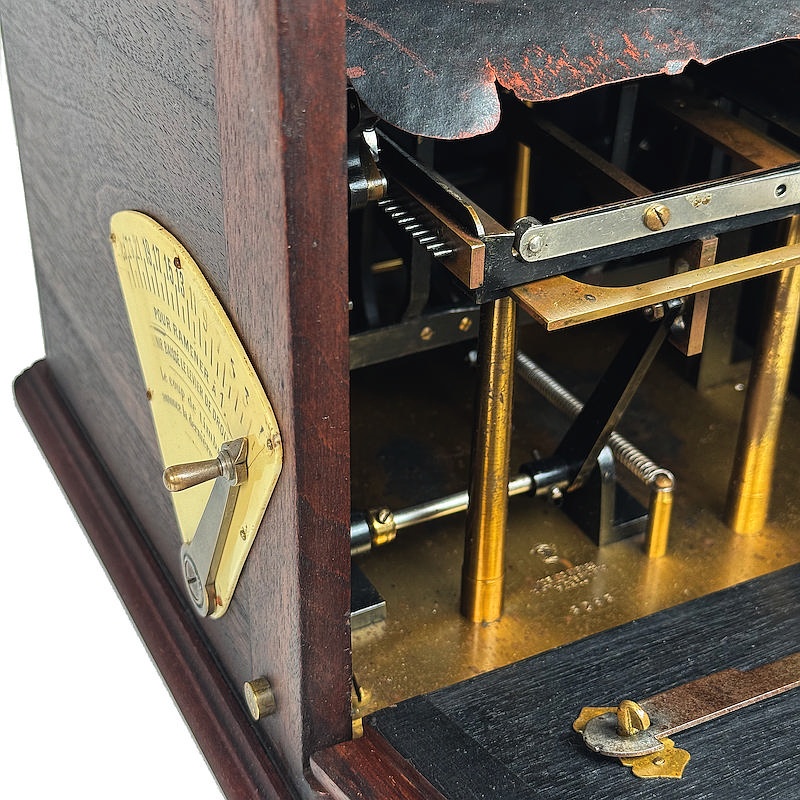
The viewer illustrated has an unusual counter mechanism. Instead of the common circular counter with a knob for navigation, it has one more lever. While navigating to a specific slide requires rather fine motor skills, moving the tray back to the front for exchange is quite comfortable.
Details
A bakelite tray containing 25 glass slides can be inserted by flipping down the front of the viewer. Then, by depressing the lever on the right side of the housing, one slide after another can be examined. On the left side of the viewer, there is a counter which indicates the number of the slide and allows navigation to a specific slide.
The base of the viewer has three drawers with four trays each, making it possible to store a total of 300 slides. The electric light unit was added later. Although it’s clearly no Richard product, it’s well done and allows basic adjustment.
In-depth information on the Taxiphote can be found here: Le Taxiphote — the most famous French stereo viewer
Date Made
Place Made
Period
Type
Manufacturer
Technique
Format
Medium
Related Patent
Series Title
Additional information or corrections are very welcome. Please send an e‑mail to mail@stereoscopicmuseum.org.