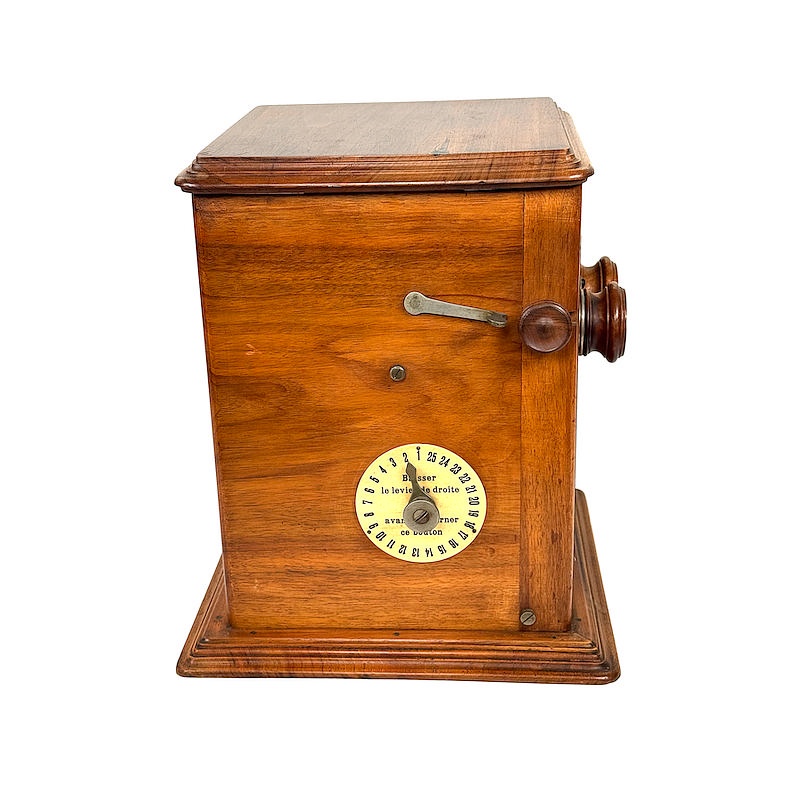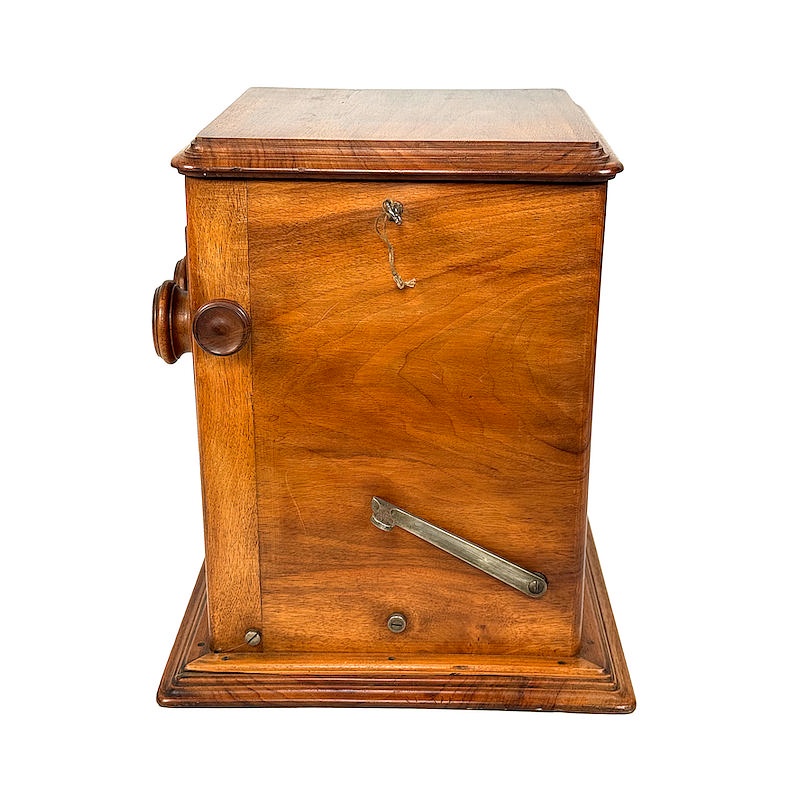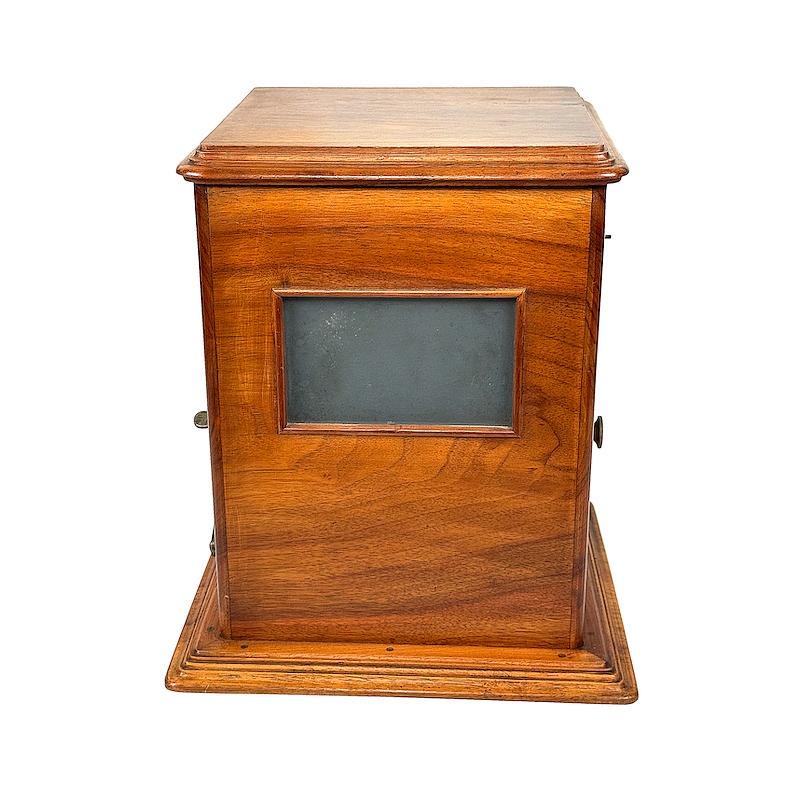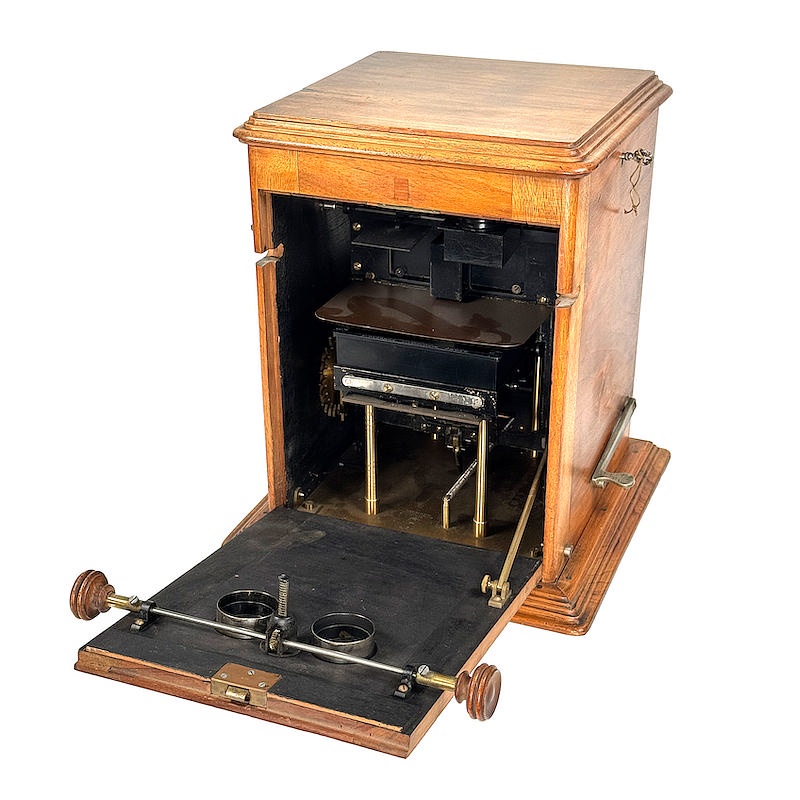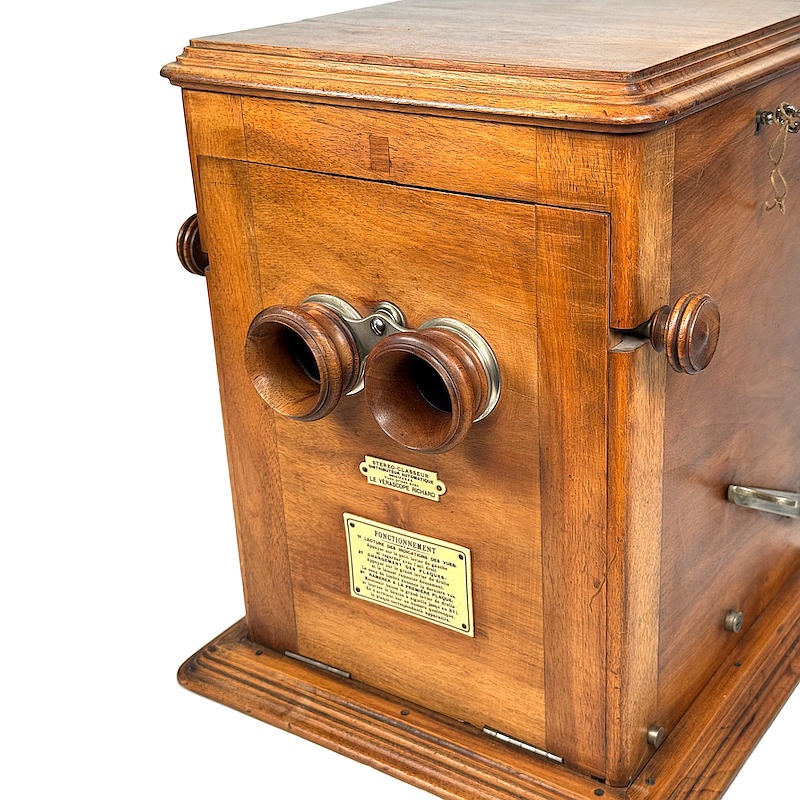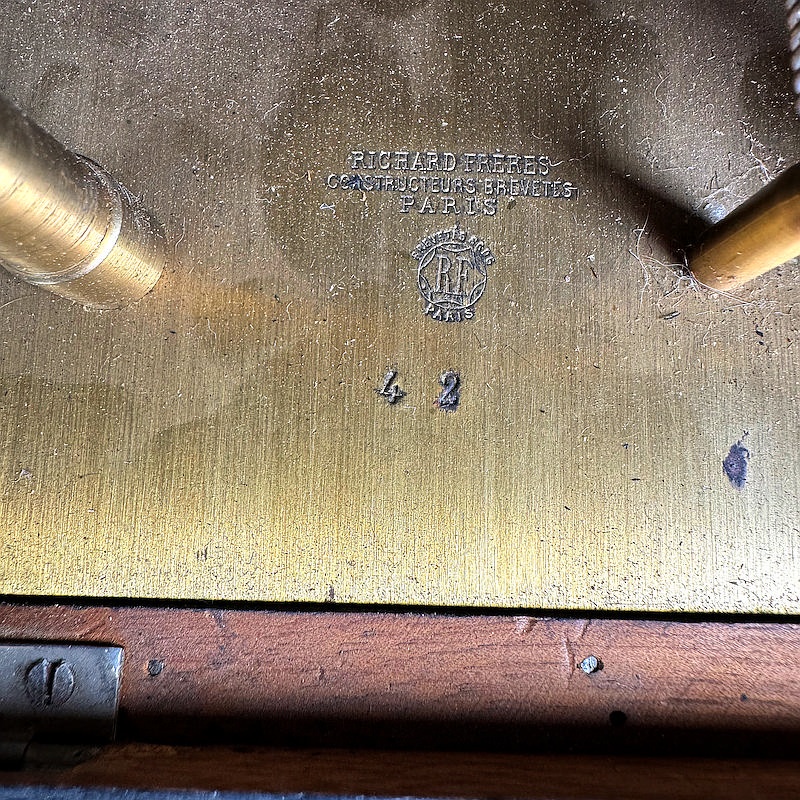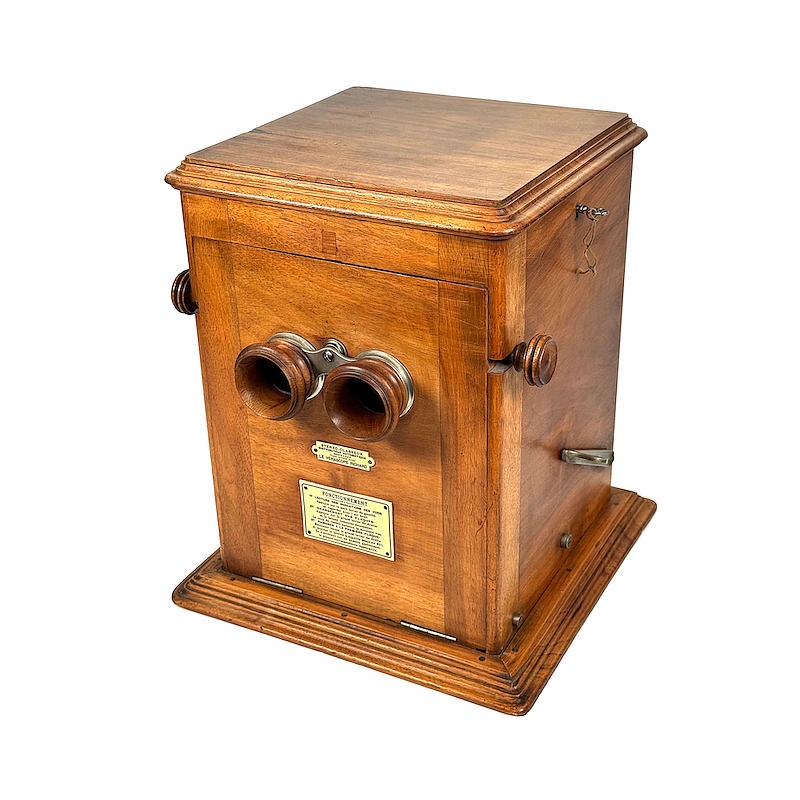
Tray-Stereoscope ‘Stéréo-Classeur’, serial no. 42
Historical Context
Shortly after the success of the ‘Vérascope’ stereoscopic camera, Jules Richard and his engineer Louis Colardeau patented the ‘Stéréo-Classeur’ in 1899 and started production in the same year. Though, it was only poorly advertised in the company’s catalogue. This would change one year later, when it was renamed as ‘Le Taxiphote’.
The ‘Stéréo-Classeur’ was available in two standard versions, one in waxed walnut and one in polished mahogany. The viewer illustrated has the serial number 42 and is therefore one of first ever produced. There are some differences in detail from the final design, which was already finalized in the first year of production.
Details
A bakelite tray containing 25 glass slides can be inserted by flipping down the front of the viewer. Then, by depressing the lever on the right side of the housing, one slide after another can be examined. On the left side of the viewer, there is a counter which indicates the number of the slide and allows navigation to a specific slide. There is also a smaller lever on the left which brings a mirror into position allowing the slide title to be read through the right ocular.
In-depth information on the Taxiphote can be found here: Le Taxiphote — the most famous French stereo viewer
Date Made
Place Made
Period
Type
Manufacturer
Designer
Technique
Format
Medium
Related Patent
Series Title
Additional information or corrections are very welcome. Please send an e‑mail to mail@stereoscopicmuseum.org.