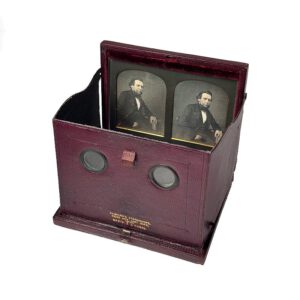
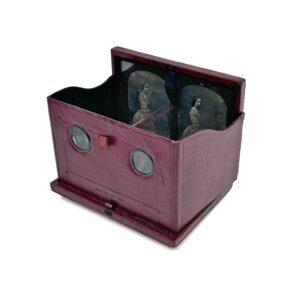
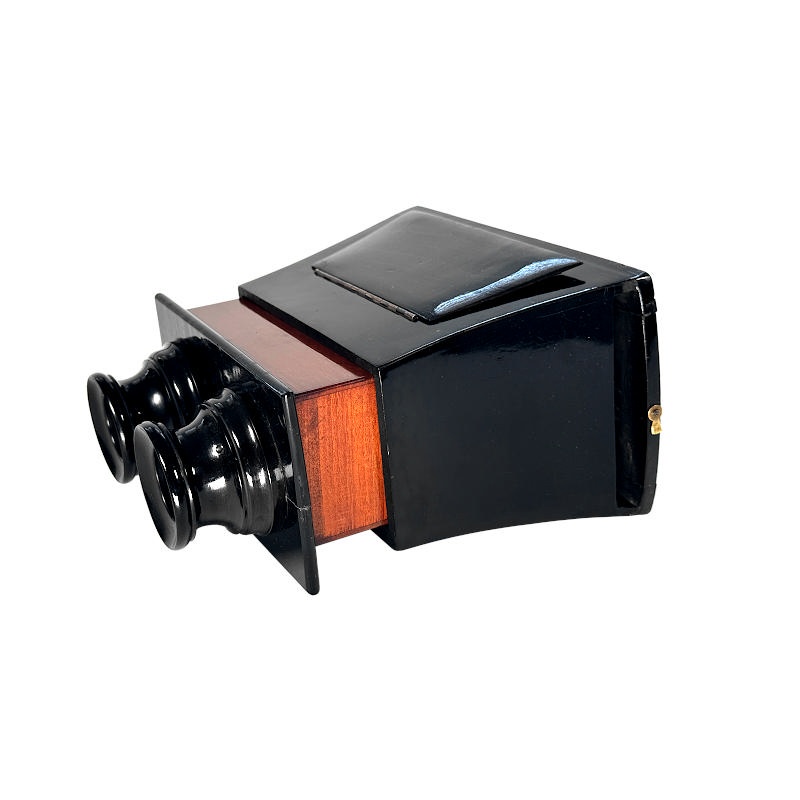
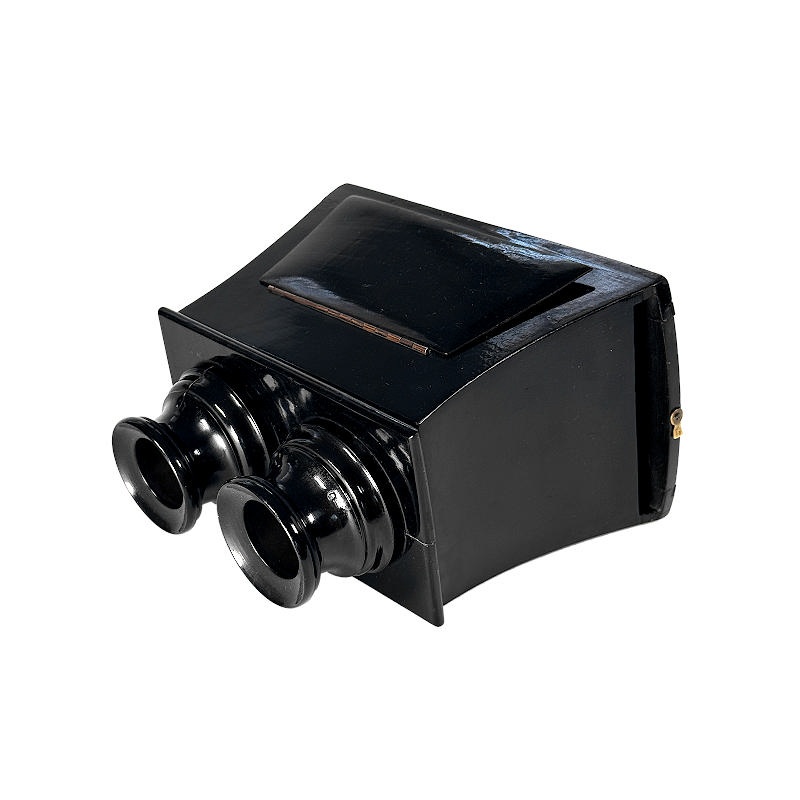
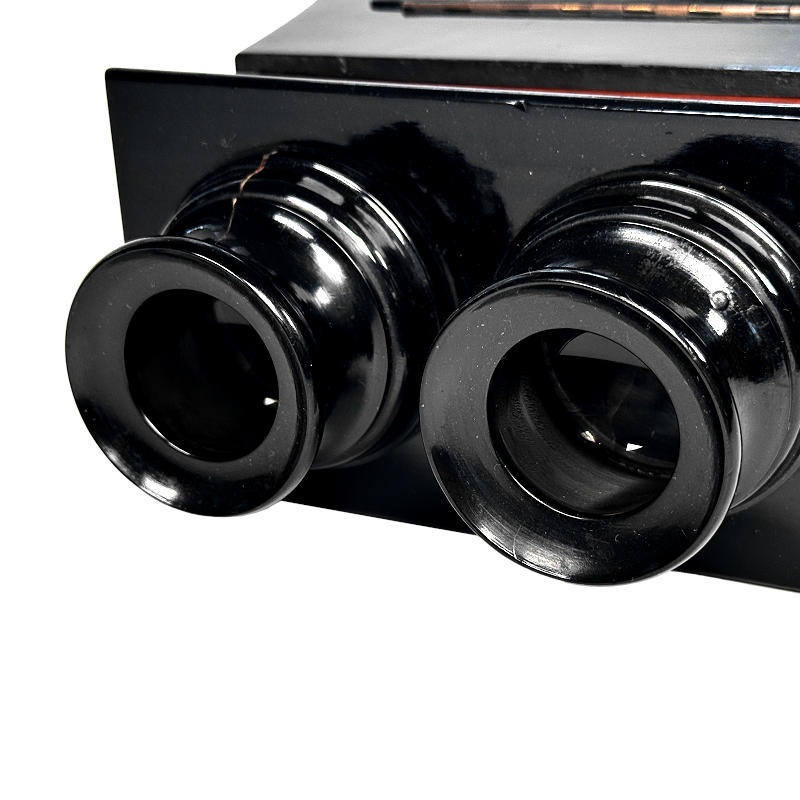
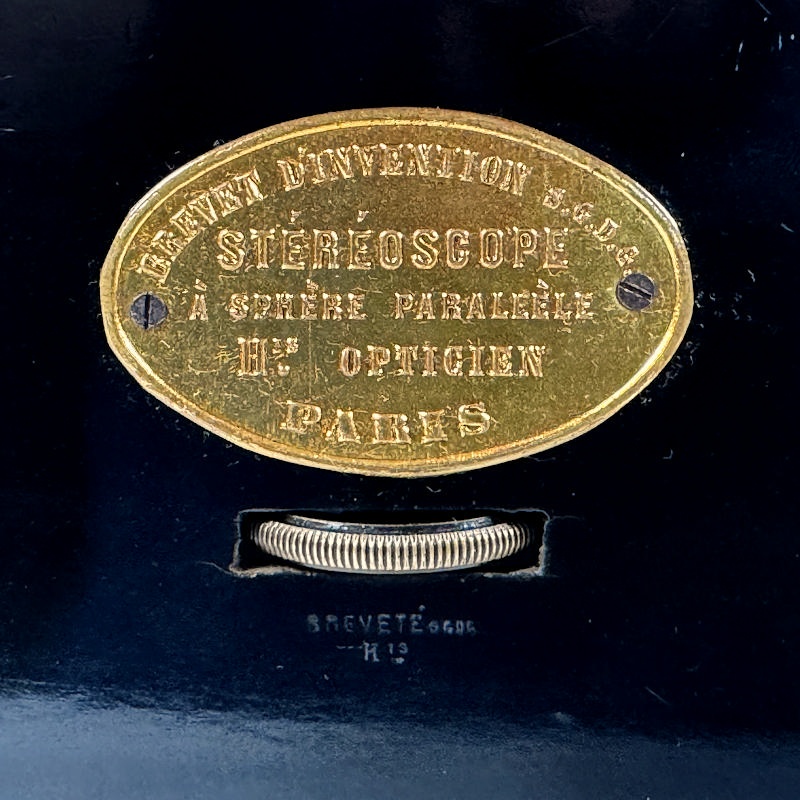
Stereoscope ‚à sphères parallèles‘
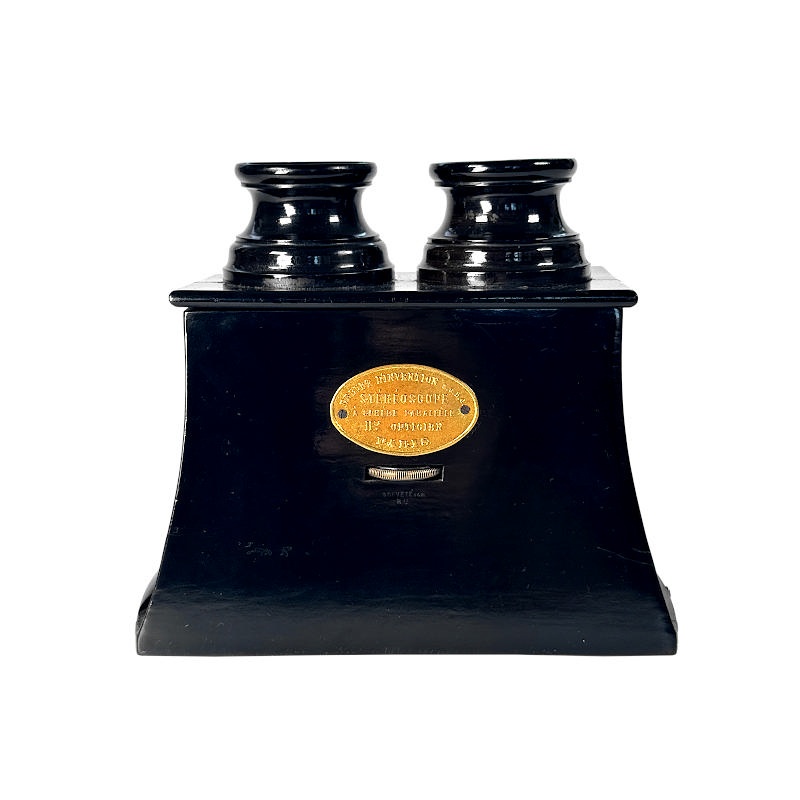
Details
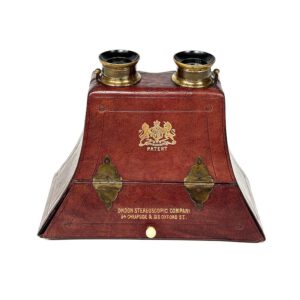
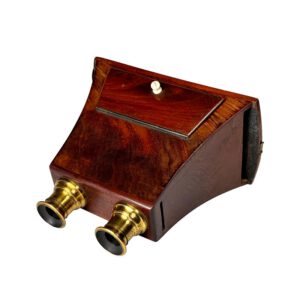
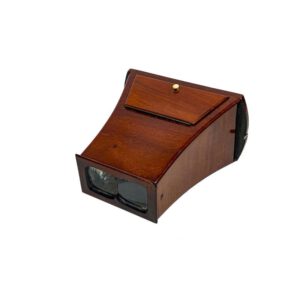
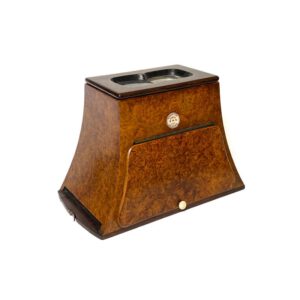
The Stéréoscope à sphère parallèle is a Brewster-type stereoscope. The patent describes an improved optical design based on parallel spherical lenses and makes four principal claims: reduced image distortion, diminished chromatic aberration (color fringing), increased magnification, and reduced eye strain.
(from: Compendium of Stereoscopes)
Historical Context
Hermagis is one of France’s oldest optical manufacturers. In 1855, Hyacinthe Hermagis established his own optical workshop in Paris. The business was continued in 1864 by his son-in-law, Jules Fleury, who adopted the name Fleury-Hermagis. The company’s products were subsequently marketed under the name J. F. Hermagis.
Hermagis developed into one of France’s leading optical firms and became particularly renowned for producing high-quality photographic lenses. By 1916, the company announced in its advertising that it had already supplied 50,000 portrait lenses. In addition to lenses, Hermagis manufactured cameras and stereo cameras, and designed the Stéréoscope à sphère parallèle, a stereoscope featuring improved optical performance.
In 1934, Hermagis was acquired by SOM Berthiot. Following the acquisition, the Hermagis name continued to be used as a trademark until after the Second World War.
(from: Compendium of Stereoscopes)