Stereoscope ‘à deux foyers’
Details
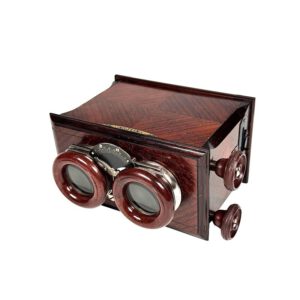
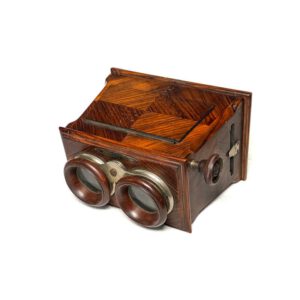
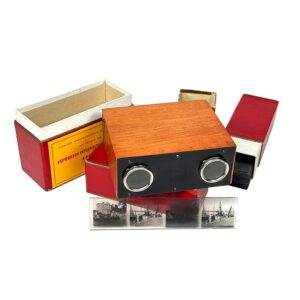
The Stéréoscope à deux foyers (dual-focus stereoscope), in the 6×13 format, was introduced by Mattey as a novelty in 1922 to satisfy enthusiasts who wished to view both black-and-white stereoscopic images and Autochromes. While black-and-white stereographs work very well with a short focal length and strong magnification, which enhances them perfectly, the Autochrome, because of its trichrome filter, is displayed much better with a stereoscope having a long focal length and low magnification, which lessens the enlargement of the colored starch grains.
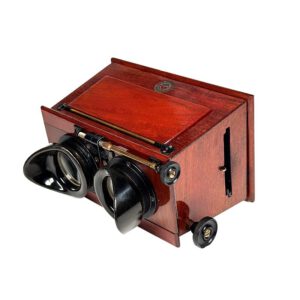
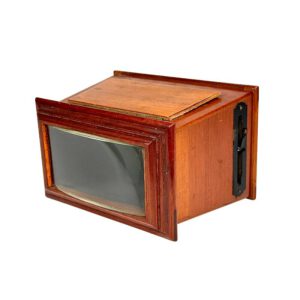
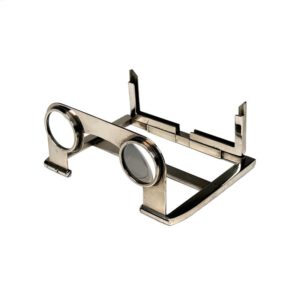
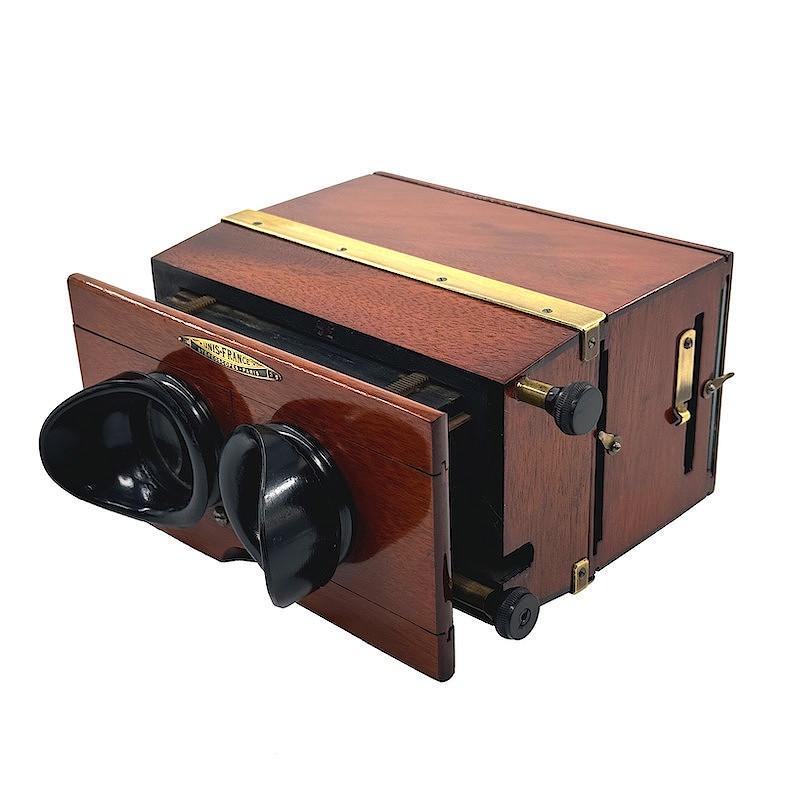
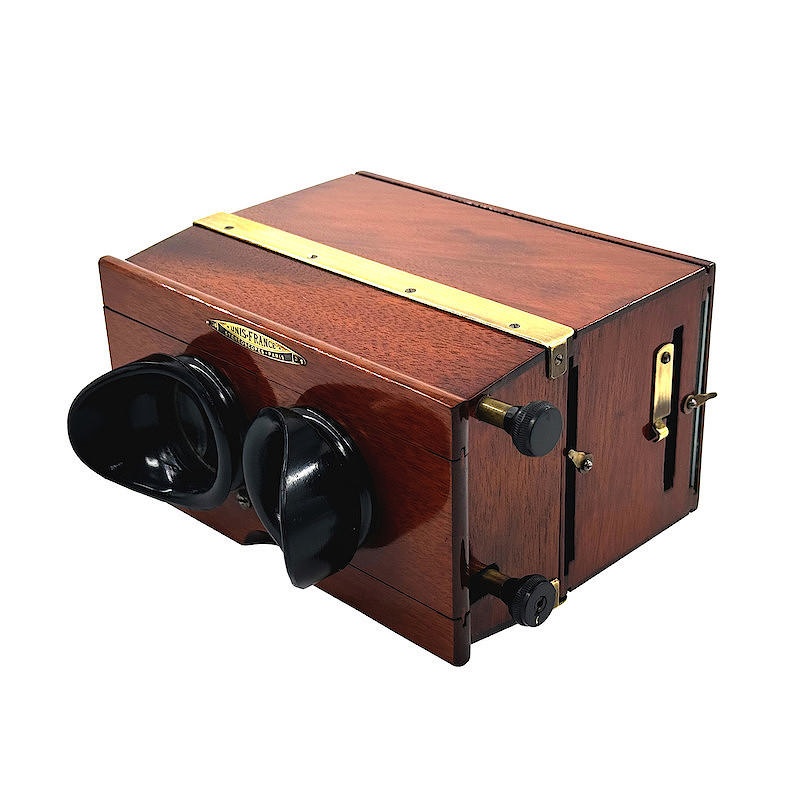
Since a medium-focus stereoscope was not satisfactory either for black-and-white images or for Autochromes, Mattey marketed this dual-focus stereoscope. Its reversible body can be detached or coupled at the front in the same way as a camera magazine, allowing the focal length of the two sets of eyepieces — fitted with achromatic lenses and eye-cups — to be adjusted. The eye-cups themselves are mounted quickly by simple friction fitting.
The front part of the stereoscope is identical to the standard model, with focusing adjustment and variable eye spacing. The cabinet work is in old mahogany with oxidized metal fittings. The set includes the stereoscope and a double set of eyepiece assemblies.
Note: the eyepiece assemblies with the ‘large brass fittings’ contain thelong-focus lenses; conversely, the short-focus lenses are mounted in the eyepieces with the ‘small brass fittings’.
(from: Moulinier et al. Histoires de visionneuses stéréoscopiques françaises. Limoges, 2025, p. 104. Author’s translation.)