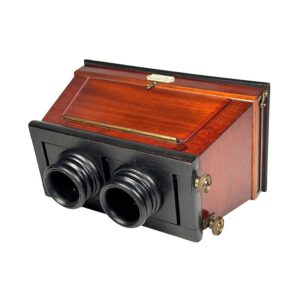
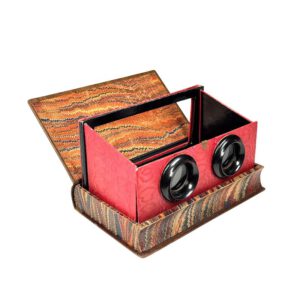
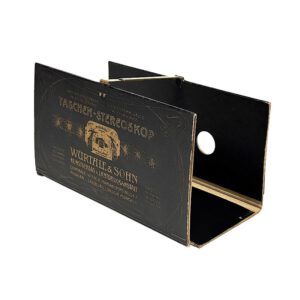
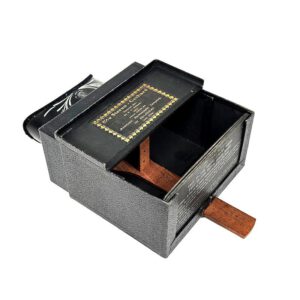
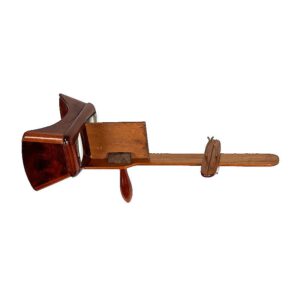
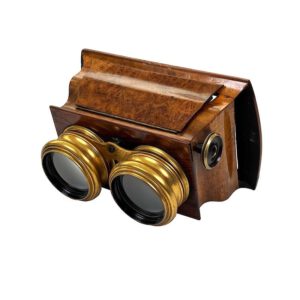
Foldable Stereoscope ‘Clégil’
Details
In 1887, Eugène Gaston Clément and Georges Arthur Gilmer joined forces with the optician A. Laverne for three years, at the end of which they took over the commercial business located at 10 Rue de Malte in Paris. From 1890 onward, the partnership Clément & Gilmer offered projection equipment and accessories for photography, then for cinema around 1896, and began producing stereoscopic equipment around 1900. In 1905, they registered the trademark Clégil (No. 091.004 of July 8, 1905) for all optical instruments. In 1907, Clément and Gilmer parted ways and created two separate companies: Clément E.G. and Gilmer & Cie.
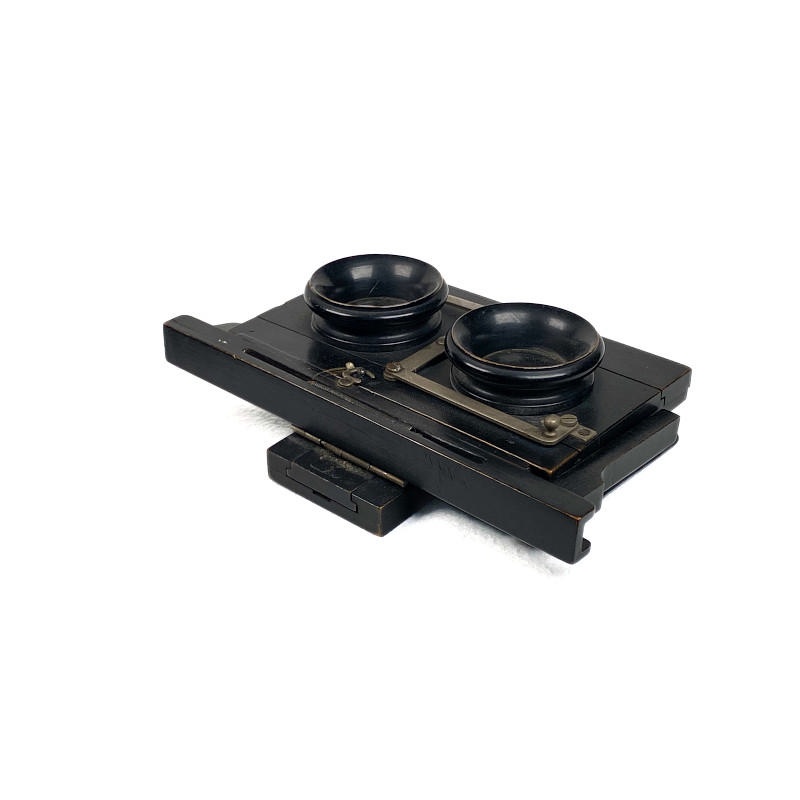
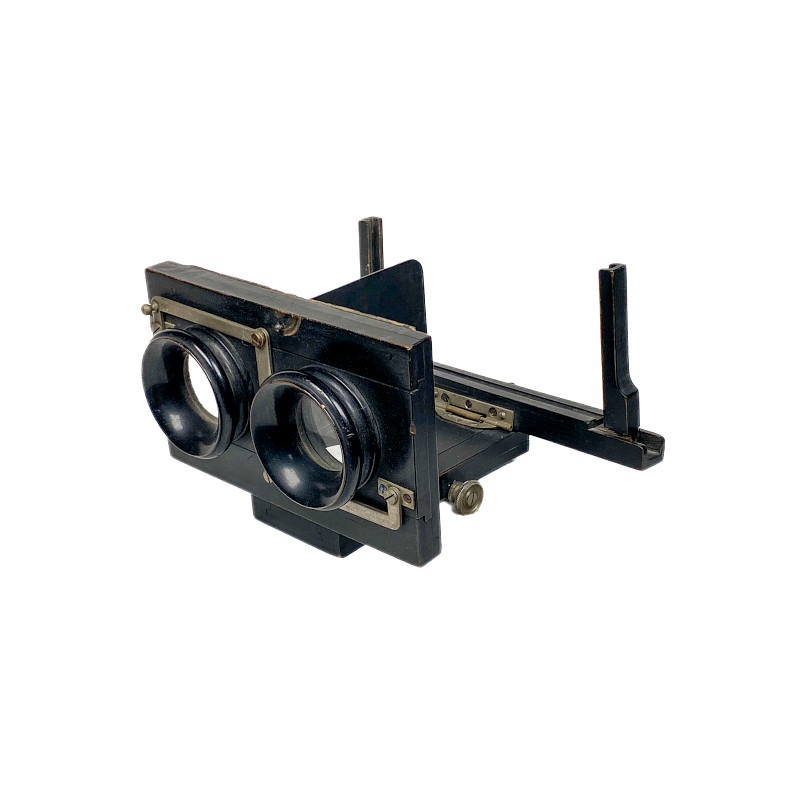
The ambition of Clément & Gilmer was to offer a universal stereoscope compatible with the formats of the period: 45x107mm, 6x13cm, and the older 8.5x17cm format, whether mounted on cardboard or glass. To achieve this, adjustable interpupillary spacing was essential, as was an adjustable focusing mechanism. For travel, a folding model was particularly desirable.
The Clégil stereoscope appeared around 1905. Its inventor was Émile Rosengard, who filed patent FR340,444 on February 15, 1904.
(from: Moulinier et al. Histoires de visionneuses stéréoscopiques françaises. Limoges, 2025, p. 53. Author’s translation.)
The stereoscope shown here shows no name oder brand. There are also some examples with the initials E.R. Rosengard thus also marketed his design under his own name or at least without the Clégil sign. It seems most likely that he began doing so after Clément and Gilmer dissolved their partnership. After all, this happened just two years after Rosengard’s patent was granted.