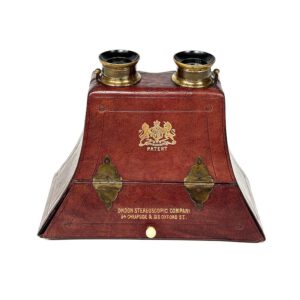
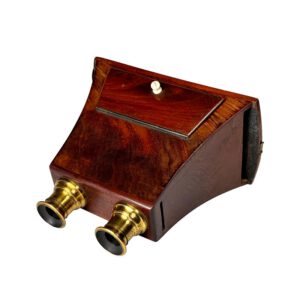
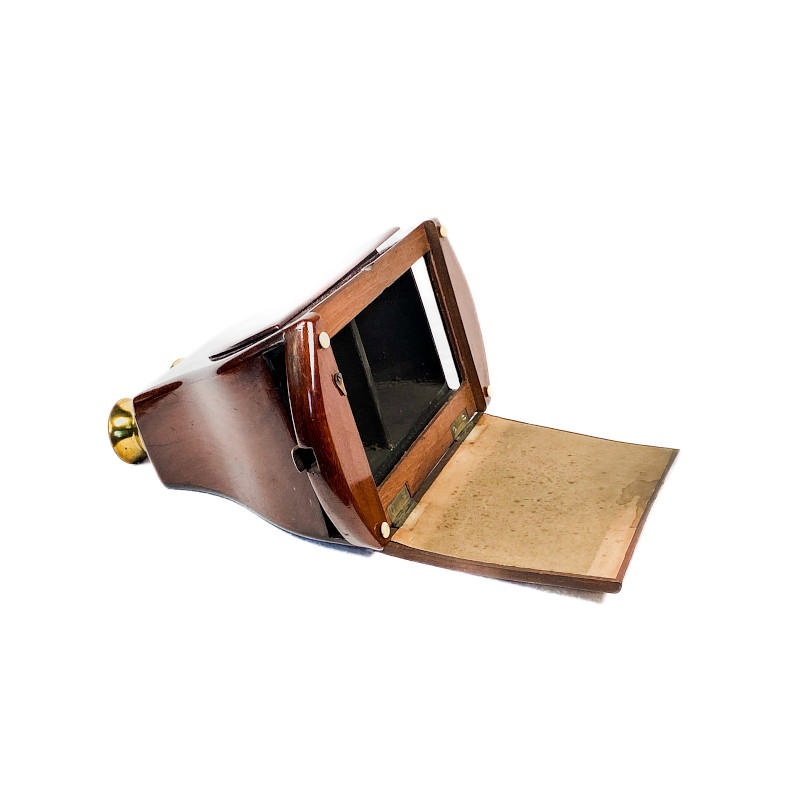
Brewster Stereoscope, Claudet Patent, Foldable Back
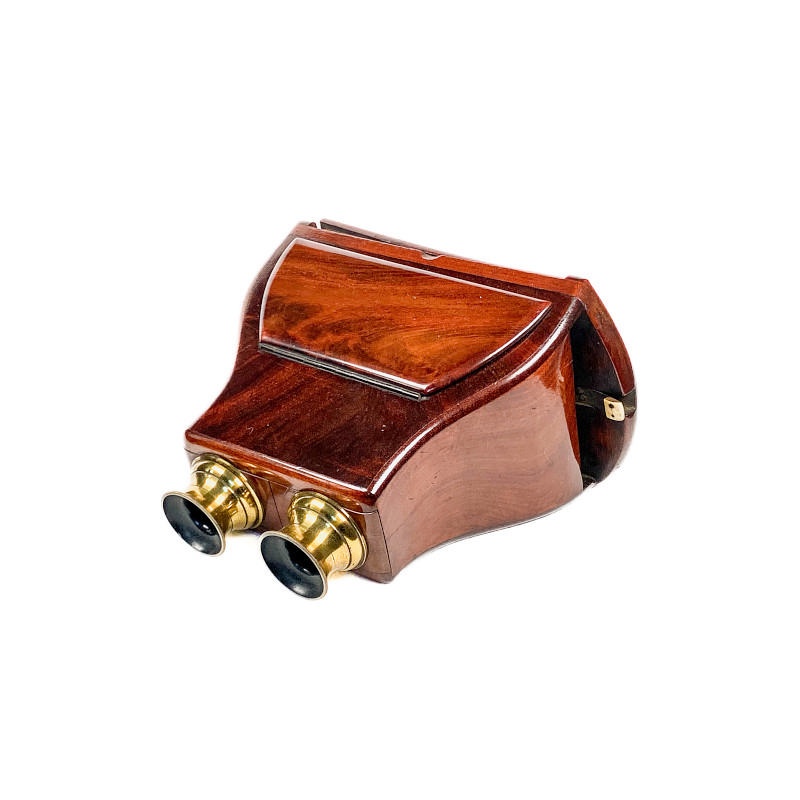
Details
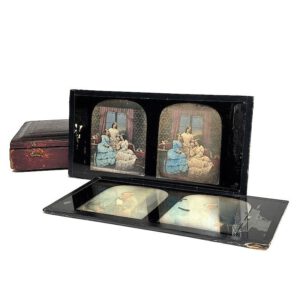
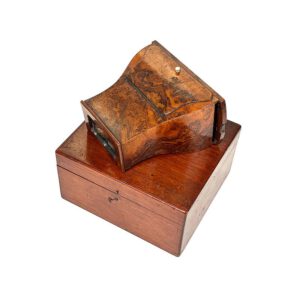
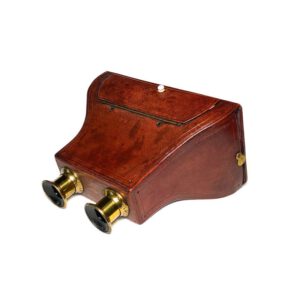
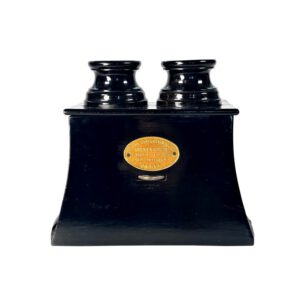
A Brewster-type stereoscope is a refracting hand-held stereoscope introduced by David Brewster in 1849. The device was later developed into a viewer with an enclosed housing. This modification occurred largely in response to the use of daguerreotype stereoviews, which exhibited high surface reflectivity and therefore required shielding from ambient light. A hinged lid was added to the top of the viewer in order to direct incident light onto the daguerreotype and, subsequently, onto paper stereoviews. Jules Duboscq later incorporated a ground glass element to enable illumination of glass stereoviews by transmitted light.
Claudet designed several improvements to the stereoscope. These were recorded in two patents containing different technical ideas. His second patent, no. 515, describes curved side panels for the Brewster-type stereoscope intended to reduce internal reflections.