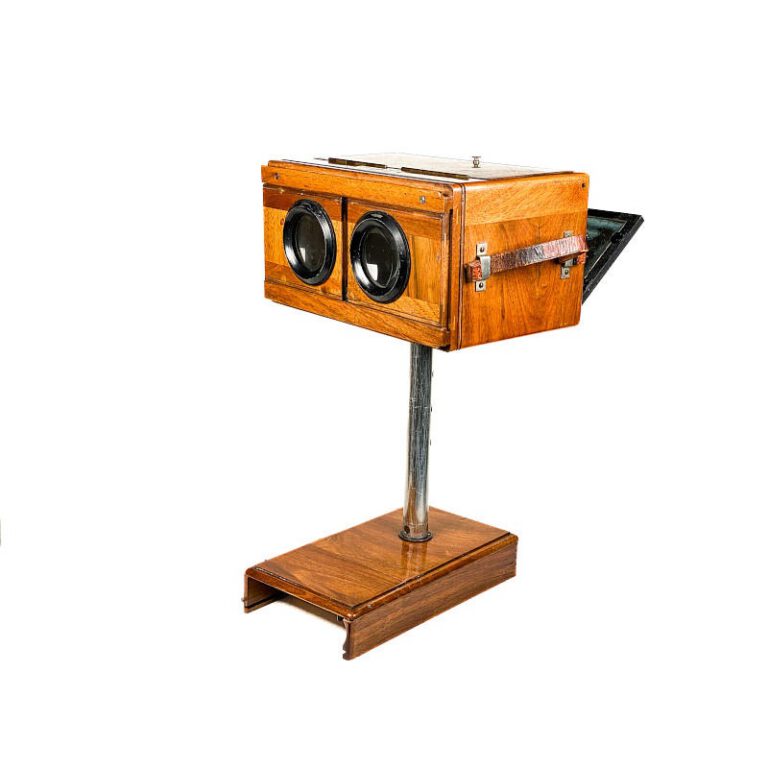
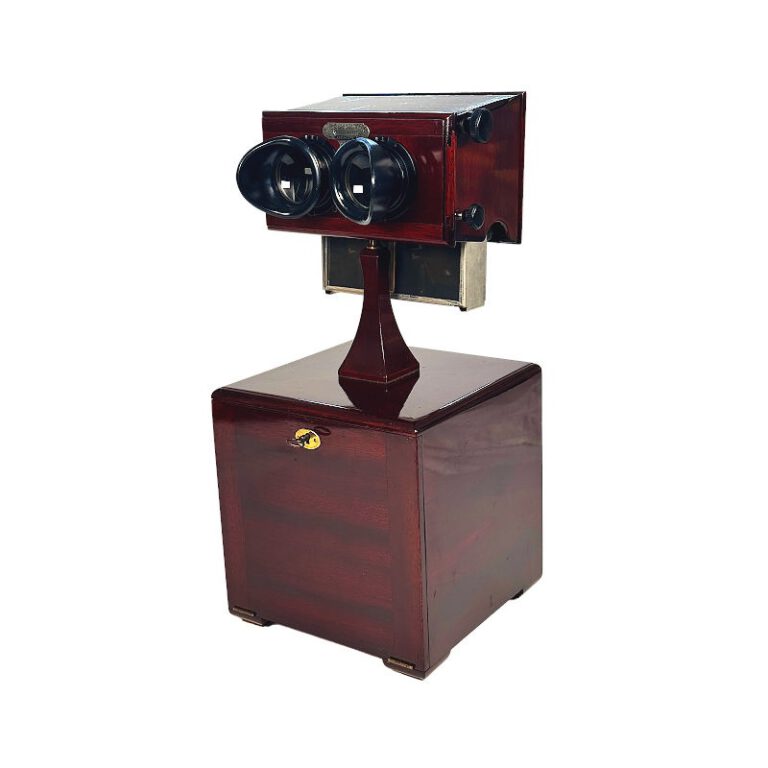
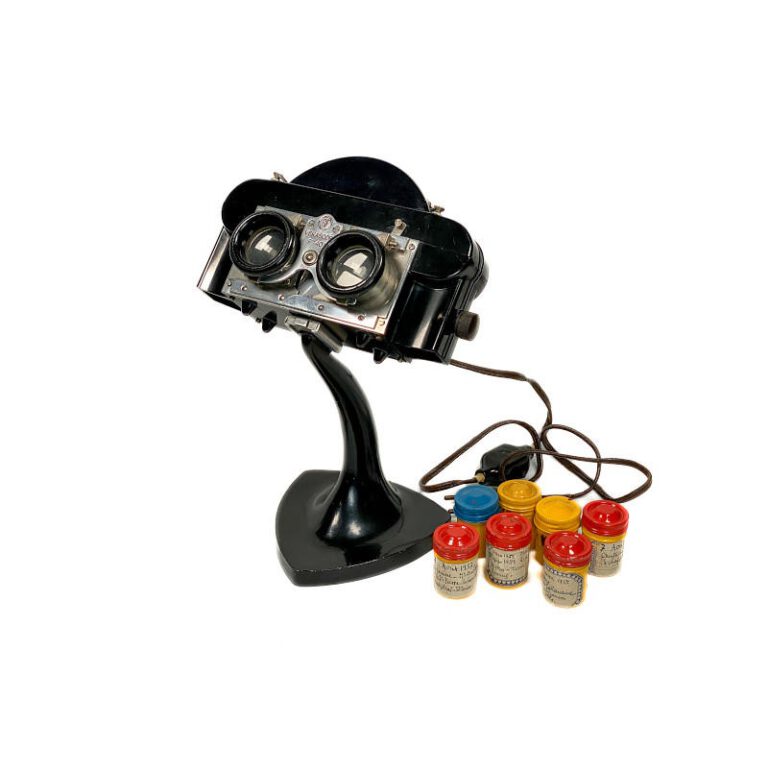
A Little More Comfort — A Century of Stereoscopes on Stands
Holding a stereoscope in front of your eyes can become tiring during longer viewing sessions. A simple stand offered an obvious solution, turning a handheld instrument into a comfortable tabletop viewer.
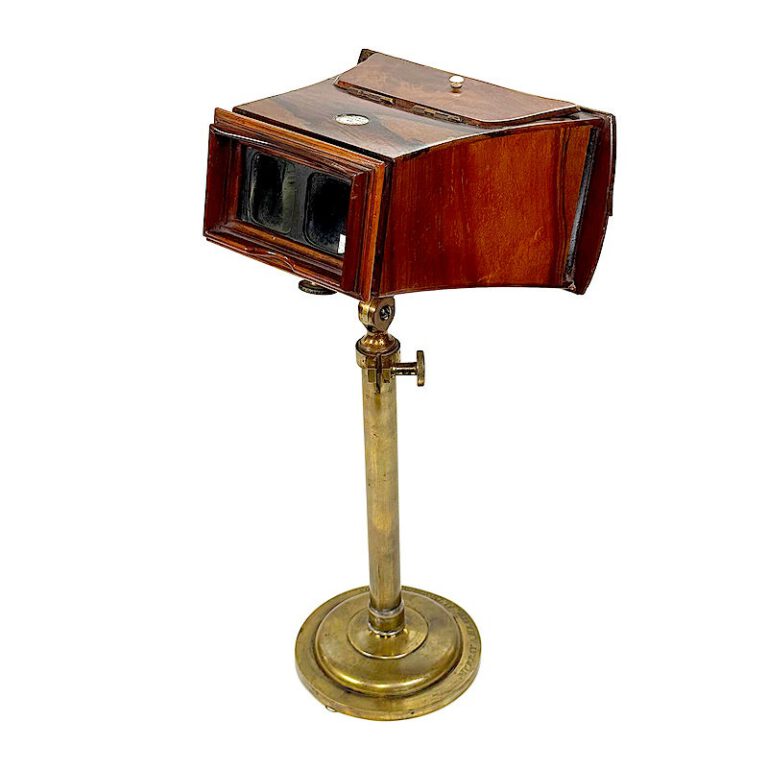
The idea dates back to the earliest days of stereoscopy. Around 1855, George Lowdon, one of the pioneers of Brewster stereoscope production, made his Patent Dioramic Stereoscope on a stand. A few years later, Murray & Heath offered an elegant rosewood Brewster stereoscope in a similar arrangement.
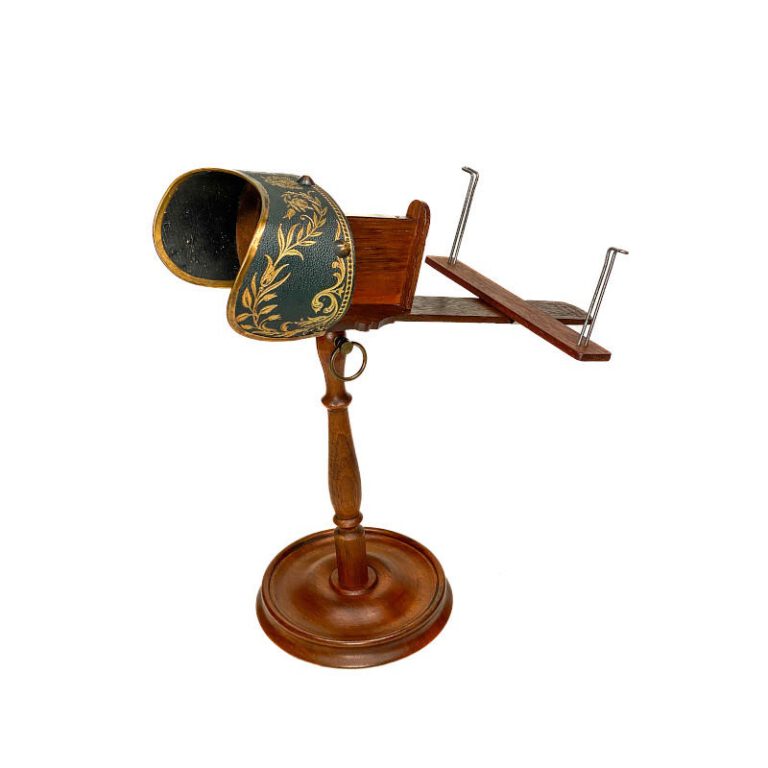
Of course, Holmes stereoscopes appeared on stands, too. For this selection, we’ve chosen a beautifully decorated example by H. Ropes & Co.
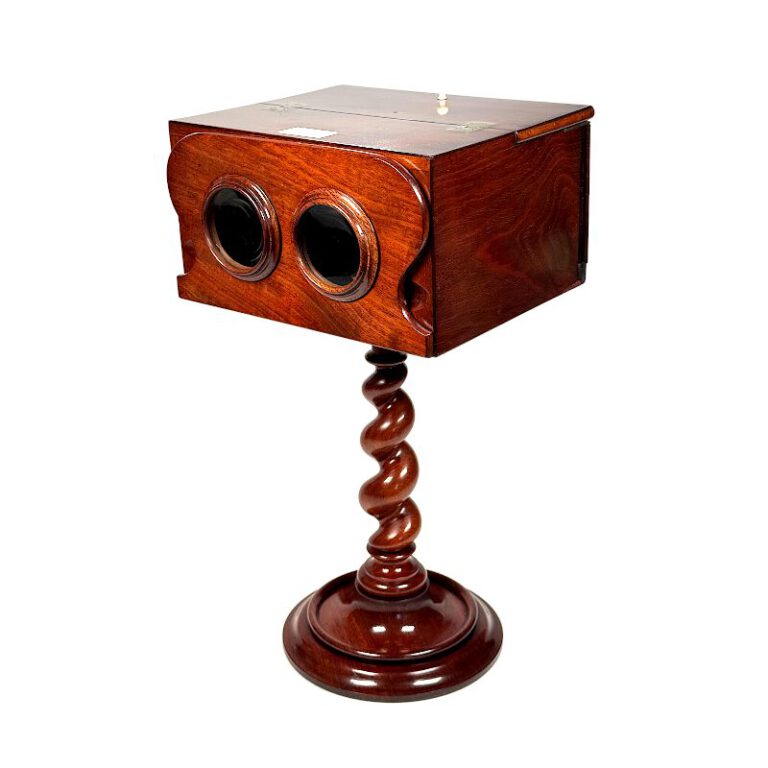
An ingenious solution appeared around 1910 with the Austrian cuboid stereoscope by Lechner & Müller. Its stand can be dismantled and reassembled to fit over the stereoscope like a lid, protecting the lenses when the instrument is stored.
Later developments introduced handheld stereoscopes capable of displaying several images in succession without having to change them individually. The French Planox Apéscope used a magazine holding twelve glass stereoviews, while the Vérascope F40 was designed for 35 mm roll film. Both could be used as handheld viewers or placed on detachable stands for more comfortable tabletop viewing.
These six instruments illustrate how manufacturers consistently offered stands for handheld stereoscopes throughout their history, providing a more comfortable option for tabletop viewing.